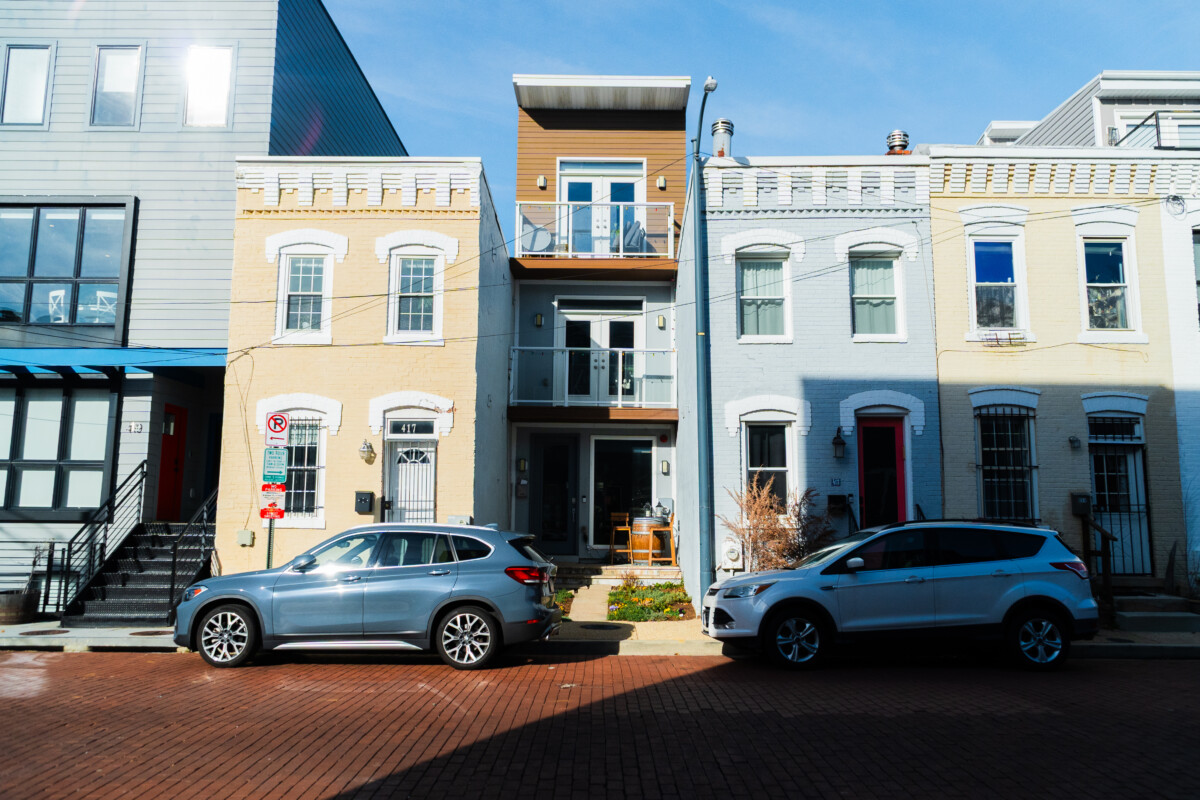
WASHINGTON (HUNS) — Georgia Avenue ends at 7th Street, marked by rust: on the gates, on the crooked street signs and on the hinges of corner stores. They have aged as the community’s evolved.
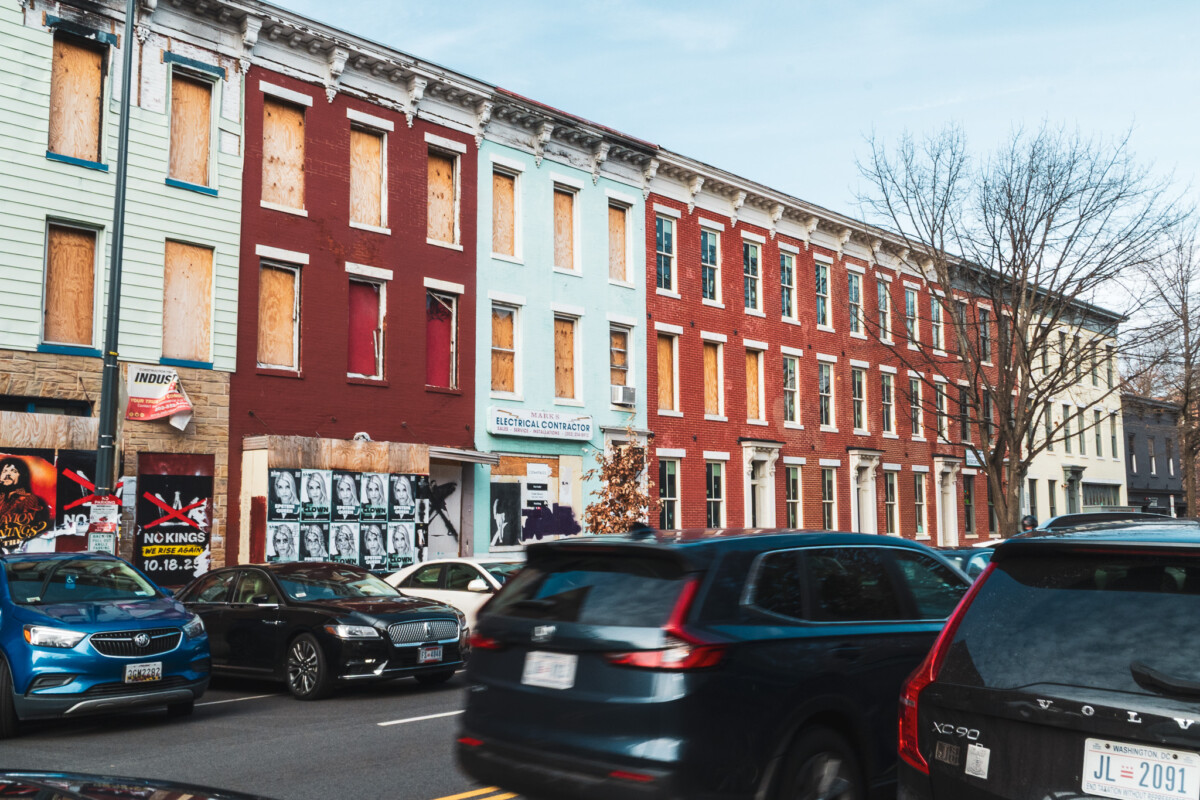
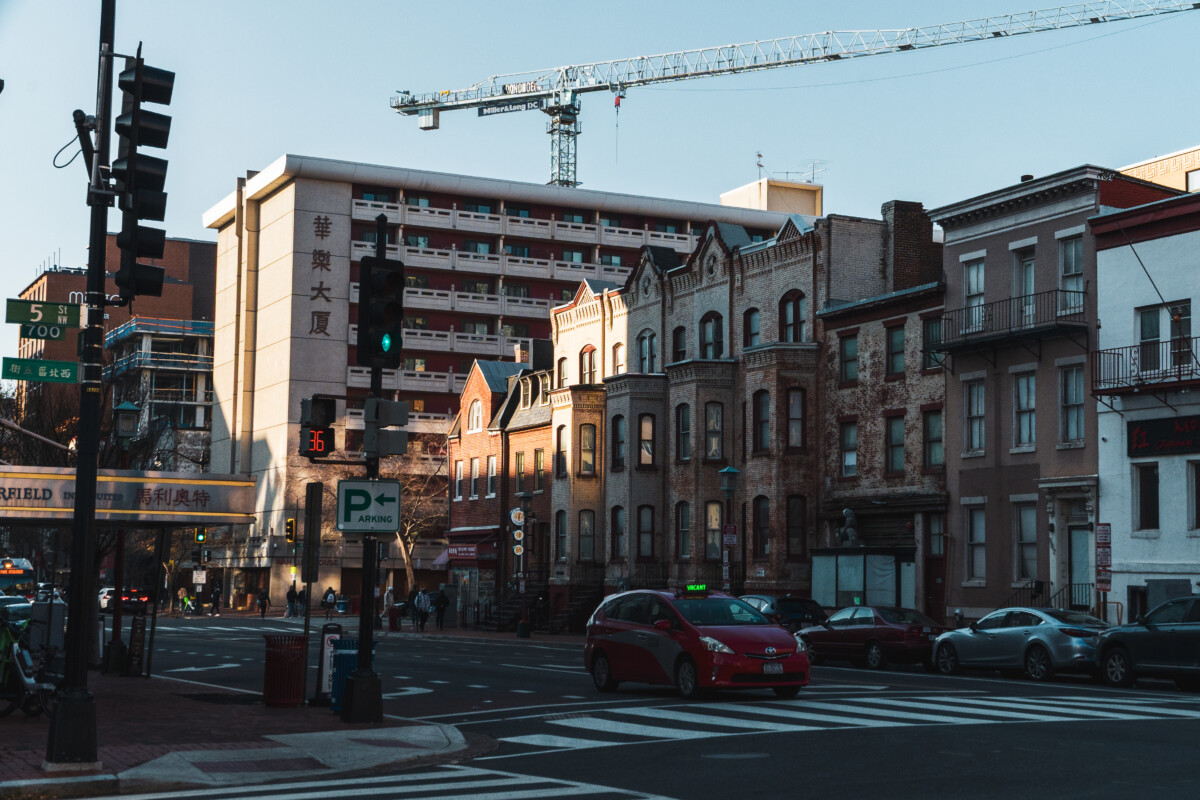
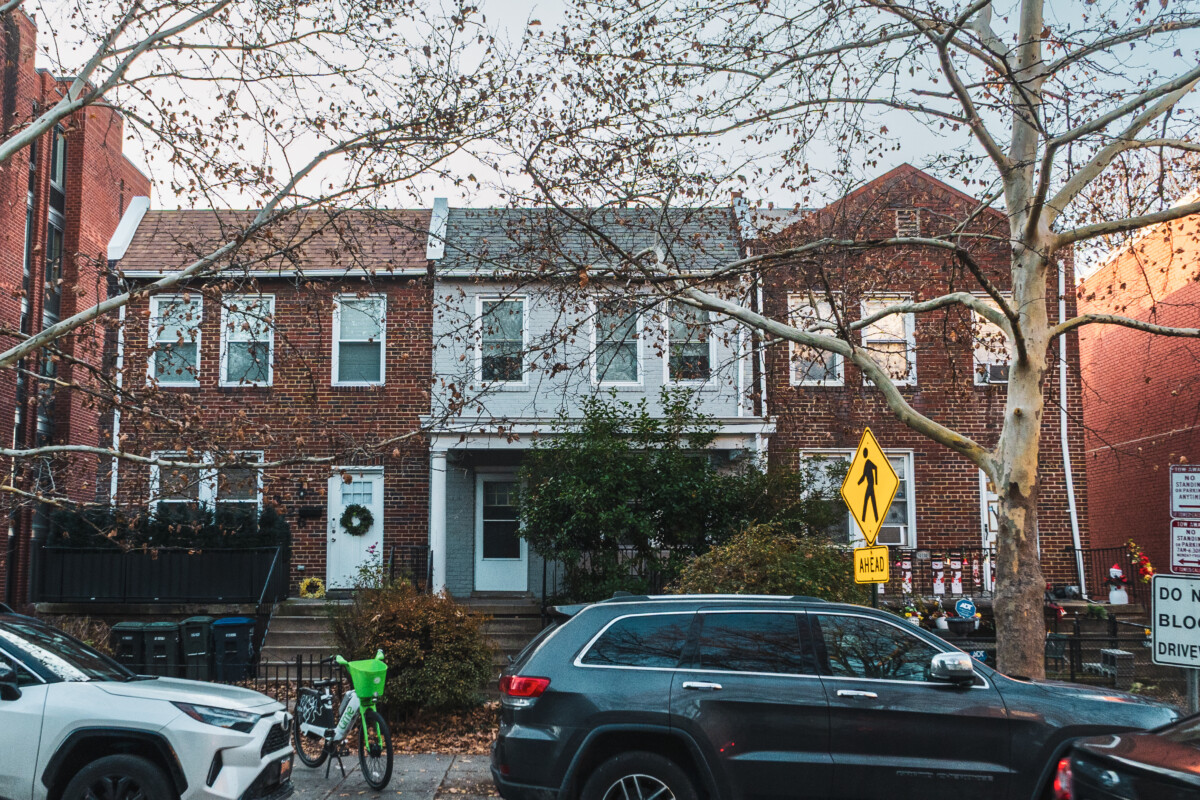
The buildings are low and worn, brick chipped at the corners; paint faded to a dull whisper of its original color.
The community – some of whom have called the area home for decades – is surrounded by flurries of rap and Washington, D.C.’s own Gogo music.
But then the street begins to shift.
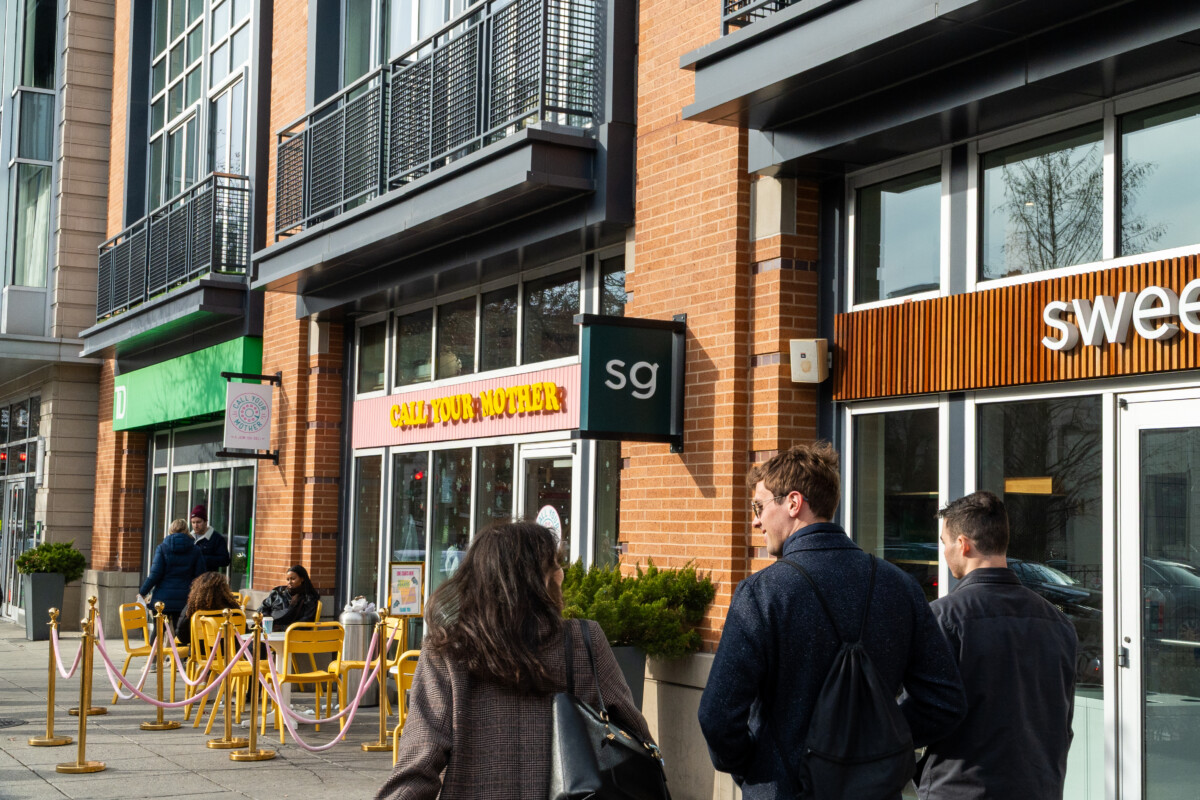
The buildings grow taller, rising to ten stories or more. The sidewalks are clean and smoother here, lined with new trees and brushed metal trash cans.
Here, the faces were mostly white: heads down, AirPods in, water bottles swinging at their sides. No one seemed to be in a rush.
From the contrast in the quality of buildings to the towering construction crane in the warm sky, a story about Black culture and movement is told through crooked and decrepit signs — some depicting Heritage Trails within the Shaw Neighborhood — speaking to long forgotten history.
“I told you I can’t pay that right now!” a Black man yells into his phone, his voice bouncing off the cracked brick walls, carrying the frustration of a community squeezed by rising rents and new developments.
These expansions can create a change in the area’s culture, leaving locals looking for ways to cling to the past they once knew.
Rising Rent Costs Push Families Out of D.C.
Akilah Hartgrove grew up in Shaw, a historic neighborhood in Northwest D.C.
Now 26 years old, she spent her childhood moving between her mother’s and grandmother’s homes as her family navigated financial strain.
From frequent museum trips with her grandmother to participating in community programs, Hartgrove said her early years were shaped by a deep connection to D.C. and its culture.

But by 2010, when she was 10 years old, she said that connection weakened as her neighborhood began to change.
“I was so used to being in the city… and then having to move to Silver Spring—it took me a while to really grow into that,” Hartgrove said. “It really affected how I saw the city and my place in it.”
She is one of the many D.C. residents who relocated out of the city after her family’s living situation became unsustainable.
“It might have been like seventh or eighth grade…when gentrification started to become incredible and money started to become tighter,” she said, recalling the early signs that her neighborhood—and her family’s future in it—was shifting.
After several years away, she returned to D.C. in 2021.
“I moved back because I missed my home, my city,” she said. “I only got to experience it in my youth. [I] went away for college and wanted to experience D.C. as a young Black professional.”
Hartgrove’s story reflects a larger pattern across D.C., where rising property values and increased competition are displacing longtime residents despite protections designed to keep them in place.
“I felt like we were targeted…like every white person I saw was part of taking over areas that used to be Black and brown,” she said.
Hartgrove only learned about the Tenant Opportunity to Purchase Act (TOPA) during her conversation with HUNewsService.com –– making her wonder if her family’s story could have been different.
“If my mom wanted to stay—and I think she did—TOPA could have changed the trajectory of our future,” she said. “She doesn’t live in D.C. anymore… maybe she just doesn’t feel like she has a place in it anymore.”
TOPA can benefit residents with experiences like Hartgrove’s, giving them an opportunity to remain in their homes as modifications to the city’s landscape advance.
TOPA: Giving Residents a Voice
Redevelopment and rising housing costs are reshaping neighborhoods once rooted in long-standing communities, forcing many long-time D.C. residents to leave.
Residents and tenant associations are turning to TOPA to preserve affordable housing and protect long-time Washingtonians from displacement. For more than four decades, the act protects the city’s long-term residents.
Enacted in 1980, TOPA gives tenants the right of first refusal when a landlord decides to sell their building.
The D.C. Department of Energy and Environment defines gentrification as “…the transformation of neighborhoods from low value to high value. This change has the potential to cause displacement of long-time residents and businesses.”
By giving tenants a chance to stay in place during ownership changes that often fuel displacement in gentrifying neighborhoods, the law aims to preserve stability before market pressures push residents out.
The law also requires property owners to notify tenants before putting up a building for sale. It also grants those tenants the first chance to purchase it themselves or transfer that right to a nonprofit organization or developer committed to maintaining long-term affordability.
It was reshaped by a series of reforms meant to keep pace with D.C.’s shifting housing landscape.
Amendments added to the law in the late 1990s and early 2000s expanded opportunities for tenant associations to partner with developers. The TOPA Single-Family Home Exemption Amendment Act of 2018 exempted single-family homes from TOPA unless the tenant is elderly or disabled.
In neighborhoods like Shaw, Columbia Heights, Mount Pleasant and Brightwood, where redevelopment pressures have surged over the past two decades, TOPA gives residents the ability to organize, negotiate and ultimately remain in the places they call home.
Taniya Rogers is the housing organizer for Organized Neighborhood Equity’s (ONEDC) Homes For All campaign. The nonprofit’s campaign is a tenant organizing program with the goal of empowering and protecting tenants’ rights, from advocating for rent control to preventing evictions.
“[TOPA is] a process, but you get to be a part of being able to make those key important decisions about where you live and how you’ll be living,” she said.
Tenants Navigating TOPA
Joseph Williams is a member of the Eleven Nicholson St NW Cooperative. Associations like these convene to address housing matters in relation to using their TOPA rights.
Williams and other residents formed a cooperative ownership, which grants tenants the ability to collectively purchase and jointly own their home.
Beginning in 2021, Housing Counseling Services, a D.C.-based nonprofit, informed the association of their privileges as outlined in the legislation and the avenues through which they could use them.
“We saw the sale of the building being posted in front of the entrance level. We had no idea what to do at the time. So, we asked Housing Counseling Services to give us guidance to protect our rights,” Williams said.
Williams is not a stranger to the TOPA process, as it was utilized in a six-unit building he lived in for 30 years. Located near Colorado Ave. NW & 13th St. NW, Latino Economic Development Center (LEDC) organizers assisted the tenant community living there.
After undergoing this experience, when his current home was placed on the market, Williams was more equipped to handle the situation. He told his fellow tenants about how they could resolve the conflict by requesting support.
“I’m just happy and grateful that we have the opportunity to exercise our rights,” he said. “TOPA gives us an opportunity, and I think it should always be there for tenants.”
According to Williams, initially, some tenants were seeking monetary reimbursements as per their rights; some were open to receiving payments in the form of buyouts.
A buyout agreement is when a property owner offers a tenant money or other compensation in exchange for giving up their occupancy rights and moving out of the unit.
“A lot of the tenants were looking at … financial compensation. Then they realized this is our opportunity to own a part of D.C., to own a share of the property and that was intriguing. The mindset was ‘Hey, we can live here 20 to 30 years or 15 to 20 years and we can have affordable rent.’”
Even though the process took more than a year, Williams said the association did not face many major setbacks while navigating TOPA. Their attorney also assured Williams that they took all the correct steps toward their housing goal.
Williams felt that having a stronger understanding of TOPA rights and procedures would have helped him support the nonprofits in explaining the process to other tenants. He added that the association faced communication challenges because not all members spoke the same language.
“We can be in meetings, and you have either Housing Counseling Services or Mi Casa explain things about how this process works, but then you have those who need more explaining,” Williams said. “But then, to have the tenants among themselves educate each other and to catch [each other] up, I wish I had known how to do that before it all began.”

He also listed the challenge of tenants understanding what participating in a cooperative ownership fully entailed.
“Some of the tenants didn’t understand how ownership works…they were still thinking like a tenant,” he said. “But then, when you become an owner, you have to think like an owner. You have to do things in a different way, and gradually it happened.”
Following their success in being part of a cooperative ownership, Mi Casa Inc. continues to aid the association in their management of the building. Williams also pointed out why TOPA personally benefits him.
“I’m an elder. I’ve lived [in D.C.] all my life––born and raised. This is my home,” Williams said.
At St. Paul’s Senior Living residential complex, a tenant association is in the early phases of utilizing TOPA.
Patricia Younger, vice president of the association, established the group in 2021.
“We had trash piled up in the dumpsters, as well as in the trash closets on each floor,” Younger said. “We didn’t have any management or a porter…people kept complaining to me about things that were broken in their apartments,” she said.
Associations often collaborate with lawyers to guide them through TOPA and to safeguard their rights. One lawsuit worth noting is an ongoing Housing Conditions Court case, first filed in August 2024.
For this case, the association, represented by a lawyer, is seeking repairs to address housing code violations within the common areas of their building, including carpet replacements.
Younger and the association say they are committed to following the TOPA process through to the end and she is reflecting fondly on a productive moment that gained them community support for their cause.
“The only way we were able to get any kind of recognition as far as the bills being paid, and even to have the porter, we had to go to demonstrate at St. Paul Church to get any attention at all. That’s one of the highlights of what we have been doing,” she said.
As tenant associations like Younger’s continue to fight for stability, city leaders are weighing how to strengthen the very tools residents rely on.
Ward 4 Councilmember Janeese Lewis George, who announced a run for mayor of the district in December, represents many of the communities experiencing these changes firsthand.
For Lewis George, the issue is also deeply personal. A third-generation Washingtonian, she used TOPA in 2016 to become the first in her family to purchase a home.
She was a tenant at the time, and when her building went up for sale, TOPA gave her the first chance to buy it—an opportunity she says she would never have had on the open market.
“That experience shapes everything I do on housing policy, because I know firsthand that TOPA isn’t just policy, it’s the difference between generational struggle and generational opportunity,” Lewis George said.
From her perspective, TOPA’s impact on housing stability and affordability is both significant and essential.
“TOPA is one of the most powerful tools we have for closing the racial wealth gap and keeping Black and brown residents rooted in their communities,” she said. “It gives tenants leverage to negotiate maintenance, secure protections, and even pursue homeownership—something many longtime residents have historically been excluded from.”
Using TOPA for Good
With TOPA and funding sources, nonprofit organizations can use their community power to make housing affordability more easily accessible for tenants.
Nonprofits are more successful when they are able to secure funding – mainly through loans and grants – whether federal, city or private, to support their work.
The TOPA process begins when tenants are notified about an official written ‘offer of sale’ on the building they live in. At that point, they can form a tenant association and exercise their TOPA rights, which gives them several possible options. Tenants may choose to purchase their own units, form a cooperative to buy the building together, or assign their TOPA rights to another buyer, often a housing nonprofit or another developer.
If tenants choose cooperative ownership, they collectively own and manage the property. If they transfer their rights to a preferred buyer, that buyer can purchase the property instead of the tenants. In both situations, tenants are able to obtain benefits like adjusted rent, housing repairs and other improved living conditions.
In LEDC’s case, many tenant groups opt for a partnership with a buyer whose vision for the property most aligns with their residential needs.
Some of the most notable nonprofits, many utilizing similar strategies in helping tenant associations enact TOPA’s provisions, include LEDC and ONEDC.
By advocating for tenants and organizing residents in apartment buildings and other housing complexes, these nonprofits help shift some housing control from property owners and the city government to the community.
“TOPA works really well when it works as enforced,” said Awad Bilal, LEDC tenant organizer. Bilal is a 5-year staff member who manages a service average of roughly 350 tenants from about 14 buildings per year.
Under LEDC’s Department of Tenant Services, tenant organizers are responsible for assisting and guiding tenant associations through their utilization of TOPA.

As soon as a formal offer of sale is given for a particular building, LEDC’s work can begin.
Organizers can then collaborate with tenant associations, facilitating meetings and informing them of their TOPA rights. Next, a survey is conducted to determine the percentages of tenants who want to remain in the building and those who want to leave.
When those numbers are collected, a TOPA lawyer is hired to represent the tenant group and help them navigate the best solution to their housing challenges. However, the legislation is not without flaws.
“I’ve seen that a lot of people who are not informed or misinformed give up their TOPA rights for little to nothing. I’ve seen people give up their TOPA rights for $100,” Ward 8 Councilmember Trayon White said.
EmpowerDC, under their Housing Justice campaign, implemented a somewhat similar approach in empowering tenants with their TOPA rights.
Farah Fosse, community development director for the nonprofit, also recognizes significant gaps in the legislation’s effectiveness regarding the housing procedures that accompany its execution.
“These city processes, including TOPA, and housing conditions are complicated, expensive and take a long time,” she said.
Declining to identify the residential complex, Fosse mentioned a specific Ward 7 building that received an offer of sale. However, many of the residents who lived there believed there was no other option but to move.
“A lot of folks just thought, ‘This means I’m being displaced,’” Fosse said. “That’s not the law. So even though, there’s these laws, it takes a lot of work to really say, you have these rights, you can enforce them and make them real. Because [being displaced has] been their lived experience,” she said.
ONE D.C. organizer Taniya Rogers said the deteriorating conditions in many neglected buildings push longtime Black residents out of their homes. Such conditions, she said, are often the result of property owners’ detachment from their tenants.
“If your owners do not care about this land or where you live…then you’re going to deal with whatever it is,” she said. “They don’t live here. They don’t have to endure it.”
Rogers believes in continuing the fight for housing justice, with more organizing, educating and unification of the community.
“If each building was to assert their TOPA rights and take ownership of their building, and they’re able to establish and negotiate the decisions as far as how that building’s upkeep is and all those different things, then I think that we’ll start changing real estate,” she said.
TOPA Comparisons
D.C.’s TOPA is not the only effective tenant-empowering model. Similar laws are found in cities like San Francisco.
Unlike the TOPA act, the Community Opportunity to Purchase Act (COPA) in San Francisco is nonprofit focused.
COPA gives qualified nonprofit organizations the right to first offer and refusal to purchase properties that are on sale.
According to SF.gov, COPA was created to mitigate tenant displacement. Given San Francisco’s high-priced housing market, city nonprofits utilize COPA to do just that by creating and preserving affordable housing opportunities.
The legislation also mandates sellers to inform tenants and qualified nonprofits of their intent to sell a property, along with presenting a signed declaration to the Mayor’s Office of Housing and Community Development (MOHCD) that certifies their “compliance with COPA”.
“[COPA is] a critical tool in San Francisco…where the people who have made San Francisco an incredible city that it is—the artists, the teachers, the creatives—who couldn’t otherwise afford market rent, and whom may be displaced, if their buildings are bought by a speculator who has a profit motive,” said Kyle Smeallie, policy director for the San Francisco Community Land Trust.
“We’re able to step in, turn them into permanently affordable housing and keep those people in their homes in perpetuity,” Smeallie said.
COPA became effective in 2019 and is enforced by the MOHCD.
While COPA earns housing nonprofits multiple affordable housing wins, Smeallie recognizes that there is room for improvement within the legislation. His main critique is the issue of funding.
“There’s so many great opportunities that are not able to be taken advantage of because funding is just insufficient, so if we had significantly more funding, we could be moving on many more buildings instead of having to sort of pick and choose,” he said.
From Smeallie’s perspective, despite their flaws, both TOPA and COPA preserve cities, keeping communities intact and stabilized.
“When you have that and you can scale [TOPA and COPA], you can really transform communities to places where living is precarious, to a place where people can thrive, people can contribute, people can organize, people can affect change,” he said. “That makes all the difference.”
As more communities test and revamp TOPA and similar legislation, the possibilities of how best to solve the gentrification question will expand and evolve.
The Pitfalls of TOPA
Despite TOPA’s goal to help tenants buy their buildings, many D.C. residents say the law often falls short, leaving them without the guidance, funding, or legal support needed to stay in their homes.
Representing clients on TOPA-related cases since 2023, Forrest Albiston, a housing attorney at Ballard Spahr, is a witness to the impact of rising housing costs in D.C.
He said reforms like the Rebalancing Expectations for Neighbors, Tenants and Landlords (RENTAL) Act of 2025 reflect ongoing attempts to fix aspects of TOPA that have not worked as intended.
The RENTAL Act of 2025 changes TOPA rules, making it easier for owners of newer and smaller buildings to sell without offering tenants the chance to buy.
“The exemptions will not apply to at least 92 percent of properties in D.C.,” Albiston said. “The vast majority remain subject to the costs, delays and abuses TOPA reform is intended to correct.”
To Councilmember Lewis George, TOPA’s role in shaping housing stability and affordability is undeniable but is not without barriers.
“Tenants often lack access to adequate technical assistance, legal support and financing resources to actually exercise their TOPA rights,” Lewis George said.
She also noted that the city does not track data on how many families successfully use TOPA, making it harder to understand where the biggest obstacles remain. Without comprehensive statistics, it is difficult to measure the law’s effectiveness or target resources to the tenants and buildings that need them most.
“We also don’t have clear data on how many families are using these rights successfully, which makes it harder to identify and address the barriers they’re encountering,” she said.
While Lewis George focuses on ensuring tenants have the resources and support to navigate TOPA, experts like Emilia Calma, director of housing policy at the D.C. policy center, point to another challenge: a lack of clarity around what counts as a successful outcome under the law.
Calma said at a minimum, residents should have access to information, to be able to measure TOPA’s effectiveness.
“We don’t know if a tenant association bought the building. We don’t know if there was an affordability covenant…we just have no clue what actually happened.” said Calma. “….no one has this agreed definition of success, there wasn’t that much political will to be tracking outcomes, because what do you actually care about here?”
Some critics argue that TOPA slows redevelopment, but Lewis George rejects the idea that speed should outweigh stability.
“While I hear concerns about delays, we can’t prioritize speed over people’s homes and livelihoods—especially when we lack data showing TOPA is actually preventing responsible development,” she said. “The real question is: what kind of development do we want, and who gets to stay and benefit when neighborhoods change?”
Her remarks highlight a key challenge: even with the law’s protections, tenants and their advocates often lack the financial and logistical support needed to act on their rights.
TOPA does not provide funding to support tenant associations or help affordable, mission-driven buyers acquire buildings. Financing these buildings is more difficult now, particularly when trying to purchase larger properties.
“Permanent financing is just so hard to find these days for these buildings. There’s a fund within D.C. government that does bridge loans. They’ll give a building money to buy the building. But the loan is only supposed to last for two years,” she said.
The short timeline for securing permanent financing, combined with limited resources, left many tenant groups struggling to complete purchases successfully.
“That two years is supposed to give them time to find a permanent buyer. And we’ve heard that they’re not finding permanent buyers. So, all those bridge loans have become permanent mortgages,” Calma said.
There is also a lack of diversity in TOPA use. Small buildings also make up a disproportionate number of tenant associations.
According to the D.C. Policy Center, more than 96% of tenant associations have been formed in buildings constructed before 1978, mostly smaller, rent-controlled properties. The issue is not their use in these older buildings, but rather the limited application of tenant organizing in larger buildings, where many more residents depend on the available housing.
“There were only five tenant associations in buildings that were built in the last 20 years… I think for two reasons. One, those buildings tend to be pretty large. The average size of a new build is 150 units. A lot of them are over 300. And they’re brand new, and they’re very expensive to purchase,” said Calma.
Banks have also become more reluctant to give out these loans due to previous incidents where buildings fell into disarray and were undercapitalized once they were transferred to condos.
Calma pointed out owners not saving up for big repairs and poor building management, is a big issue in smaller buildings.
The TOPA process can significantly slow property sales. On average, it adds around five months to transactions, and in some cases, delays stretch for years. That uncertainty can discourage developers and complicate deals, particularly when legal disputes come into play.
Tenant buyouts are a common outcome, with a large number of cases ending with them.
Albiston also said that tenant buyouts—which happen frequently in larger buildings—often increase rather than reduce displacement.
“These payments do nothing to counter displacement and may in fact exacerbate this, since tenant buyouts increase the cost of housing,” he said.
Landlords often recoup the buyout costs by raising rents or selling at higher prices, which can make housing less affordable for future residents and accelerate gentrification.
Calma said that more funded developers will simply offer more than developers prepared to create affordable housing.
“[The D.C. Policy Center] just heard over and over from affordable housing providers who would make an offer on a building, and then they’d get bid out by a market rate developer who would offer the tenants, say, $20,000 each,” she said.
Despite these challenges, TOPA continues to protect thousands of residents from losing their homes.
Tenant associations use the law to educate, organize and negotiate, giving communities a real chance to remain intact even amid rising rents and redevelopment pressures.
The law may be imperfect, but for many longtime residents, it remains a critical tool for stability and keeping longtime residents connected to the neighborhoods they helped shape.
Looking Forward
For D.C. residents, the Tenant Opportunity to Purchase Act is more than just a law––it is a lifeline. The law gives tenants a voice in their communities, letting them negotiate, organize, and even purchase the buildings they call home.
Under the RENTAL Act of 2025, greater limitations exist for tenants using TOPA and opportunities are expanded for landlords, developers and investors. The legislation’s impact being difficult to measure causes confusion for organizers, experts and policymakers as to how best the legislation can be implemented and improved.
In the midst of this shift, Councilmember White stresses the need for further addressing the issue of displacement and guaranteeing support and resources to the D.C. community.
“This is a housing crisis, and we need to have access to all our tools in the toolbox to ensure that people are, one, getting treated fairly and getting access to resources that the government can provide to ensure that there’s a society in D.C. for working class and poor people,” he said.
As D.C. continues to grow and transform, the future of TOPA holds the power to determine whether longtime residents can remain part of the city they built.
The law preserved thousands of homes, but its flaws, from funding gaps to confusing processes to unequal outcomes, leave many residents at risk of being pushed out before they use this 40-year-old tool.
Tenants, organizers, and advocates say TOPA stabilizes communities, creates opportunities for affordable housing, and gives residents a say in the future of their neighborhoods.
Whether that power widens or narrows in the years ahead will decide if TOPA is a tool of the future, or another piece of legislation that will be lost to time.
Akilah Hartgrove’s story is a frequent reality for Washingtonians, but those of Joseph Williams and Patricia Younger are evidence of what TOPA has done and what can be applied on a city-wide scale, if the legislation continues to be developed.
“[I feel] reenergized because now I know more about TOPA,” Hartgrove said. I’m always contemplating if I can afford to live in D.C., and now I know I have a chance.”
TOPA can be a powerful tool for keeping residents in their homes, but its impact is limited when tenants are unaware of their rights.
Lewis George calls for strengthening the law to make it easier for residents to use as displacement pressures increase.
“Rather than dismantling TOPA piece by piece, we should be strengthening it and making it easier for residents to exercise their rights,” Lewis George said. “As displacement pressure intensifies…TOPA will be critical to ensuring longtime residents can stay rooted in place as their neighborhoods transform.”
Morgan Knight, Morghan Langston, Kree Anderson and Cole Edmonds are reporters for HUNewsService.com