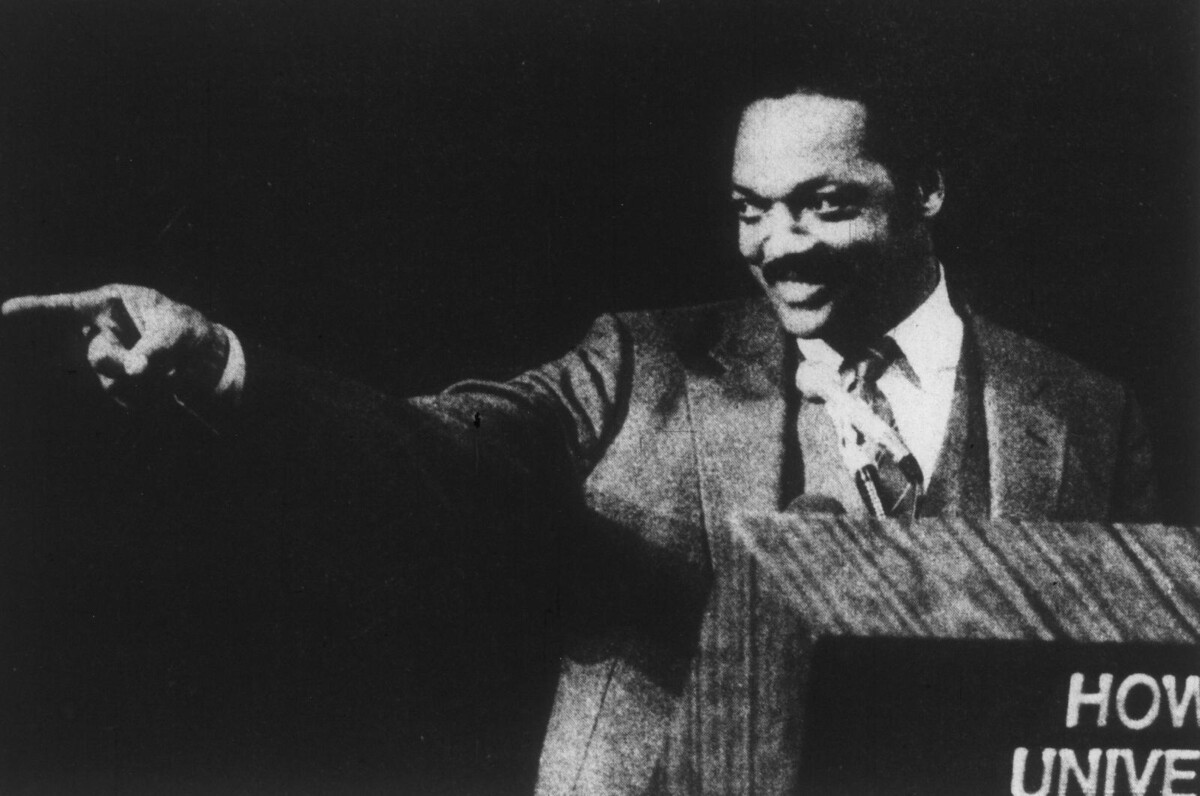
The Rev. Jesse Jackson became one of the figures to help link the Black community and American political structures to address issues of race, economics and social class. One space in the Black community that he prominently molded was his relationship with the “Black church”.
What started as enslaved Black people risking their lives to read from the Bible transformed into a rebellion for autonomy of one’s mind, body and soul. Black Christianity became a way for Black citizens to rise in the community and offer a place in America where African Americans could hold positions of power.
The Rev. Dr. Cheryl J. Sanders, a Christian ethics professor at the Howard University School of Divinity, recognized Jackson’s ability to foster unity and understanding of Christianity.
“His style of leadership and oration was relatable to the Black church and beyond,” said Sanders, senior pastor at the Third Street Church of God in Washington. “He certainly represented the ecumenical nature of the Black church because he could make himself at home anywhere.”
Sanders remembered how Jackson came back to “The Mecca” in 2021 to meet with Howard students who were protesting over mold and rodents in residential halls.
“He showed up to show his solidarity, but then he fell because of his health,” Sanders said. “I thought, ‘Here was somebody who was pushing the envelope in terms of their own health, yet still being present to support Black people and others pushing for social justice and human dignity.’”
Political figures like Frederick Douglass, the Rev. Dr. Martin Luther King Jr. and Jackson harnessed the foundations of the Black church to light fires under old revolutions, but in new eras.
King’s Southern Christian Leadership Conference, an African American civil-rights organization founded in Atlanta in 1957, inspired the birth and merger of Jackson’s Rainbow PUSH Coalition. Both were created on the backbone of social justice and theology, which Jackson emphasized to protect Black people in their endeavors.
The Rev. Nicholas K. Young, a therapist and young adult leader at New Bethel Baptist Church in D.C., noted that Black churches defined what human rights look like in America.
“Growing up, I thought there was no separation between [Black church and politics],” Young said. “The civil parts of this country have often found themselves to be byproducts of Black church through Black church leadership.”
Jackson resonated with him because he encompassed what Young preached at Bethel.
“I think Rev. Jackson was embodying the spirit of Amos, of Isaiah, of Moses,” Young said. “These were people who not only thought about what it meant to be Christian, but also did the work to make this world a better place.”
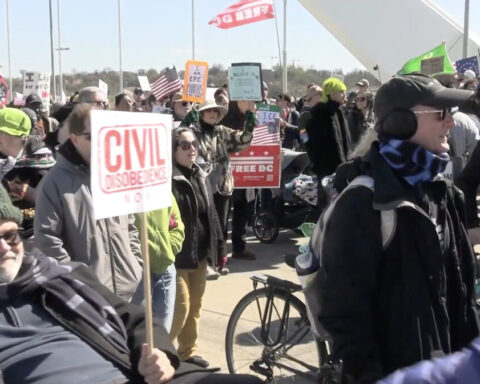
Beyond hymnals and praise dance routines, Black churches carry a song that civil rights leaders continue to sing in the streets today. For generations, the church has served not only as a spiritual refuge but as a training ground for civic engagement and moral leadership.
Walter Hicks, grandfather of Howard student Mya Hubbard, attends True Word Church of God in Christ (COGIC) and acknowledges that Black churches have the responsibility of not being apolitical — and that extends to the congregation as well.
“In church, we were taught to vote and let the politicians do their job,” Hicks said. “The church can guide you through, but cannot tell you how to vote. The church has to make people aware of the consequences of doing nothing. We are taught to make a difference and lead by example.”
Faith Harper covers culture, lifestyles and trends for HUNewsService.com.