This is an opinion piece by a Hilltop columnist.
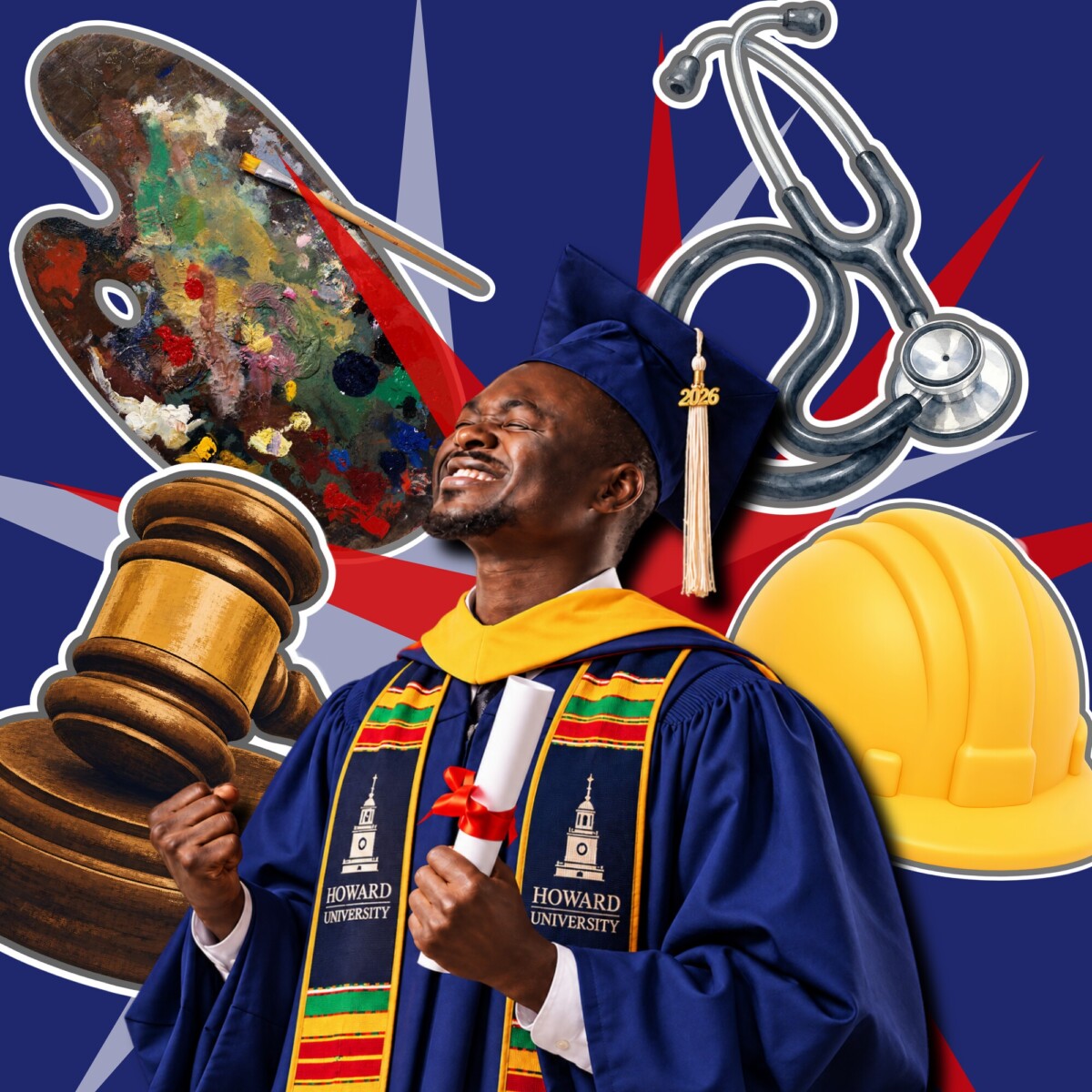
“To Be Young, Gifted and Black” is the name of one of Nina Simone’s songs and a quote most often attributed to Howard University alumnus Chadwick Boseman, but at The Mecca, it works like a creed.
It is embedded into the very fiber of the university and runs through Howard’s halls. The message is simple: achieve beyond what your circumstances might suggest and dare to pursue the wildest version of your dreams.
At Howard, ranked the nation’s second-best historically Black college and university by U.S. News & World Report, that dream is within reach. It also comes with a condition most students never asked for.
For four years, Howard offers a space where race does not have to be explained. Beyond Howard’s gates, however, race is the first lens through which others see you.
Howard builds Black students who are secure in who they are, but it does not prepare them for a workplace that may question whether they belong. Identity and readiness are in the same vein, and the Howard bubble protects one and neglects the other.
The stereotypes Black students may encounter in the workforce, being perceived as lazy, uneducated or poor are products of a society that has historically attached these assumptions to Blackness. While time and representation in the media have challenged some of these stereotypes, they have not erased them entirely. They can remain ingrained even among Black people themselves.
In a 2004 study by Marianne Bertrand, Ph.D. and Sendhil Mullainathan, Ph.D., both professors of economics at the University of Chicago and Massachusetts Institute of Technology, respectively, they sent employers identical resumes with either white- or Black-sounding names. Applicants with white-sounding names received about 50% more callbacks than those with Black-sounding names. The resumes were identical but the outcomes were vastly different.
At Howard, nothing is handed to you. Every letter of recommendation, executive board position and grade is earned through persistence and an even better work product. Race was never a qualifying factor. Experiences at Howard build confident and capable students who are able to adapt and thrive in every environment.
Then comes the interview, the internship, the office where some employers see a diversity hire first and a competent candidate second. The label is imposed from a society built upon deflating the accomplishments of Black individuals. The damage begins when those stereotypes become internalized, and a student starts to question whether they might be true.
Simon Dumas Jr., a senior human development major from New York City, and a current intern for the United States Senate Special Committee on Aging, said he believes Howard prepared him for that dichotomy.
“Some people see Black people in professional settings and think they are [there] because of [diversity, equity and inclusion initiatives] rather than skill,” Dumas said. “My career will be dictated by confidence and skill, rather than by [others’] opinion.”
Annique Roberts, who received a law degree from Howard University School of Law in 2024, explained the pros offered by the Howard bubble.
“[Attending Howard] helps you figure out who you are, and what lines you will and are not willing to cross,” said Roberts, who is also an attorney at the Latham & Watkins law firm. “It builds you into a strong person.”
That is true, and it matters. But Howard gave Roberts character, not a playbook on how to meet implicit bias. Roberts said she still met microaggressions, work requests outside her purview and conversations that felt demeaning to her character. Her character is her foundation, but her ability to respond is a skill, and skills need practice, she said.
While Howard does provide students with opportunities to enter these spaces before graduation, early exposure is not the same as long-term preparation. Howard students frequently work on Capitol Hill and at majority-white companies through internships before they graduate. But internships are temporary and structured. Students often have clear roles, guidance and supervisors to turn to when something goes wrong.
The challenge is preparing students for what happens when that structure disappears, when they enter professional spaces without the same built-in support or protection. The first truly unguarded moment comes later, when there is no classroom or supervisor safety net, and an experience of negative implicit bias forces a reaction that can carry consequences that are harder to undo. That is the paradox of the Howard bubble: its protection is what makes leaving it so jarring.
Howard does not need to lose the qualities that make its environment so valuable. The confidence, community and sense of belonging it builds in students should remain at its core. Pre-internship workshops, alumni panels on navigating bias and career programming that rehearses difficult moments could prepare students without taking away from the Howard experience. These additions could save students strife, headache and self-doubt in spaces where they are meant to thrive and enjoy themselves.
Howard builds the person. It should prepare the professional too.
Copy edited by Jori Johnson