For many Ward 5 residents, health care doesn’t always begin in a hospital or a doctor’s office. Instead, it often starts with a bus ride, a trip to the pharmacy, or a walk to pick up groceries.
Rhode Island Place, a major shopping center in Northeast Washington, D.C., has become more than a retail destination. The center serves as an everyday access point for resources that help improve or protect health.
“I learned I could get on the bus and go to the center, which has made my life five times easier,” said Sandy Nwankwo, a longtime DMV resident who recently moved to Ward 5
For residents like Nwankwo, it is not simply convenient; it is essential.
Before the establishment of Rhode Island Place, Ward 5 had fewer centralized locations where residents could access essential items, such as groceries and prescriptions, in one place. As a result, residents had to travel farther for essential items, creating another challenge for those seeking to maintain healthy habits on a regular basis.
“Believe it or not, before I learned about Rhode Island, I would wait until I went to work to go shopping or get prescriptions. I work at the Krispy Kreme in Columbia Heights, and there’s a Target next door. That’s where I went,” said Nwankwo.
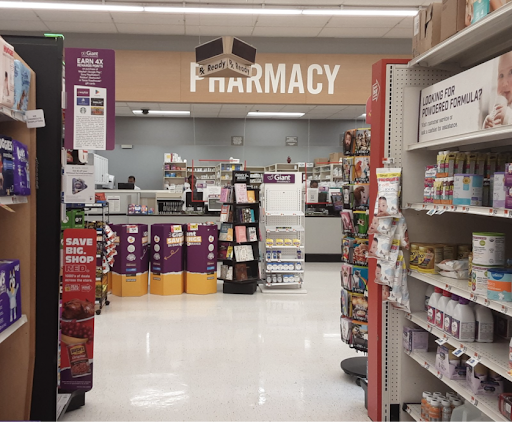
Today, Rhode Island Place offers residents access to a grocery store, pharmacy and other essential services, enabling them to run multiple errands in one visit.
In addition to providing prescriptions and having groceries, they also provide immunization services, diagnostic testing, pet prescriptions and community well-being services.
This type of accessibility is important. Research on public health has demonstrated that neighborhoods with greater access to food and medical resources have better health outcomes. A lack of access to food can increase the risk of disease, as demonstrated by federal government research.
Additionally, access to pharmacies increases the likelihood that individuals will adhere to their medications.
Rhode Island Place has provided better accessibility to resources for Ward 5 residents, but accessibility is not the case for the entire city of Washington, D.C. Wards 7 and 8, which have historically been underserved, continuing to lack access to grocery stores, pharmacies and health care facilities. Residents of these wards must travel longer distances to access basic facilities.
On the other hand, the wealthier areas of the city have more health-supporting facilities, including multiple grocery stores, clinics and pharmacies, located at closer intervals.
While shopping centers are plentiful in many parts of Washington, D. C., Rhode Island Place is a somewhat rare resource in Ward 5. For example, studies suggest that the closer a person is to a pharmacy and transportation, the more likely they are to take medication regularly. People prefer resources that are familiar and close by, where they can get what they need regularly.
Nwankwo’s need for a direct route to access health facilities underscores how crucial transit connectivity is for maintenance. Missing a bus or longer commutes leads to delayed prescriptions or grocery trips. If access is uncomplicated, then routine care becomes manageable.
Macia Lee, community advocate and wellness educator, emphasized how navigation affects access.
“D.C works, if you let it work for you,” Lee said.
Her comments highlight how access depends on not just availability, but when residents can navigate it easily.
“We don’t have any activations over here, which really pisses me all the way off,” she said.
“Activations” are used by Lee to refer to events such as health fairs and wellness events. However, Lee’s statement points to another missed opportunity, as Rhode Island Place could be used as a hub for preventive care and connect people to care in their daily routines.
Instead of going to new places, why not bring health initiatives to where people are?
The idea is simple. We should leverage existing behaviors rather than try to form new ones.
The layout of Rhode Island Place also reduces friction. Rather than make several trips, one to the pharmacy, another to the grocery, another for household items, residents consolidate their health-related errands into a single stop. That consolidation saves time, energy and in some cases, money.
Access to clinicians and pharmacies varies across Washington, D.C. It covers an area that comprises eight wards. The number of access points can distinctly shape local health outcomes. The more access points there are, the easier it is to access these services.
Urban planners and health professionals increasingly stress the importance of creating a highly accessible community. Instead of only considering health through a traditional lens, these professionals seek to address factors that affect or impede general health practices.
The state of Rhode Island Place demonstrates this.
Rhode Island Place isn’t a hospital or a clinic, yet for many residents, it is a part of daily life that supports their health. The fact that there is a pharmacy within a reasonable distance of public transportation, and that there are groceries and other necessities, gives residents one less problem to deal with.
For many residents like Nwankwo, access is enough to keep their routines, health and lives running smoothly.
Tanaija Kee is a reporter for HUNewsService.com who covers Ward 5