Resetting My Mind: My 31-Day Digital Detox
Towards the end of 2025, I felt off balance. I was constantly scrolling, comparing, and questioning myself, leaving me feeling unsure and mentally drained.
What was meant to be a quick check of social media often turned into hours of mindless consumption, and instead of feeling connected, I felt more isolated. I began to notice how much my mood depended on what I saw online, and it became clear that something needed to change.
That realization led me to make a decision: I would start the year by letting go of the things that were weighing me down. I committed to a digital detox, stepping away from social media, specifically Instagram and TikTok, for 31 days.
At first, I didn’t know what to expect. There was hesitation, even a bit of anxiety, about disconnecting. But almost instantly, I felt a sense of relief. Without the constant noise and pressure, my mind felt quieter.
As the days went on, that relief turned into clarity. I found myself becoming more present and more in tune with my own thoughts, rather than with everyone else’s. I picked up habits I had been neglecting, like reading, exercising and spending more time outside. These small changes made a big difference. I felt more grounded, more productive and more at peace.
By the end of the 31 days, I noticed a shift in how I saw myself. I was more confident and more sure of who I am without social media’s influence. Stepping away didn’t just give me a break; it gave me a reset.
Social Media and Digital Detoxes
A digital detox is a growing trend for people looking to step back from their screens and reclaim their mental well-being. In essence, it is a planned period of time during which someone reduces or eliminates their use of digital devices, especially social media platforms such as Instagram, TikTok or Facebook.
Constant scrolling can take a toll on mental health. Studies have linked heavy social media use to increased anxiety, lower self-esteem and difficulty focusing.
For Ariana Jahnke, a sophomore double major in political science and criminology at Howard University, the decision to step away from social media came after recognizing unhealthy patterns in her daily life.
“I have been on and off social media since my sophomore year of high school, and recently, I’ve noticed that I have had a hard time stopping myself from scrolling on Instagram,” she said. “Noticing that pattern, almost like I itched to scroll online, I deleted it from my phone in January.”
Before her detox, Jahnke described her relationship with her phone as overwhelming.
“I would describe my relationship with my phone and social media as an anxious attachment,” she said. “Anytime my phone buzzed, I had to check it… no matter what I was doing prior.”
She said that the constant need to stay connected eventually became concerning.
“When I realized this pattern of mine, I honestly became fearful of my attachment with social media, which ultimately caused me to delete it,” Jahnke said.
While her decision developed over time, a defining moment pushed her to commit fully.
“I was in my bed scrolling on my phone for three hours, and upon realizing that, I had to look at myself and genuinely ask, ‘What are you doing with your time?’” she said.
Since then, she has kept Instagram off her phone.
Mental health professionals say experiences like Jahnke’s are increasingly common.
Dr. Monique Dennis is a psychologist and the founder of the Freedom Heart Foundation, which advocates and brings awareness to domestic violence survivors.
She said excessive screen time is often linked to a range of mental health challenges.
“In clinical practice, I often see increased anxiety, depression and difficulty with attention and focus in individuals who spend excessive time on social media or digital devices,” Dennis said. “There’s also a rise in sleep disturbances due to late-night scrolling, as well as heightened feelings of loneliness and disconnection.”
A digital detox offers a break from that cycle, allowing people to reset, refocus and prioritize real-world connections.
Jahnke said her daily habits began to shift almost immediately.
“I noticed that my attention span began to grow,” she said. “Whether I was doing simple tasks around my dorm or sitting for long periods working on assignments, I realized I could focus… for longer.”
She also found herself becoming more patient without the constant pull of notifications.
Beyond productivity, the emotional impact of staying off social media has been significant.
“I definitely do think my increased mood and mental health status correlate with my being off of social media,” Jahnke said. “It has forced me to slow down, connect with lost hobbies and be present.”
She added that the experience gave her a sense of control.
“It has proved to me in a way that I have self-control and that has helped my overall mental health,” Jahnke said.
Experts emphasize that digital detoxes do not have to mean completely rejecting technology.
Joanne Broder is a media psychologist, author and fellow of the American Psychological Association.
She said that while digital interaction can be beneficial, it should not replace real-life connections.
“Having devices and digital interaction is great, but it should only be an accessory to a relationship, not the whole relationship,” Broder said. “I’m a big believer that even [humans] need to spend time with people in real life.”
For some, stepping away from social media highlights just how much time they spend online.
Morghan Langston is a senior journalism student at Howard University from Teaneck, New Jersey.
She said she used social media for hours a day and decided to give it up for Lent, a 40-day period when many Christians fast or give up certain habits leading up to Easter.
“I knew that I used [social media] a lot and I’m prone to doomscrolling and just becoming distracted by the algorithms,” Langston said. “I didn’t even initially consider what it’s doing for my mental health, but I do think I’m worrying less, which is good.”
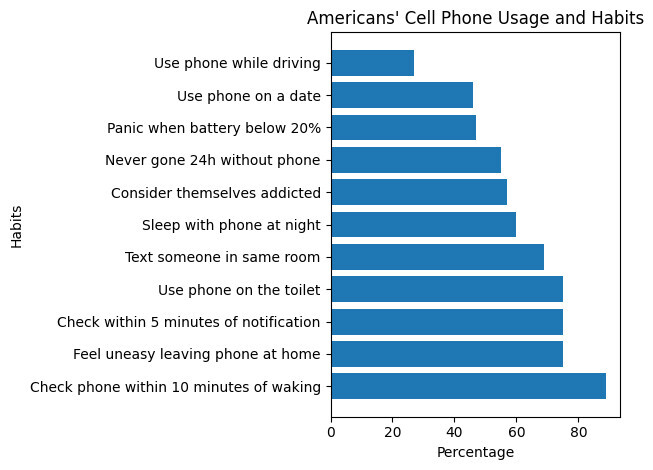
The average American spends roughly 12 hours a day on digital devices, and nearly half of U.S. social media users ages 18 to 29—about 45 percent—report taking an extended break from platforms due to negative effects on their well-being.
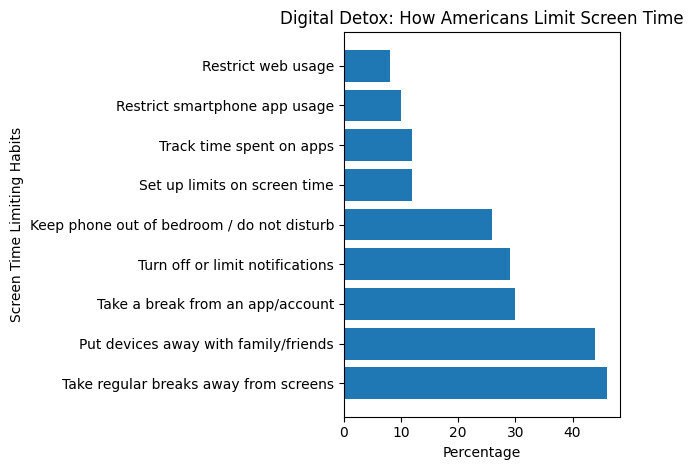
Some people cut out social media entirely for a day, a week or even a month. Others limit notifications or set specific screen-time rules. During this period, many participants fill the time with alternative activities such as reading, exercising, spending time outdoors or practicing mindfulness.
Dennis said taking a break from screens can improve overall well-being by allowing individuals to mentally and emotionally reset.
“Mentally, it reduces overstimulation and gives the brain space to rest, which can improve focus and clarity. Emotionally, it decreases exposure to triggering or comparison-based content,” Dennis said.
Langston said that without social media, her daily routine has become more productive and intentional.
“I think I’ve been more focused on school and myself without social media,” she said. “I’m actually getting up in the morning and doing the routine I always set out for myself, but without the distractions.”
Broder said that stepping away from screens allows people to be more present in their daily interactions.
“If you’re not using your phone or social media, you’re more present with the people you’re with by doing other activities other than looking at a screen,” she said. “There’s so many things we can do online and social media does make our lives easier, but it’s not the only way to stay connected.”
Still, disconnecting is not always easy.
Langston said one of the biggest challenges has been resisting the urge to return and staying in the loop socially.
“The most challenging part of staying off social media is not going back,” she said. “Also, not knowing certain things that are going on socially, like what people are posting about or what jokes everyone is laughing at, makes it difficult.”
Despite the challenges, she said the experience has helped her reflect on her habits and mental health.
“I learned I’m too nosy for my own good,” Langston said. “I like being in other people’s business, but at the same time I’ve realized it makes me feel a certain way about myself depending on what I’m seeing.”
People who complete a detox often report improved mood, better sleep and a stronger sense of confidence.
Dennis emphasized that balance, not complete disconnection, is key to maintaining a healthy relationship with technology.
“Ultimately, it’s about using technology as a tool, rather than letting it control your time and emotional state,” she said.
It is not about rejecting technology, but about learning to use it intentionally and avoiding the negative effects of constant digital engagement.
Langston said she does plan to return to social media, but with a different mindset.
“I think I’ll be on social media less after this break,” she said. “If I can’t make it without scrolling for a few days, then I have a problem.”
In a world driven by constant connection, choosing to unplug even briefly can be a powerful act of self-awareness. For many, the real impact of a digital detox is not just the time spent offline, but the mindset they carry when they log back on.
Morgan Knight covers culture, lifestyles and trends for HUNewsService.com.