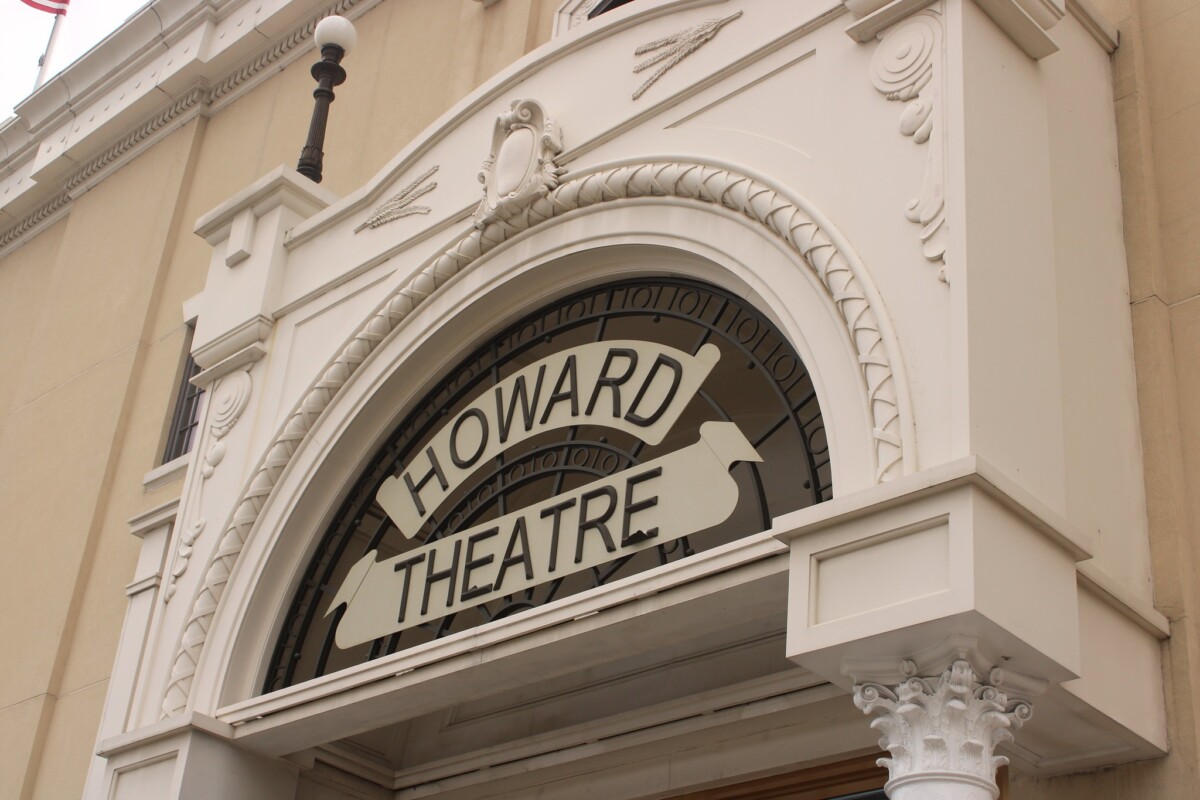
The Howard Theatre Walk of Fame stretches from the Shaw-Howard Metro Station to the theater, the historical mainstay of the U Street Corridor. Enshrined in bronze in the sidewalks of 7 and T Streets are names like Ella Fitzgerald, Marvin Gaye and James Brown. Mary Jefferson’s name is not.
Zachary Paige-Westbrook, Jefferson’s grandson and an actor based in Houston, refers to his grandmother as D.C.’s “queen mother of the blues.” Jefferson was a jazz and blues singer, actress and Emmy Award-winning television producer.
Paige-Westbrook described her as a griot who told stories through music and acting on the screen and stage. He said her artistry inspired him to become the entertainer he is today.
Jefferson grew up just behind the Howard Theatre, where her father and grandfather worked. Her early years were colored by the vibrance of the venue, where she was mentored by renowned performers like Duke Ellington and Fitzgerald, according to her grandson.
Jefferson’s devotion to the theater was lifelong.
“While megastars like James Brown or Pearl Bailey merely stopped by the Howard Theatre on tour, [my] grandmother’s entire life was anchored there,” Paige-Westbrook said. “She grew up in [the theater’s] shadow. Her family ran its backstage; she was mentored by its headliners, and she performed jazz and blues on its stage.”
According to Paige-Westbrook, the theater was an “oasis” of stable and dignified employment within a city rife with Jim Crow discrimination.
“Black stagehands such as my great and great-great grandfather served as ticket takers, ushers, custodians and even musicians,” he said. “They were treated with professional equity and dignity inside the building, a sharp contrast to the harsh Jim Crow restrictions enforced just outside its doors.”
Vincent Mona of Naples, Florida also cherishes his memories of the theater in its prime. Mona said that from the late 30s to mid-70s, his father, Joseph Mona, was the theater’s property manager. His grandfather was the controller.
Mona, now 83, described the theater as a “masterful way of uniting people” through Black artistic excellence.
“It was dynamite. We couldn’t wait to get in the door,” Mona said. “We were the only white guys there, but we enjoyed the hell out of it.”
As a teenager, Mona delivered “tens of thousands” of Howard Theatre posters to stores in the U Street Corridor where he thought patrons would want free passes to shows.
Shaw neighborhood store owners eagerly anticipated Mona’s arrival every time, he said. Passersby rushed for the first glimpse at the upcoming headliner.
“Even though we were only $1 to $1.50 per hour workers delivering invitations to storefronts, we thought we were inviting the neighborhood to the best rock ’n’ roll shows in the country,” Mona recalled.
Shep Allen served as the theater’s general manager of operations from 1931 to 1970. Mona said as one of the few Black executives in the District Theaters chain, Allen’s leadership secured and sustained the theater’s prosperity.
“As I recall from anyone I heard from, but especially my father — Shep was the secret sauce,” he said.
At the Howard Theatre, both Allen and Jefferson committed their lives to forging a legacy worthy of preserving. Their descendants and devotees believe their memories merit the same preservation.
The Howard Theatre Walk of Fame honors 15 performers who contributed to the venue’s rich heritage. Paige-Westbrook said that long before the city installed the monument, it was his grandmother working to keep the theater’s memory alive.
Jefferson’s projects included the documentaries “Howard Theater: A Class Act” and “Seventh and T.” Amidst the Howard Theatre’s decades-long abandonment and decay, starting in 1980, her works educated the public on the crucial history of the Shaw neighborhood.
In 1988, she was recognized as Ambassador of the Blues by the D.C. Commission on the Arts and Humanities.
Several D.C. historians and Shaw residents have pushed for Jefferson to be recognized on the sidewalk, according to Paige-Westbrook.
“She preserved the history the Walk of Fame celebrates,” he said. “It is only right that my grandmother ‘Virgin Mary’ Jefferson take her rightful place on the Howard Theatre Walk of Fame among the greats that she learned from and idolized.”
While Paige-Westbrook did not grow up in D.C. and does not have a personal relationship with the theater, Jefferson’s story lives in him.
“Being an actor, performer, comedian and artist, I treasure the day I can perform on the same stage as the ones who came before me,” he said.
Copy edited by Jori Johnson