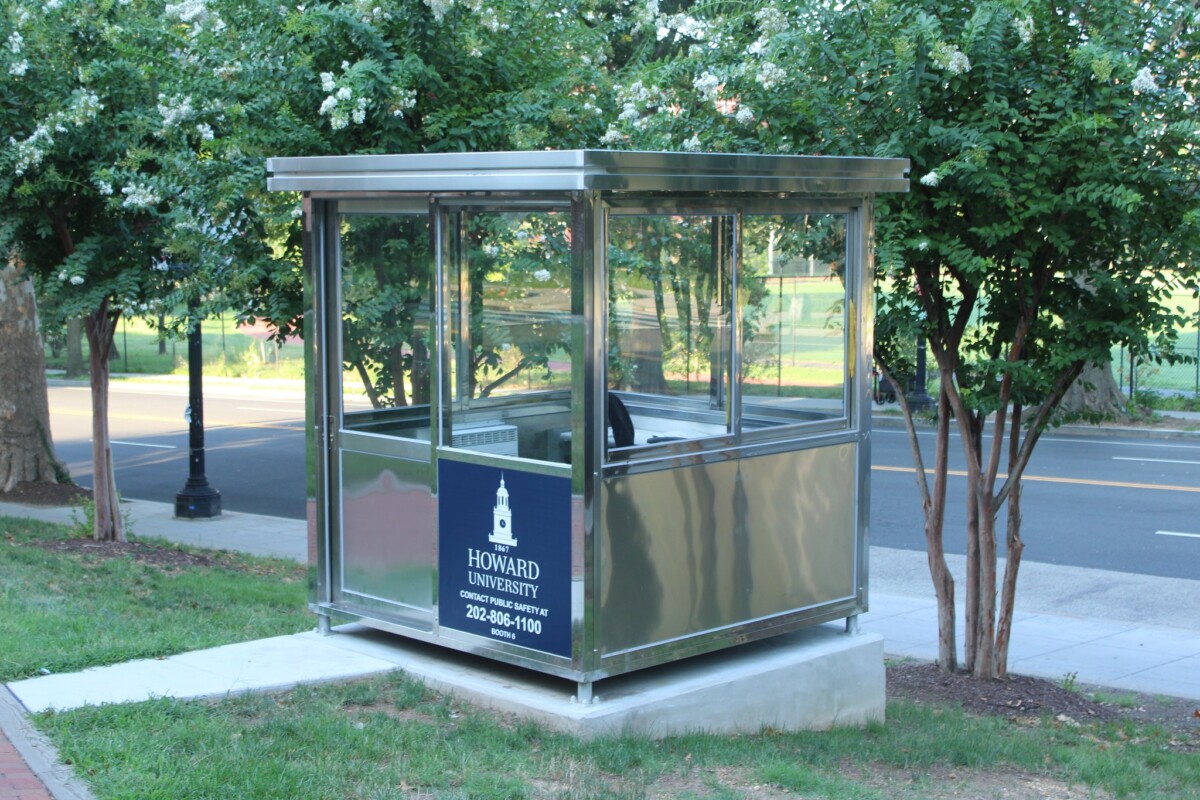
In the Fall 2025 semester, Jedidah Njoroge was greeted by a surprise as she exited the Louis Stokes Health Sciences Library with her friends: an unidentified booth beside the building.
Njoroge, a sophomore human development major from Nairobi, Kenya, eventually realized that the booth was one of multiple security booths added on campus.
“I really had no idea what they were doing there in the first place,” she said.
Njoroge, who lives in College Hall North, said the booths haven’t made her feel protected on campus. She criticized the lack of booths near the student residence halls on Fourth Street including the Harriet Tubman Quadrangle, CHN, College Hall South and Bethune Annex. Quad and CHN are all-female, while CHS and Annex are gender-neutral.
“Not only is this where the biggest three female dorms are, but almost all three of these dorms are filled with freshmen,” Njoroge said. “I feel like this is where security should be the closest.”
The nearest booth to the residence halls on Fourth Street is by the Louis Stokes Health Sciences Library, which is a three-minute walk from College Hall North. Other booths are located throughout campus, including near Howard University Plaza Towers, the Howard Mackey Building and the John H. Burr Gymnasium.
Campus Security Changes
Last fall semester, new security booths appeared across Howard’s campus as one of several security changes made in the past year after David Taylor was appointed as the new police chief. The Hilltop previously reported that Taylor pledged to institute more security measures on campus, including a new collection of security vehicles and the hiring of additional campus police officers.
Since then, Taylor said he and his team have increased Howard’s security system. Under his new leadership, 11 security booths were added near the main entrances of some residence halls and other campus buildings.
“We’re continuing to push home our goal of building upon our visibility, and that comes with bringing in more officers, hiring more officers,” he said.
Taylor also said he added more OpenPath readers — devices that allow students to unlock academic or residential buildings through an app on their smartphones. Multiple residence halls use the readers including CHS, CHN, Quad and The Axis. Some other campus buildings also have them, including the Mackey Building and Lewis K. Downing Hall, though these buildings typically remain open during the day and the reader is not used until after hours.
Taylor said the new security initiatives are part of a strategy for “policing for engagement and prevention” to help students view campus police as partners rather than authority figures.
“We want to just make sure that everyone, that the campus as a whole, feels safe and secure and supported,” he said.
Student Concerns About Crime
Despite the security changes, some students expressed continued worries about crime and the response of campus security to it. In 2025, 22 criminal offenses occurred on campus, including rape, robbery, aggravated assault and burglary, according to the university’s Annual Security and Fire Safety Report. Given this spate of crimes, some students say they are wary of possible incidents.
Temprince Battle, a junior psychology and sociology double major from Athens, Georgia, said they have concerns about burglaries on campus.
“I don’t even honestly trust parking my car near campus sometimes, because I know a lot of people have had issues with their cars getting broken into,” Battle said.
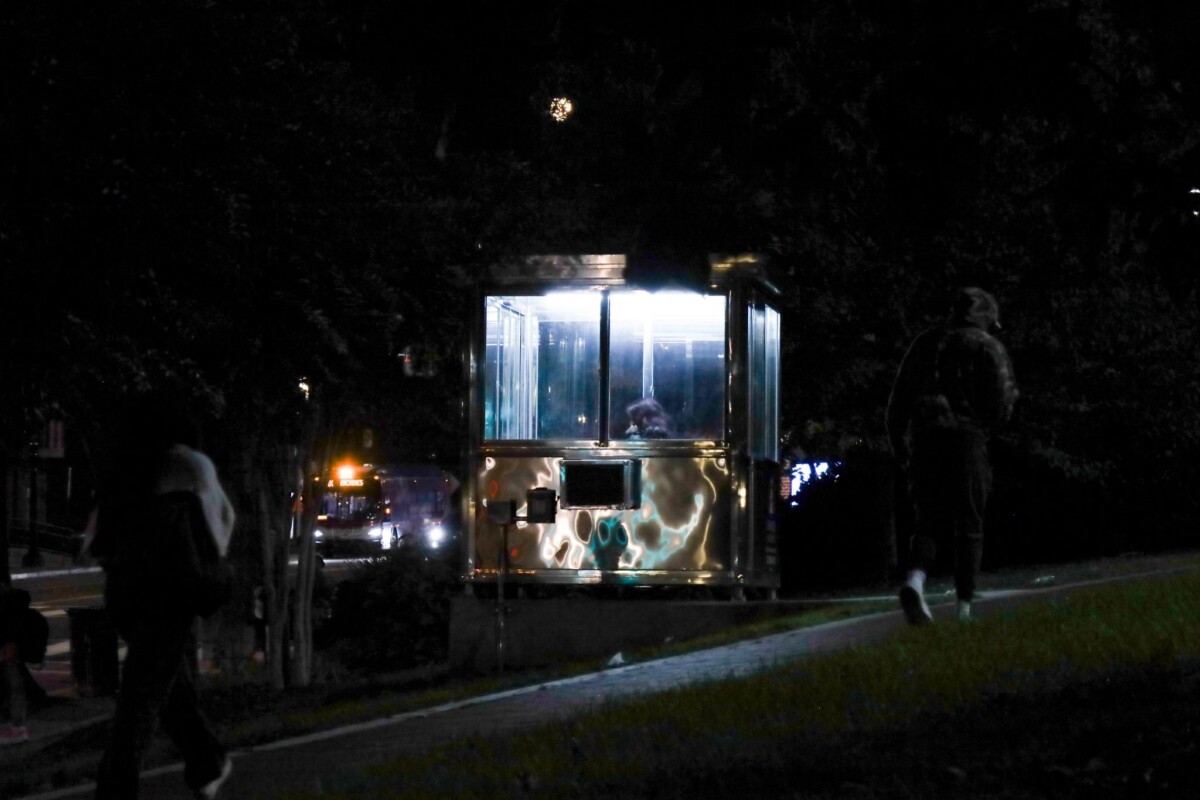
Taylor said that crime affects campus police’s conduct and that they utilize partnerships with students as well as the Metropolitan Police Department in order to stay updated on crime on campus. According to Taylor, specific actions they take include lighting assessments and IT assessments of campus technology.
The Howard University Department of Public Safety operates all 24 hours of the day, allowing students and staff to report crimes so the university can “perform investigations and prevent future incidents and distribute crime alerts through timely warnings,” according to the safety report.
Some Howard students described general dissatisfaction with the university’s response to crime near and on campus.
“It kind of sucks whenever we hear about people having guns and they’re less than five minutes away from campus,” Njoroge said.
Howard’s security system handles specific situations, including active shooter incidents using a series of phases of emergency management. These phases are as follows: prevention, protection, mitigation, response and recovery, according to the Howard University Emergency Management Plan.
Inattention and Absence of Security Guards
Although Taylor said that campus police are working to provide safety to the Howard community, some students say these new additions are not helpful, noting the absence of campus security guards in the security booths as well as a general lack of attentiveness from guards across campus.
Battle said that the guards are “just there.”
“Often, when I’m walking past them, I see them on their phones or just not really doing anything,” they said.
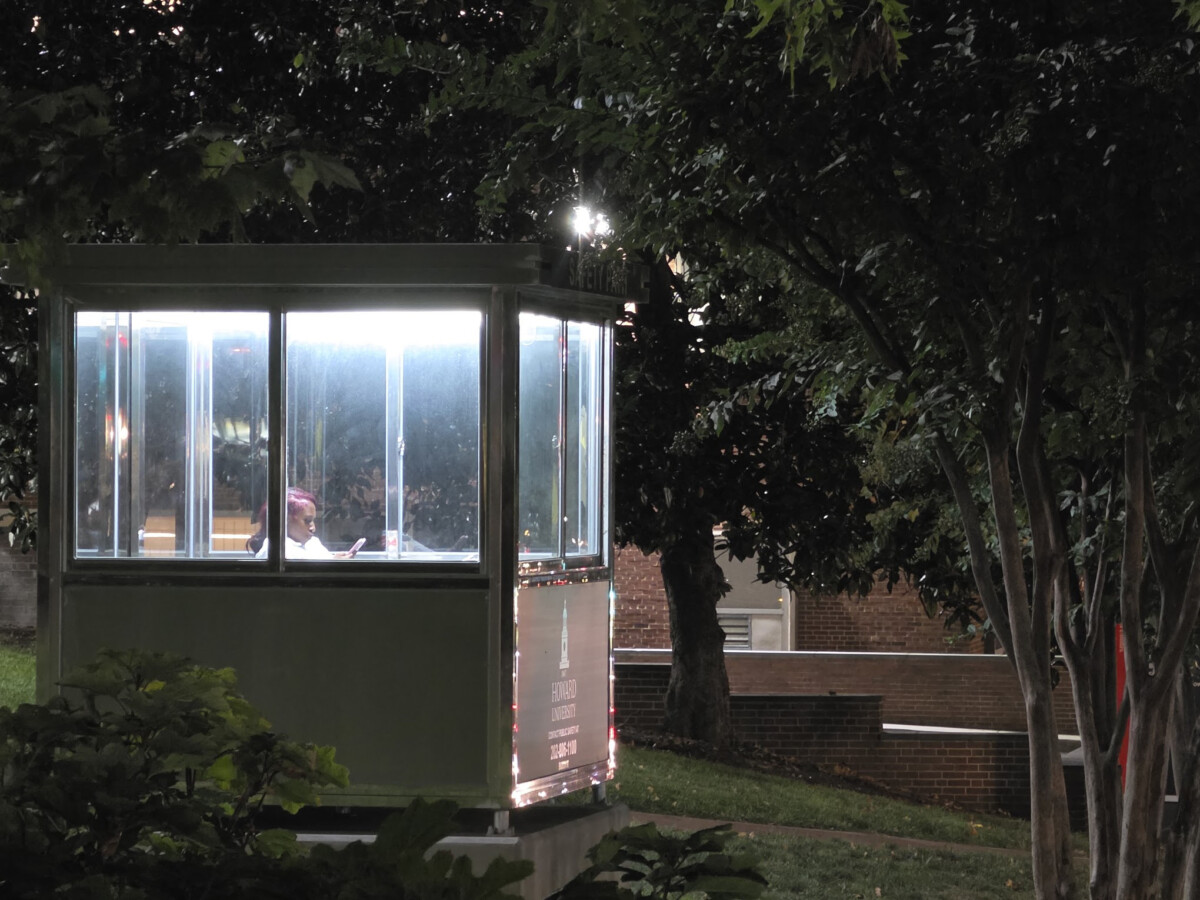
Mia Keitt, a senior political science major from Suwanee, Georgia, criticized the lack of guards in the booths during the daytime.
“I feel like it was kind of a waste of time, money and resources,” Keitt said. “If you made it, why is there no guard in there?”
In a written statement to The Hilltop, the Office of University Communications said that the working hours of the security guards are 7 p.m. to 7 a.m. However, a later statement from Taylor said that the booths are operational from 6 p.m. to 6 a.m. “during the daylight saving time adjustment period.”
“These hours are strategically established to enhance security visibility and accessibility during evening and overnight hours,” he said.
He added that the booths are not meant to “It is important to emphasize that the booths are an additional layer of security and are not intended to replace our existing 24-hour public safety operations,” he said.
Taylor also addressed students’ concerns about security guards using their phones.
“Personal use that interferes with post responsibilities is unacceptable,” he said in the statement. “We will reinforce these expectations with the appropriate supervisors and security personnel.”
Student opinions on campus safety vary. While some students said they feel unsafe or uncertain about security, others find that new measures are working to keep the campus safe.
Amiyah Graham, a freshman chemistry major from Roselle, New Jersey, said she doesn’t have complaints about security on campus.
“Whenever I’m walking in my area where the guards are at, I just see them being observant,” she said.
Njoroge called for more comprehensive safety measures moving forward, including security booths to be moved closer to freshman dorms. She also said there needs to be more awareness among students about campus safety programs.
“I had no idea until the end of my first year that you can basically call campus police and they can just pick you up from wherever and walk you back to your dorm,” she said. “I had no idea that was an option.”
Njoroge was referring to the Bison Lift program, which Taylor encouraged students to use.
The program allows students whose classes may end at a later hour to receive transportation from campus police back to their residence halls, the police chief said.
In response to student worries about campus safety, Taylor said that communication from students is important.
“I rely on students’ intel. I rely on the students to keep us on point…and if in fact there are some concerns, please let us know,” he said.
Chelsea Barnor contributed to this report.
Copy edited by Daryl R. Thomas Jr.