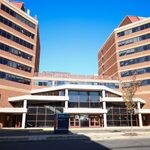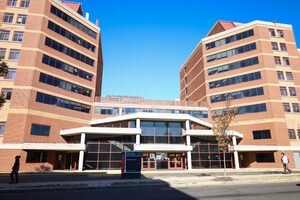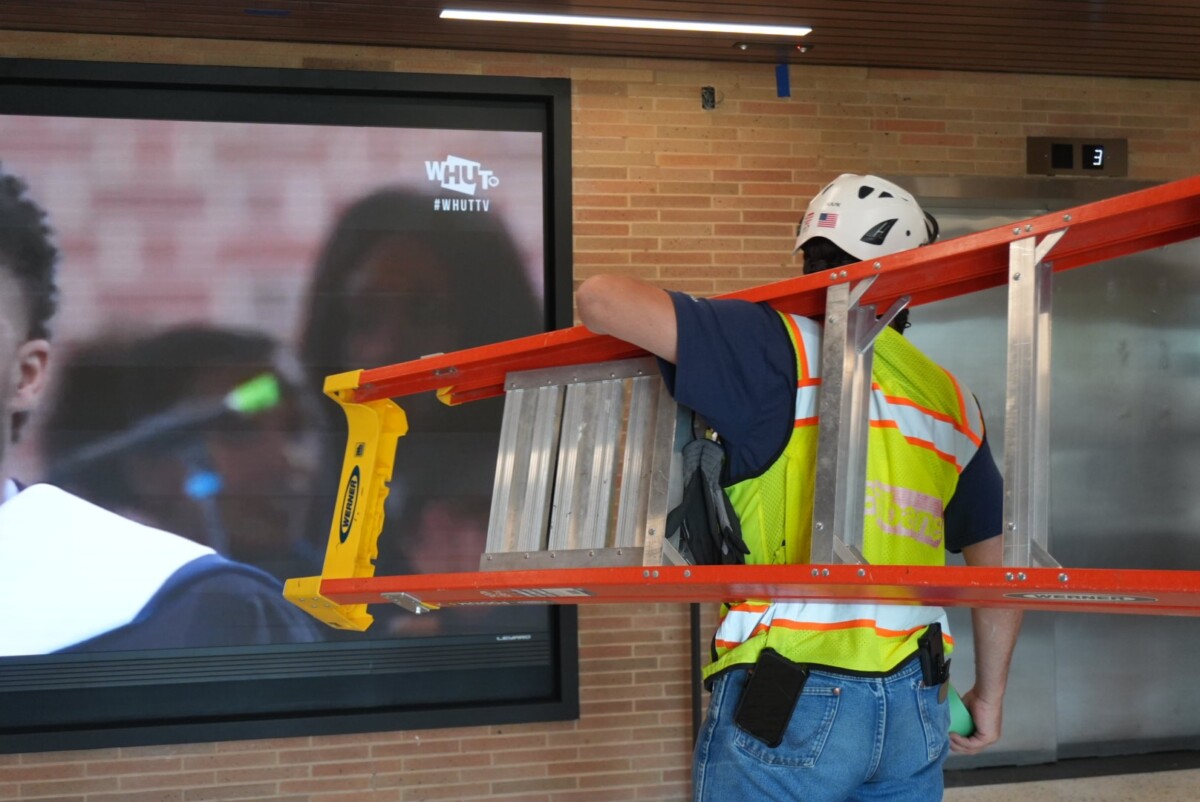
Students in the Chadwick A. Boseman College of Fine Arts (CABCoFA) returned this fall expecting to resume life inside Lulu Vere Childers Hall. The move back, however, happened in stages.
Some students say the phased renovation has disrupted classes and access to facilities over three semesters, beginning at the start of last school year. By September 2026, renovations to the first three floors and elevator of the four-level Childers Hall were complete, while work continued in the basement, according to Howard University’s Real Estate Development & Capital Asset Management (REDCAM).
Raquel Monroe, dean of the CABCoFA, said community partnerships allowed the college to continue instruction outside its usual facilities during the renovation.
“We have to turn D.C. into our campus,” Monroe said. “Fortunately, we have good community partners that we’re able to engage with.”
During the renovation, Theatre Arts students used the Oddfellows building, about a 15-minute walk from Childers Hall. Music students practiced at Vermont Avenue Baptist Church, about an 18-minute walk away. Dancers trained at the Dance Institute of Washington, reached by roughly a 12-minute ride on Howard’s West Campus shuttle, followed by an additional eight-minute walk.
Howard’s August 2025 renovation announcement outlined a phased schedule, with completion initially targeted for the same month for third-floor music facilities, December 2025 for second-floor art facilities, May 2026 for first-floor theater spaces and December 2026 for the basement.
Howard’s REDCAM website previously listed the 2027-28 academic year as the expected date for Childers Hall to fully reopen. After The Hilltop asked about the conflicting information, Jordan Catoe Strudwick, REDCAM deputy director of communications and archives, confirmed the error in a written response.
“We identified incorrect occupancy information on a university web page,” Strudwick said. “Full occupancy is expected in spring 2027, rather than the 2027-28 academic year previously listed.”
REDCAM said the official construction timeline had not changed. The dates Howard previously published referred to different phases of the renovation, rather than when the entire building would be ready for students. While the first-floor theater spaces are complete, the basement, which also contains spaces used for theater classes, remains under construction. The Hilltop requested the completion dates for each floor from REDCAM but was not provided the information in time for publication.
Students, however, described a different problem. They said communication from the college about when they would return to Childers Hall was inconsistent and sometimes unclear.
Kevoy Somerville, a senior acting major from Waterbury, Connecticut, said college leadership had outlined the renovation timeline during meetings with students, indicating they would return to Childers at the beginning of the fall 2026 semester.
On Aug. 17, Somerville said he and his classmates arrived for a 10 a.m. class expecting to use their assigned space in Childers Hall, only to find construction still underway.
At 10:17 a.m., after his class had begun, the Department of Theatre Arts emailed students that classes scheduled in the Al Freeman Environmental Theatre Space, Ira Aldridge Theatre and Smart Room would be held virtually for the week.
“My professors were blindsided,” Somerville said, adding that his instructors learned about the change at the same time as students.
Somerville said his class initially met virtually for approximately a week and a half before moving to Oddfellows for roughly two weeks. Students then began returning to Childers as individual theatre spaces became available for classroom use.
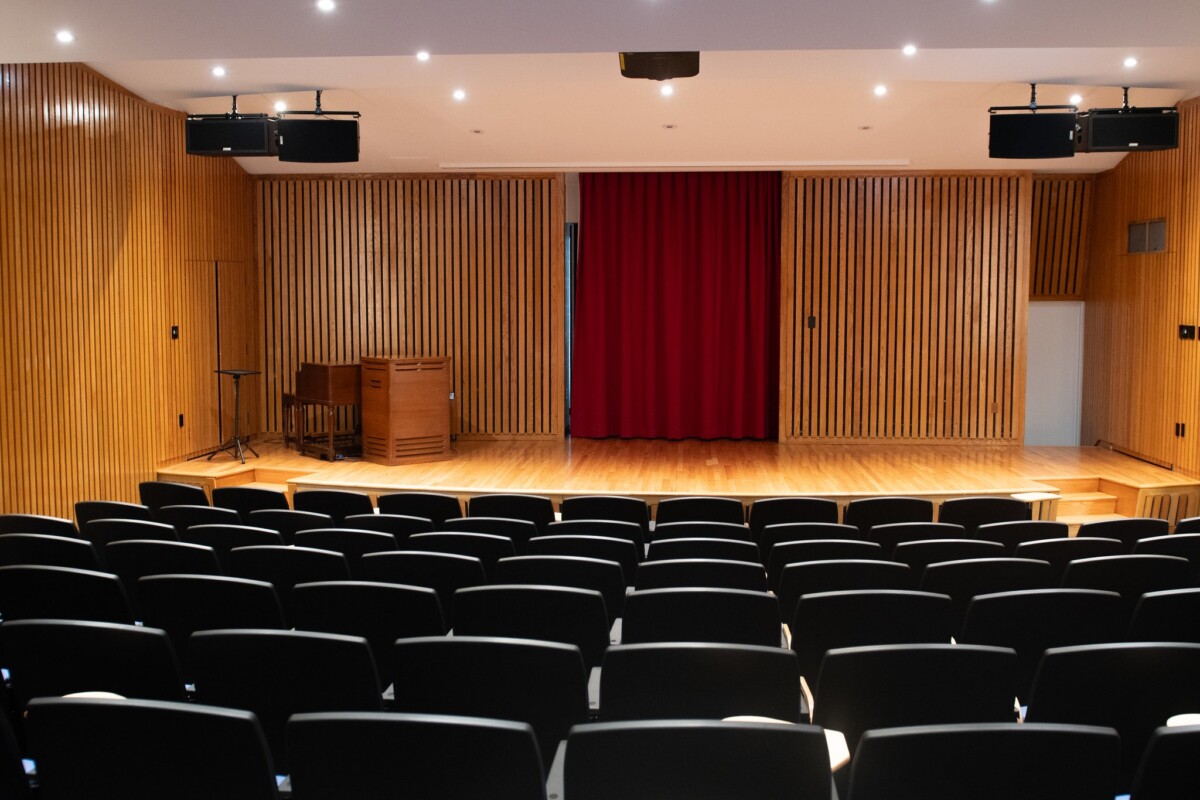
“If your class is in the environmental theatre space, you can come back and have class here,” Somerville said. “If it’s in Ira, you’re still going to have to wait.”
Although acting-focused classes have since returned to Childers, Somerville said some of his other courses continue to be held at Oddfellows.
William Webb, a senior musical theatre major from Atlanta, said classes he expected to take in Childers were listed at Oddfellows in BisonHub, Howard’s online student portal used to register for classes.
For Joshua Morris, a freshman musical theatre major from Miami, the renovations are all he has known of Howard’s Fine Arts facilities. Unlike upperclassmen who remember attending classes in Childers before construction, Morris has had to adjust to changing class locations while still learning his way around the college.
“Sometimes the program can be a little unorganized,” Morris said.
Morris said clearer, more direct communication from the college would help students adjust to the changes.
“I just think being more clear and direct,” he said of what would help students adjust.
Beyond the uncertainty surrounding their return, some students said they have lost experiences that cannot be reproduced in a classroom or temporary space.
Theatre Arts students went without their normal production season during part of the renovation. Students continued performing through class assignments, staged readings and student-led work, but Somerville said those experiences could not fully replace a production.
Denise Joy Hart, a professor and coordinator of playwriting, stage and screen, described the effect of losing access to the department’s usual performance facilities.
“Being out of our theater laboratory spaces and not regularly producing and presenting public facing plays has caused a hardship for the students,” Hart said. “It disrupts their training as actors, administrators and technical theater practitioners.”
Somerville said that while students continued performing through class assignments and staged readings, those experiences couldn’t replace being part of a full production.
“There’s nothing that can replace the essence of auditioning for a thing and getting into a full production,” Somerville said.
For acting students, losing an entire production season narrowed their opportunities to perform in a College of Fine Arts production. Somerville said acting students cannot be cast during their first semester, and auditions are open to students across Howard University, not just theatre majors.
Somerville performed in a college production during his sophomore year.
“I have some friends who have been here for four years who might graduate having never done a College of Fine Arts production,” he said.
Students have raised their frustrations about the renovations with their department chairs, the dean said. She said she hoped the departments had been responsive to their concerns.
“I understand how their time at Howard University is finite,” Monroe said.
Monroe also said the college made decisions based on what students need now while also thinking about future generations.
“We’re all trying to make decisions based on that urgency and based on 10 years from now,” she said.
Despite those losses, Hart said the disruption has not lowered expectations for either students or faculty.
“The standards remain the same,” Hart said. “And the rigor of teaching…remains the same.”
Meeting those expectations, however, has become more difficult for students who need dedicated spaces to rehearse and practice while renovations continue, according to Janay Williams, a sophomore musical theatre major.
“We don’t have any practice rooms,” Williams said. “As for musical theatre majors, we need the space to practice because we’re singing, or dancing or acting.”
Rehearsing in her dorm was not a practical alternative, Williams said, because her roommates, who are nursing majors, also needed a quiet space to study.
“I don’t want to be belting in my dorm,” she said.
The move to temporary facilities also changed how students accessed rehearsal rooms. Webb said musical theater, music and acting students often had difficulty finding available rehearsal rooms at Oddfellows.
Webb, who served on the College of Fine Arts student council last year, said some rooms were locked, and this year’s council had to ask for greater access.
At Oddfellows, Williams said practice rooms had to be reserved in advance, unlike at Childers, where students could sign in and use an available room.
The restrictions meant students could not always practice when they needed to. Webb said students sometimes had to find empty classrooms, use lobbies or rehearse at home to complete assignments. The limited access also made him more disciplined about finding time to practice, he said.
But for Webb, the challenges of the renovations haven’t defined his entire experience.
“I think it’s the students and the professors that are making a way for us to be successful,” Webb said.
Some students have also created their own opportunities to perform. Howard Players, the student theater organization, is staging “John Proctor Is the Villain” and “Choir Boy” this semester, with “Funnyhouse of a Negro” planned for spring, Somerville said.
Others have looked beyond the college for opportunities. Webb participated in student showcases and fashion shows during his time at Howard.
Somerville said the experience has reinforced the importance of creating opportunities in an industry where they may not always be readily available. But that determination has also come with frustration.
“We’re gonna do it ourselves because sometimes there’s this feeling of ‘They failed us. We have to do it,’” Somerville said.
For freshmen like Morris, who have never experienced the college without construction, adapting has become part of their introduction to Howard.
“Things are not going to slow down because I need to take a second to change,” Morris said.
Morris said he sometimes has just 10 or 20 minutes to move between classes in different buildings. He has built a routine around those transitions, and the experience has also brought his freshman cohort closer together, he said.
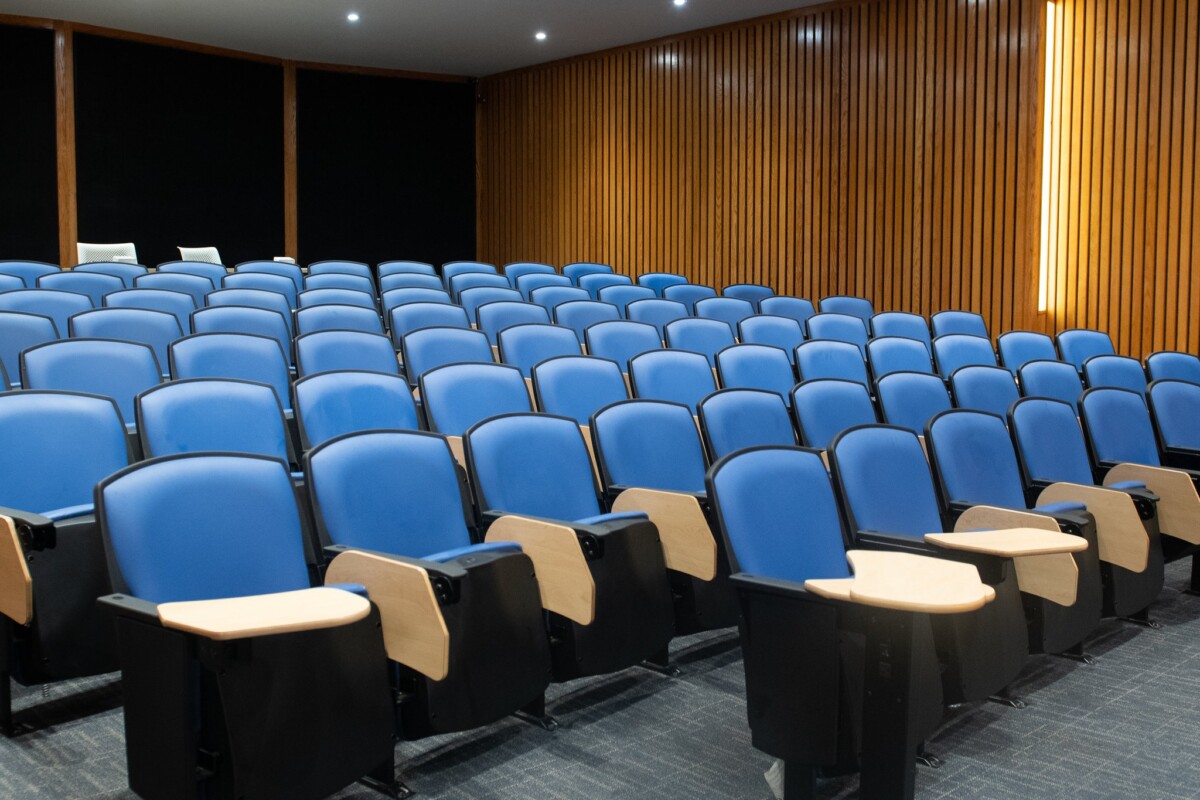
Howard’s plans for Fine Arts facilities extend beyond the current renovations to Childers Hall and Ira Aldridge Theatre.
The university’s 2020 Central Campus Master Plan proposed a new Fine Arts and Communications center. The Hilltop previously reported that Strudwick said Howard determined in 2024 that executing the full plan for a merged facility would require an additional $200 million to $300 million in funding that was not then available.
“The project is suspended at this time,” REDCAM wrote in an Oct. 5 statement to The Hilltop. “Fundraising is ongoing in support of realizing the broader vision outlined in the 2020 Central Campus Master Plan.”
While the broader project remains on hold, students are returning to spaces that hold generations of Howard’s artistic history.
Among those historic spaces is the Ira Aldridge Theatre, which stands beside Childers Hall. Renovations to the theater were completed Sept. 8, REDCAM said, and the theater was back in use that month.
“Ira was essential because it really helped to solidify Howard’s position in the canon of Black theater production in the country,” Hart said.
Hart, a Howard Theatre Arts alumna, recalled a period during her own time as a student when Ira Aldridge Theatre was unavailable for roughly a semester. Although the current disruption has lasted longer, she said the expectation to continue creating remained.
Hart later became president of Howard Players in 1996. That spring, the organization’s theme was “Continuing the Legacy.”
Years later, she created the Howard Players Theatre History Archive, documenting the organization’s history from 1909 to 2019.
For Somerville, preserving that legacy also means hoping future students will have opportunities that his class did not.
“I hope that the next people who come behind me get so much more than I did,” Somerville said.
Copy edited by Daryl R. Thomas Jr.