When the 14th Amendment was ratified in 1868, it was meant to answer a question the nation had long avoided: What makes an American?
In the wake of slavery and in direct response to Dred Scott v. Sandford — which declared that Black people could not be citizens — the amendment established that anyone born in the United States is a citizen.
It was a promise. One rooted in correction, in repair, in recognition.
More than 150 years later, that promise is back before the U.S. Supreme Court.
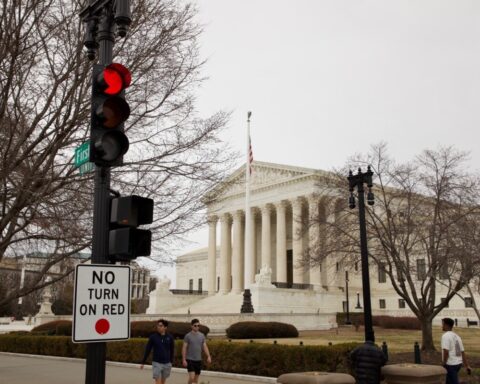
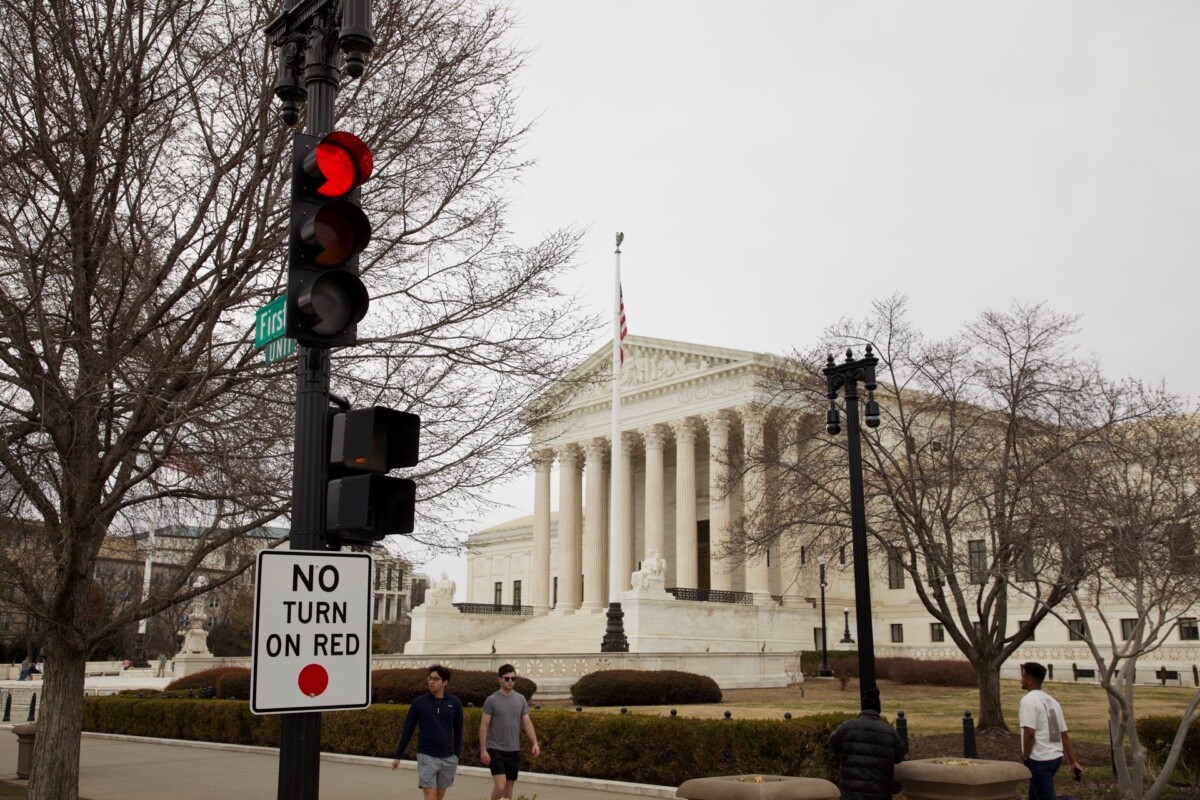
On Wednesday, justices will hear arguments in Trump v. Barbara, a case that could redefine birthright citizenship and test the limits of presidential power.
For generations, the citizenship clause of the 14th Amendment has been understood to grant automatic citizenship to nearly all people born on U.S. soil, regardless of their parents’ immigration status.
That interpretation was solidified in United States v. Wong Kim Ark, where the court ruled that a man born in the U.S. to Chinese immigrants was a citizen.
Now, that precedent is being questioned.
At the center of the case is an executive order signed by President Donald Trump on Jan. 20, 2025 — his first day back in office.
The order, titled “Protecting the Meaning and Value of American Citizenship,” argues that birthright citizenship was never intended to apply to children of undocumented immigrants or temporary visitors.
If enforced, it would deny citizenship to those children moving forward and direct federal agencies not to recognize them as U.S. citizens.
From Executive Order to Constitutional Showdown
The policy was challenged almost immediately.
Civil rights organizations, including the American Civil Liberties Union and the NAACP Legal Defense and Educational Fund, alongside immigration advocacy groups such as the National Immigration Law Center, filed lawsuits within days of the order’s signing. A coalition of states — including California, New York and Illinois — also brought legal challenges, arguing the policy violated the Constitution and longstanding federal law.
Federal district courts moved quickly to block enforcement of the order, citing precedent and raising concerns about executive overreach, according to court filings and reporting from SCOTUSblog. Appellate courts later upheld those injunctions. After those rulings, the Trump administration appealed to the Supreme Court, which agreed in December 2025 to hear the case on an expedited timeline, signaling the national significance of the dispute.
At its core, the legal question is not just about immigration policy.
It is about power.
Can a president reinterpret the Constitution through executive action?
Or does changing the meaning of citizenship require Congress — or even a constitutional amendment?
The Person Behind the Case
The “Barbara” in Trump v. Barbara is not a public figure, and very little personal information about her has been shared publicly. That understanding comes from the case’s official court filings — the legal documents submitted by both sides.
Those filings identify Barbara as a named plaintiff in the case, meaning she is one of the individuals bringing the legal challenge against the executive order. While the documents outline her role in the lawsuit, they do not widely disclose personal details about her life. That is not unusual. In immigration-related cases, plaintiffs often limit what information is made public due to concerns about privacy, safety and potential legal consequences — a practice reflected in cases like Plyler v. Doe, where undocumented children were identified anonymously to protect them and their families.
What those records do make clear is that this case is not only a legal fight between the executive branch and the courts. It is also driven by individuals whose lives could be directly affected by how the law is interpreted. While the case carries the name of a president, its impact is felt most immediately by people like the plaintiff at its center.
If the court sides with the administration, future children born in the U.S. may not automatically be recognized as citizens. Families could face new legal uncertainties, and federal agencies would be required to change how they issue and verify citizenship documents.
But for many, the implications run deeper than policy.
The Bigger Picture
The 14th Amendment was not written with immigration in mind as it is debated today. It was written to ensure that Black Americans — newly freed from slavery — would be recognized as citizens in a country that had long denied their humanity.
That history is not separate from this case. It is the foundation of it.
As the justices prepare to hear arguments, the outcome remains uncertain — but what is at stake is not.
At the center of Trump v. Barbara is a constitutional guarantee meant to settle who belongs in this country.
The question now is whether that guarantee can be narrowed by executive power.
And if it can, what does that mean for those whose citizenship has always depended on that promise holding firm?
For Black Americans, whose citizenship was once explicitly denied, and for immigrant communities whose place in this country is still contested, this moment carries a weight that extends beyond the courtroom.
It is history, revisited in real time.
Keith Golden Jr. is a reporter and visuals editor for HUNewsService.com.