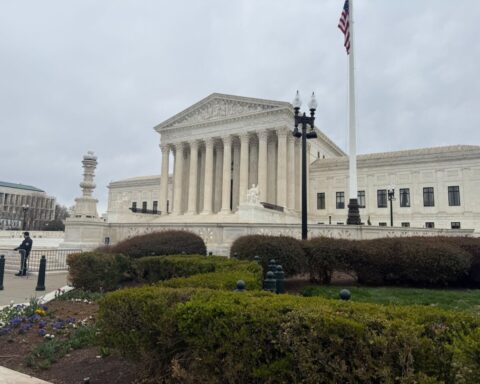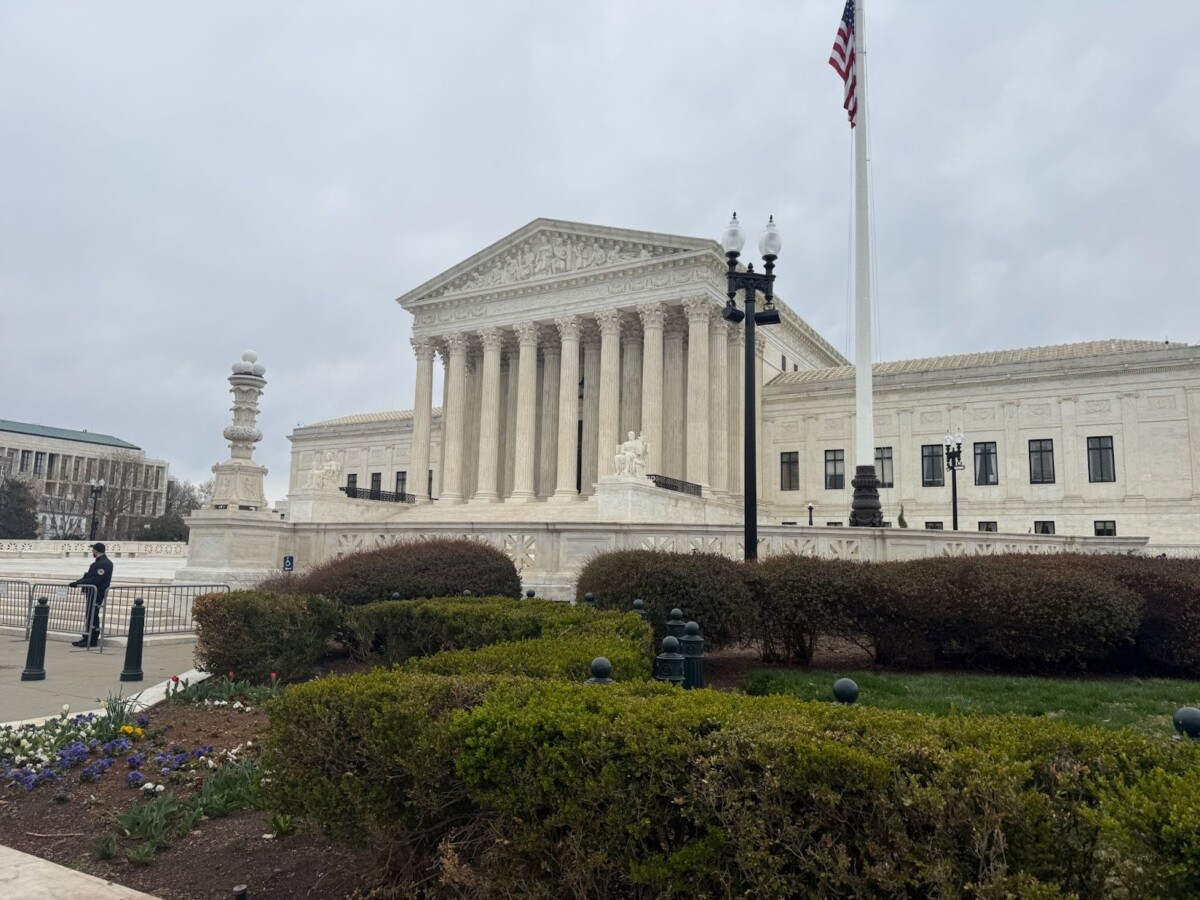
Inside the Supreme Court of the United States, a case that began with delivery drivers and bread shipments quickly grew into a landmark debate about work, commerce and the modern economy.
At the center of the argument is a deceptively simple question: Who qualifies as a transportation worker engaged in interstate commerce?
The answer could determine whether thousands of delivery drivers across the country can take their employers to court or be forced into private arbitration.
The dispute stems from delivery drivers who transport goods from distribution centers to retail stores. They do not cross state lines themselves, but the goods they carry often have.
That distinction has become the fault line in a broader debate about how to interpret long-standing federal law in the context of complex supply chains.
Under the Federal Arbitration Act, certain transportation workers are exempt from arbitration requirements. Companies cannot force employees who fall into that category into private arbitration in disputes over workplace issues.
The court must now decide whether that exemption applies to so-called last-mile drivers, workers responsible for the final leg of delivery after the goods have already traveled across state lines.
The case reached the Supreme Court after lower courts applied conflicting interpretations of the law. At issue is the meaning of the words “engaged in interstate commerce” and how those words apply to workers whose jobs are part of a larger commercial network.
During oral arguments on Wednesday, the justices heard two sharply different frameworks. The dueling interpretations reflect a broader tension between a modern, interconnected economy and a statute drafted almost a century ago.
Jennifer D. Bennett, representing the respondent, urged the court to adopt a broader understanding of interstate commerce.
In her view, the question is not what part of the journey an individual worker completes, but whether the goods involved remain part of an interstate journey.
“As this court recognized,” Bennett told the justices, “interstate commerce does not end when goods cross a state line. It ends when they reach their final destination.”
She emphasized that interstate commerce is not merely the moment goods travel across borders but a broader process that continues until the commerce at issue is complete.
Under that framework, last-mile drivers who deliver goods like packaged bread to retail stores are part of interstate commerce because they complete the final leg of a journey that began in another state.
The focus, Bennett argued, should be on the movement of the goods themselves, not on whether the individual worker ever physically entered a neighboring state.
Several justices engaged with this reasoning. Justice Ketanji Brown Jackson said that the key concern may be whether the shipment remains part of a broader interstate flow.
“The determining circumstance,” she said, “is that the shipment remains part of a broader interstate flow.”
Her comment reflected a central point in Bennett’s argument that the connection to interstate commerce should be measured by the economic journey of the goods and not the specific geographic path of the worker.
On the opposite side, attorney Traci L. Lovitt, representing the petitioners, pushed for a narrower interpretation rooted in the worker’s direct activity.
Lovitt argued that the statute should only cover workers who are actually engaged in cross-border transportation or who handle goods in vehicles that cross state lines.
“You move a good across a border. You load it. You unload it. That is where transportation begins and ends,” Lovitt said.
Her position was that the exemption should only apply to workers whose duties involve actual cross-border movement, rather than to those whose work comes after that movement has finished.
Much of the court’s questioning revealed discomfort with how difficult the broader approach might be to apply in practice. Chief Justice John Roberts Jr. raised a practical concern about the endpoint of interstate commerce in the broad framework.
“Why is the ultimate destination not the person who eats the bread?” he asked.
He highlighted the complexity of modern delivery systems, where goods often pass through multiple intermediaries before reaching consumers.
Roberts’s question underscored the challenge of defining a clear, administrable rule when goods can travel through several stages before arriving in their final form. He suggested that, under the respondent’s approach, the interstate journey could extend indefinitely, potentially covering activities far removed from traditional notions of interstate commerce.
JusticeAmy Coney Barrett echoed that concern, noting that a broad test could quickly become a fact-heavy inquiry requiring courts to untangle what employers intend, how contracts are structured and how supply chains are organized.
“It seems to me,” she said, “that the further question depends on what is pretty complicated.”
Her point reflected a worry that without a firm limiting principle, courts could be left sorting through individual contracts and business arrangements in each case, undermining the clarity that arbitration law was intended to provide.
Justice Brett Kavanaugh suggested that the case might hinge on how to define the relevant class of workers. He explored a formulation that could include “workers who perform an intrastate leg of an interstate journey” as a way to describe the group at issue.
His questions reflected an effort to find a middle ground between broad inclusion and rigid limitations. By focusing on how to categorize workers based on their role in the larger transportation process, he pointed to the difficulty of drawing bright lines in an economy where work frequently crosses conventional boundaries.
Throughout the arguments, justices also returned to precedent. Bennett pointed to 1,925 cases that interpreted “engaged in interstate commerce” to mean work that is part of a larger commercial journey, even if the individual worker did not directly cross state lines.
She cited cases involving railroad workers whose duties were held to be part of interstate commerce, because the freight they handled was destined for another state.
Lovitt countered that those cases did not control the interpretation of the Federal Arbitration Act, because the statute uses specific language about engagement in transportation.
At one point, Justice Neil Gorsuch suggested that the court might resolve the case by answering just one question: whether the proposed bright-line rule should be adopted. He asked whether the court could simply decide that the exemption applies only if a worker either physically crosses state lines or interacts with a vehicle that does.
Both sides confirmed that such a straightforward question could be dispositive. But the surrounding discussion revealed the deeper complexity underlying what might otherwise seem like a simple test.
The implications of the case are far-reaching. If the court adopts the broader interpretation advocated by Bennett, more workers, especially in logistics, warehousing and delivery, could fall under the arbitration act’s exemption. That would allow them to bring claims in court rather than being bound to arbitration clauses in their contracts.
If the narrower view prevails, companies may retain the ability to require arbitration agreements for a wider range of workers. That would limit those workers’ access to litigation and keep more disputes within private arbitration systems.
The distinction is especially significant in an economy increasingly powered by gig work, e-commerce and decentralized supply chains.
From warehouse employees to app-based drivers, millions of workers could see their legal rights shaped by the court’s interpretation of a phrase that has been part of federal law for nearly a century.
At its core, the case is not just about bread deliveries and distribution routes. It is about whether the law will adapt to the realities of a modern economy or remain anchored to a narrower, more traditional understanding of work.
The court’s decision will have consequences for workers, employers and the future of employment law in an era defined by rapidly evolving labor markets.
Grant Roundtree is a reporter for HUNewsService.com.