On March 16, 1827, the first Black newspaper, Freedom’s Journal, was founded with a mission to educate and uplift the Black community through reporting. At a time when our stories were often distorted or ignored, it created space for Black voices to tell their truths — setting a precedent for Black journalism that still resonates today.
In its first issue, the editors wrote: “We wish to plead our own cause. Too long have others spoken for us. Too long has the public been deceived by misrepresentations of things that concern us dearly.”
At a time when people were killed for learning how to read or write, these men had the audacity to tell the truth about what Black Americans were experiencing.
That mission still holds true today.
With the rise of social media has come the rapid spread of misinformation. Research published in the journal Science found that false information spreads significantly faster and reaches more people than truthful reporting online. In a digital era where narratives can be shaped in seconds, the responsibility of journalists has intensified.
At the same time, the First Amendment feels increasingly under pressure, and Black journalists continue to face scrutiny and barriers while simply doing their jobs. The mission is just as important now as it was at the founding of Freedom’s Journal.
Recently, I was asked whether Black journalists are activists. I disagree. I was taught that the role of a journalist is to be an advocate for truth. The real activists are the people in the community fighting for change — our job is to amplify their voices.
However, being a Black journalist is inherently political. Our existence has been politicized since our ancestors were brought to this country in 1619. To show up as we are, in the spaces we occupy, doing the work we do, is to challenge the status quo. Journalists may not be activists, but our presence can be a form of activism.
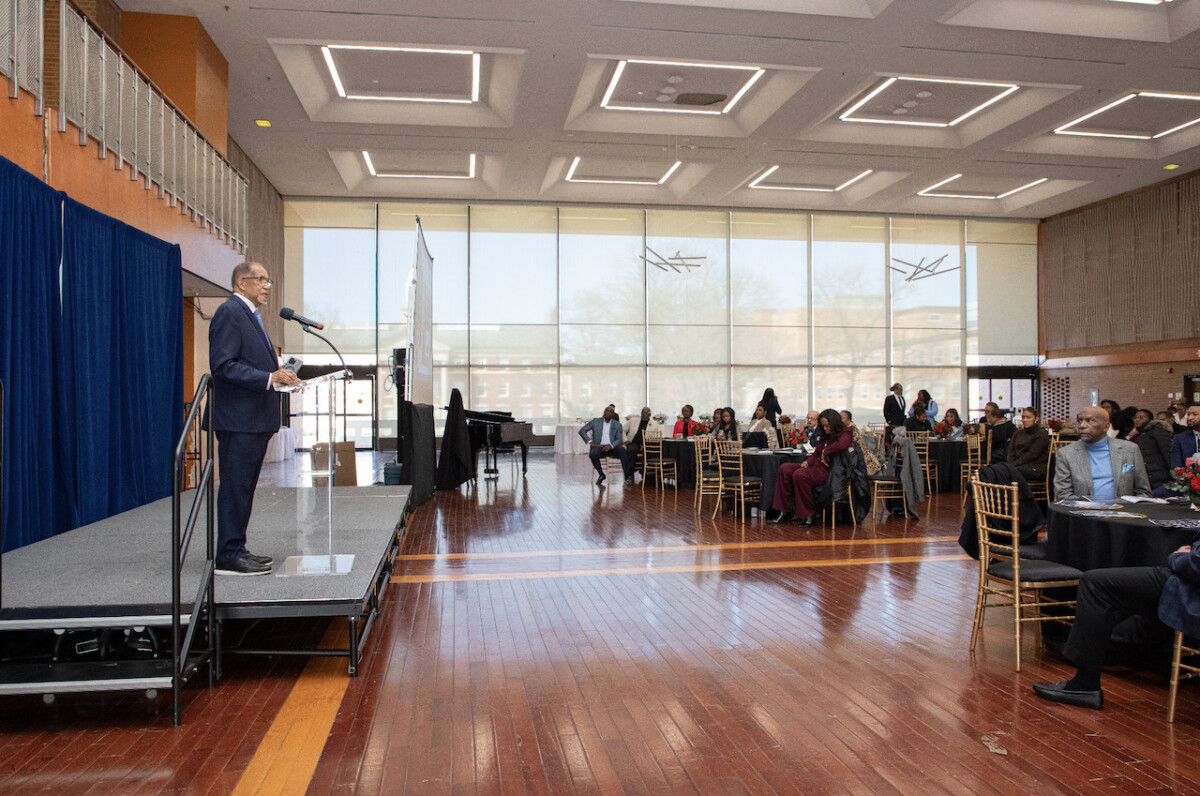
That reality became even clearer to me recently when I found myself in a room filled with generations of Black storytellers who have dedicated their lives to advancing our people. I made it a point to thank everyone I spoke with, because their work made my presence in that room possible. They crawled so I could fly, and I will always carry that gratitude with me.
As I networked, I felt seen. These professionals recognized something in me — a fire, a purpose. They told me I had something within me that could make a difference. For someone who has struggled to find his place in the world, that affirmation felt almost divine.
That moment reminded me why I chose this path — why I chose to be a Bison.
I want to make the world a better place through storytelling. I believe I have a voice and the mindset to use it to create impact. Journalism called me because, historically, our people have not been properly represented in the media. I want to help change that narrative.
When I say change the narrative, I don’t just mean how others see us. I also mean how we see ourselves.
I come from a place where being a scholar was looked down upon. A place where I felt pressure to shrink myself to fit in. A place where many believed sports or music were the only ways out. I want to show young people that creativity, storytelling and intellectual curiosity are also paths forward — paths that can transform lives and communities.
I often think back to a sermon I heard at New Bethel Baptist Church near Howard. The pastor, Rev. Dr. Dexter Nutall, spoke about the Apostle Paul writing from a jail cell — imagining a world beyond his confinement. That message stayed with me. My work is rooted in that same idea: the ability to imagine something beyond present circumstances and bring it into existence.
That is what storytelling is. That is what journalism can be.
So, to anyone reading this: Keep creating, keep questioning and keep imagining. Have the audacity to envision a world our ancestors were denied.
The world can be cruel, but you still have power — power over your voice, your vision and your path.
Use it.
Keith T. Golden Jr. is a reporter and visuals editor for HUNewsService.com.