This is an opinion piece by a Hilltop columnist.
Generation Z is America’s most diverse generation and the first to grow up fully immersed in a digitally connected world. For many of us, smartphones and social media have been constants for as long as we can remember. These platforms offer an easy way to share our experiences, celebrate our diversity, and find community.
But that connection comes at a cost. Social media has made constant sharing feel almost necessary, even as we become increasingly aware of the risks of putting our lives online. When a platform becomes integral to how we communicate and understand the world, stepping away is not so simple.
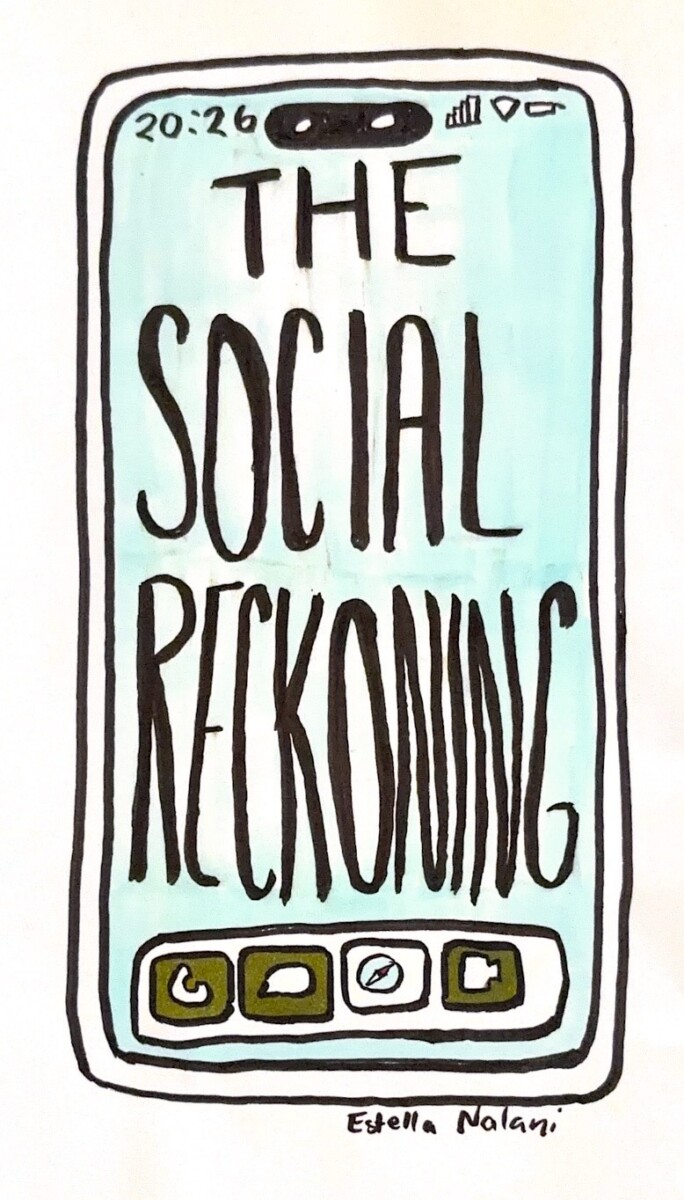
In Aaron Sorkin’s “The Social Reckoning,” this dependence takes center stage. Through Facebook’s treatment of user data, the film examines how technology companies can exploit our desire for connection while framing their pursuit of profit as a public good.
For Gen Z, the film is not simply a warning about social media addiction, but a reminder that the companies shaping our online lives are not working in our best interests.
“The Social Reckoning” follows former Facebook data scientist and whistleblower Frances Haugen, played by Mikey Madison as she exposes the company’s alleged misuse of consumer data. Her concerns include the spread of misinformation and the damage Facebook’s platforms can inflict on teenage girls’ mental health.
Yet the film’s most important revelation is not simply that Facebook’s technology can cause social and psychological harm to its users. It is that such harm is compatible with the company’s primary business objective: profit.
“The Social Reckoning” depicts that Facebook CEO Mark Zuckerberg, played by Jeremy Strong, implemented a change to the platform’s algorithm knowing it would increase engagement and reshares by 50%, despite the likelihood that the content users shared most would contain misinformation and polarizing material.
With this decision, Zuckerberg knowingly sacrifices Facebook’s original mission of connecting people in pursuit of greater profits.
But the implications of this decision extend beyond the film. In the real world, social media companies face similar incentives to maximize engagement, keeping users scrolling, sharing and returning to their platforms.
What Zuckerberg understood is that in order for new technology to become fully integrated into society, it has to be accepted by us, young people, the ones who will continue to use it decades later. And the more dependent users become on a platform, the more valuable their attention and information become to the company that owns it.
It was our decision to share so much information with Zuckerberg and Meta, to make them so powerful, believing they wouldn’t use our information to hurt us and enrich themselves. And that was naive.
The same profit-driven logic now extends beyond Facebook, as artificial intelligence companies compete to make their own products just as indispensable to our daily lives. Sam Altman, the founder of OpenAI, the company behind ChatGPT, has helped popularize a technology that is rapidly changing how people learn, work and access information. Meanwhile, policymakers are struggling to establish effective oversight as these tools become integrated into everyday life.
Like Zuckerberg, Altman is willing to sacrifice the common good for profit under the guise of improving our quality of life. Altman acknowledged the potential trade-offs in an interview with POLITICO, saying that those at OpenAI “believe that the world should accept some bad things happening for the benefits of this technology.”
These “bad things” that Altman speaks of, like the continuous spread of misinformation and AI dependency, will happen to our generation unless we act. We can be more deliberate about the information we share on online and AI platforms. We can question the answers these tools provide rather than accept them as fact and recognize that we can choose to stop using them altogether.
But it is important to realize that individual caution cannot substitute for corporate responsibility. Users cannot independently audit algorithms, control how companies retain their data or determine the safeguards governing technologies used by millions. That is why “The Social Reckoning” matters. The film asks us to look beyond the conveniences of technology and critically examine the interests of the people who control it.
As Haugen warns in the film, the tech industry is willing to “grow at all cost, buying its profits with our health and safety.” We should take that warning seriously. Unless we become more deliberate about what we share with these companies, we risk compromising our well-being, our freedom and our ability to connect with one another as human beings.
Copy edited by Jori Johnson