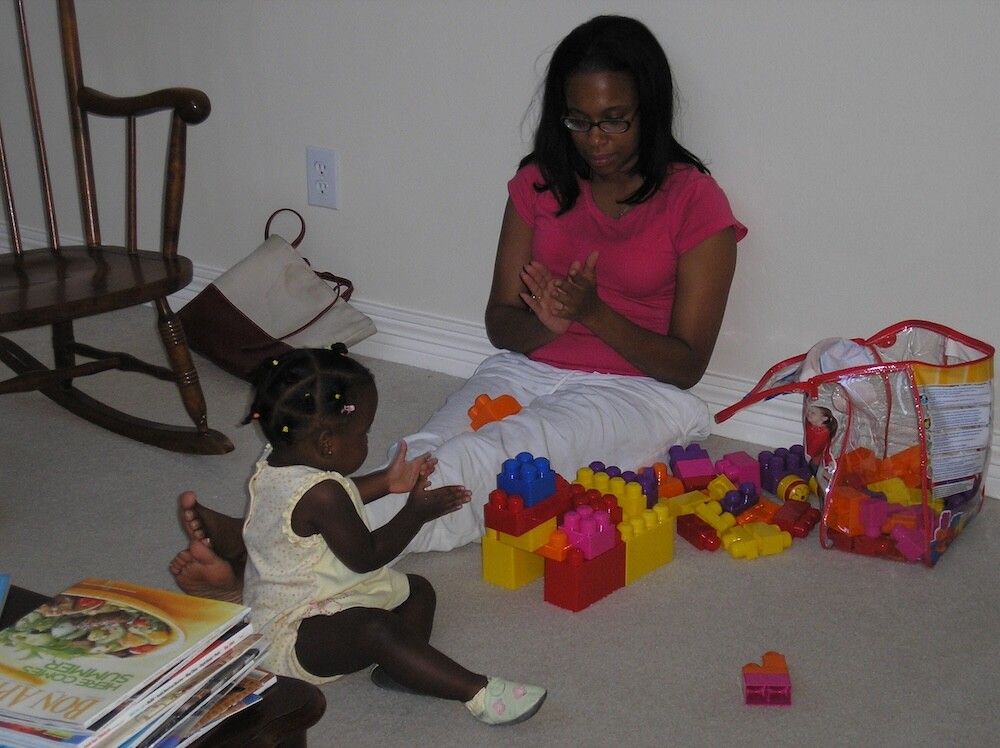
Joelle Bowers gripped her 18-month-old daughter as the first bands of Hurricane Katrina tore across the streets of Louisiana. Traffic crawled. Gas stations were empty, the air was heavy, and the wind rocked her car like a cradle from hell.
“I couldn’t risk it,” Bowers said, recalling her decision to evacuate. “I couldn’t be in a house with her, no air conditioning, no water, no food.”
Every turn on the road was a choice between life and disaster.
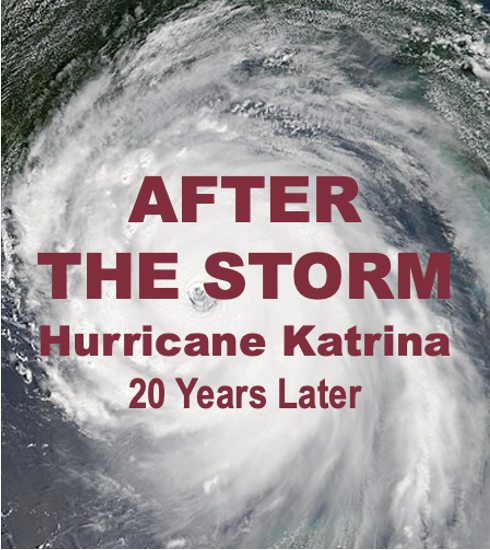
Bowers remembers exactly where she was the day Katrina became a Category 3 hurricane. A fresh attorney, she sat in a salon chair, briefcase resting on her lap as she prepared for her first court case.
The hum of blow dryers and chatter around her faded as she glimpsed the swirling storm gathering over the Gulf of Mexico on the news. Perfectly formed, massive and impossible to ignore.
“I had never seen anything like that in my life,” Bowers said. “I thought, ‘Oh my goodness! This is not gonna be good.’”
At that moment, the storm became more than a distant headline. It forced a decision she could not postpone.
The weight of the storm fully settled when she was back home, standing in her daughter’s nursery.
“Something told me, ‘You are going to leave, and you are never going to return.’ That’s what made me take pictures and things that I could hold onto with my hands,” Bowers said. “I wasn’t thinking about moving out the whole house. I didn’t even have that kind of time.”
She wasn’t the only one forced to make that choice. Her sister and brother-in-law were also preparing to evacuate but together they faced a great hurdle: convincing their grandfather to leave.
For years, storms had swept through New Orleans and left again. Her grandfather had always stayed, unshaken in the house he had built his life around.
Katrina carried a different kind of weight, a heaviness that told them this storm would not pass quietly.
After pleading with their patriarch, they finally convinced him to go, knowing this time was not like the others.
With a few water bottles in her car trunk and her 18-month-old daughter in tow, Bowers stepped into the unknown wearing a T-shirt, jeans and flip-flops.
The long drive to Houston tested her endurance, patience and resolve.
With the wind tearing through the roads, the trees bent as if they were reaching for her and trying to push her off the road. Every sway and snap made her heart leap.
“It felt like my life was threatened,” Bowers said.
Bowers’ maternal focus never wavered amid the looming threat and relentless roar of Hurricane Katrina. Her daughter’s safety and comfort came close.
As floodwaters rose and uncertainty gripped the city, she remained calm and attentive, determined to protect her child at all costs. At one point, her brother-in-law switched cars with her, taking the wheel of the vehicle so she could tend to her daughter in the backseat.
Bowers changed diapers, fed her and did whatever was necessary to keep her baby calm in the chaos.
In the face of disaster, Bowers embodied the unyielding resilience of a mother’s love.
Out of the chaos, a stranger provided a lifeline she’ll never forget. While stuck in traffic in the southern part of Louisiana, desperate and running out of options, she dialed a number printed on a map.
The man on the other end, a local resident, calmly guided her off the congested highway and onto a maze of backroads and cornfields — roads she would have never found on her own.
“He definitely knew that area, and he got us out of there,” Bowers said. “He helped us bypass that traffic. We made it.”
It was a small, selfless act, but one that still lingers with Bowers to this day. That stranger’s unexpected kindness offered without hesitation, without even meeting her, became a defining moment in how she remembers Katrina.
It set the tone for how she approached rebuilding, not just physically but emotionally: with compassion, connection and commitment to showing up for others.
By early morning, she had crossed into Houston where she would stay with a family friend. She was exhausted yet relieved. Not only did she carry her daughter, but also a renewed belief in the goodness of people.
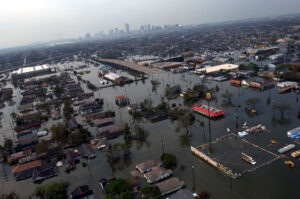
Yet even in Houston, the storm followed her. She didn’t see the water swallowing New Orleans until her sister texted her. Only the native people seemed to know what was really happening, how the levees had broken, how whole neighborhoods were disappearing — including the street where she lived.
“A guy I went to high school texted me later that night,” Bowers recalled. “He said the houses on Warrington Drive are underwater, that they’re flooded to the roof.”
At that moment, it hit her.
“My house is flooded to the roof.”
It wasn’t just a house underwater. It was the nursery she had carefully built, the photographs she couldn’t carry with her. It was the life she had been preparing to live.
All of it erased in a single sentence.
Overnight, Bowers shifted from a young attorney preparing for her first court case to a mother determined to rebuild from nothing.
For her, rebuilding was both physically and emotionally challenging.
After staying with a friend in Houston, Bowers found herself in Washington, D.C., surrounded by friends and strangers alike who quickly formed a web of support, holding her when the ground felt unsteady.
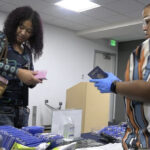
Westmoreland Church, a local church in Maryland, learned of her situation and opened the doors to a whole house while the D.C. Armory provided food and clothes.
With help from the D.C. Armory, she received a new suit for an interview. She eventually chose a position that paid less and required fewer hours, allowing her to remain close to her child while rebuilding their lives.
“I needed the money, so that served its purpose, but I knew it wasn’t going to be forever for me,” Bowers said. “I wanted to have a real relationship with her.”
Bowers could finally breathe.
“I was so grateful to these people,” she said. “It felt like D.C. did this before. They had the system, the people, the nonprofits and the charities. “Between them all, I had enough stuff.”
Throughout her journey, Bowers witnessed how compassion could bloom, sudden and unearned, during a time of disaster.
“I’ve always been there for people,” Bowers said. “When there was a time for me to really need anything, you know, especially in the way I needed, it was there.”
To this day, two decades later, she still reflects on every lesson, every moment.
“You start hearing these horror stories and realize how bad humanity can be,” Bowers said. “But at the same time, there’s this other side to the coin.”
“How beautiful people can be in times of need.”
Bri Outlaw is a reporter for HUNewsService.com.