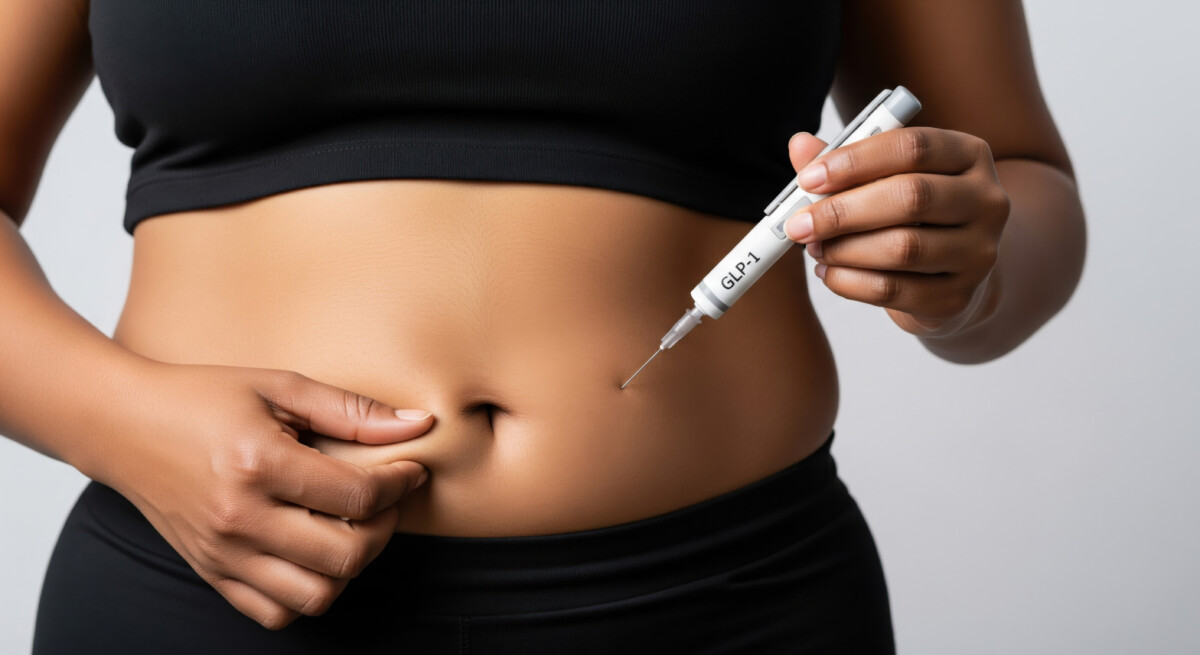
While most children cry at the sight of a needle, many adults today are welcoming sharp injections with open arms when promised a slimmer figure or just the loss of a few pounds.
In the last few years, celebrities and mainstream Hollywood shattered the taboo surrounding the conversation about GLP-1s, which are medications that treat diabetes and help manage weight loss. Personalities from Serena Williams to Oprah welcomed the world into their struggles with weight and how they utilized this alternative method to just dieting.
Many Black celebrities have historically been placed into stereotypical roles because of their weight. On shows like “Moesha” and “The Parkers,” the non-slim friend was often the target of jokes about their size. In turn, this continues a cultural shift audiences see more commonly today in the media. “Wicked For Good” sparked controversy when viewers noticed the cast’s visible weight loss, leading to speculation around utilizing medications like Ozempic. Although co-star Cynthia Erivo has not responded directly to this scrutiny, Grammy Award winner Lizzo revealed that she used GLP-1s, which received mixed reviews.
“The rise of fatphobia and ‘Thin-Tok’ can be very damaging for young people. Especially young women.”
— Vivian Smith, a junior at Howard University
Despite the slowly shifting belief that improving health is meant to reclaim autonomy, societal expectations tend to take hold of the narrative.
The Depression era welcomed its first pharmaceutical weight-loss drug in 1933. In 1968, the Food and Drug Administration successfully ordered injunctions on diet rainbow pills — a mix of amphetamine, thyroid and other medications — after they were linked to the death of 12 women. However, efforts to create a miracle weight-loss drug continued, ultimately leading to the discovery of GLP-1s.
Ava Purkiss, a historian and assistant professor of American Culture and Women’s Studies at the University of Michigan, researched how Black women’s fitness culture from 1900 to the 1930s included a largely overlooked history of intraracial fat shaming and challenged the common assumption that Black communities have always embraced larger body types.
Black newspapers and media frequently portrayed fatness as unhealthy and unattractive, promoted weight-loss products and linked thinness to beauty and respectability. This was also, in part, a response to racist “mammy” stereotypes. This history complicates modern narratives of body acceptance by showing that Black women have long navigated layered pressures of race, gender, class and body stigma.
When it comes to body weight, today’s Howard student creatives encounter pressures similar to those experienced by Black women of earlier generations.
Vivian Smith, a Howard junior passionate about singing, noticed a difference between the weight-loss journeys of Black and white women.
“Something I see with Black celebrities like Lizzo’s transformation is that there will be an emphasis on health and taking care of your body rather than an emphasis on thinness,” Smith said. “However, with white celebrities, I see more promotions on thinness and fitting into certain things to show how thin they look.”
Last August, the American Medical Association reported that consumer spending on GLP-1s rose by 500% in 2023. If not covered by insurance, GLP-1 medication can cost $150 to $1,500 per month. In the country, 25% of buyers utilize the drug with no diabetes diagnosis and the intention of losing weight.
Smith said she understands why consumers are using GLP-1s, but wants them to see it as just an advertisement by a company trying to make money.
“As somebody who has struggled with an eating disorder, I’m very aware of the language that I’m seeing online,” Smith said. “The rise of fatphobia and ‘Thin-Tok’ can be very damaging for young people. Especially young women.”
Lauryn Ciardullo, a senior musical theater major, said she recognizes these underlying tones of body discrimination in Howard’s classrooms.
“There has always been a lot of fatphobia in the performing arts department,” Ciardullo said. “I think the trend of skinniness is going to give professors more of a reason to discriminate against our plus-size students.”
Ciardullo also recognizes the fight for Black people in Hollywood to be their authentic selves in an industry that is notable for oftentimes putting “image” over everything.
“There is so much more praise for Black celebrities when they start taking weight-loss drugs,” Ciardullo said. “It’s almost like the public is thanking them for controlling their weight, whereas body positivity is only awarded to white celebrities.”
For many Black consumers, being able to relate to what is seen in the media is important, but when it becomes one note it’s easy to develop a poor body image.
Adrionna Daguillard, a junior sociology minor and member of a Howard modeling organization, believes that focusing on one’s own health and not trying to fit into any specific boxes outweighs that.
“I think audiences should appreciate things without internalizing them,” Daguillard said. “Admiration is beautiful, and we should admire those around us, but I don’t think we should be so critical of ourselves. I don’t have to look like what anyone expects me to be. That’s more than enough.”
Faith Harper covers culture, lifestyles and trends for HUNewsService.com.