As the nation navigates racial disparities, war in the Middle East and federal attacks on African American journalists, supporters of the Black Press gathered to celebrate its legacy on Wednesday at Howard University.
Journalists, students, educators and justice leaders convened in the Blackburn Center ballroom for Black Press Day, which highlighted excellence, honored legacy and offered a charge to preserve the power of truth-telling.
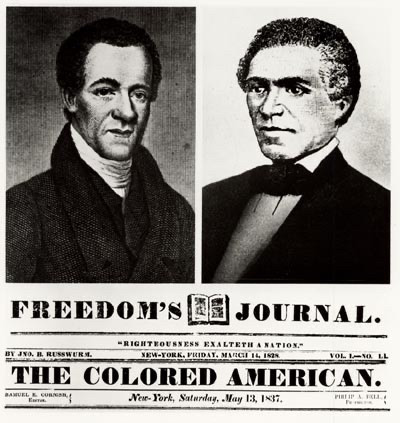
Hosted in collaboration with the National Newspaper Publishers Association (NNPA) Fund and Howard’s Moorland-Spingarn Research Center, the event commemorated 199 years of the Black Press since the founding of Freedom’s Journal in 1827.
“We gather in celebration and reflection, honoring the enduring legacy of the Black Press, which for nearly two centuries served as the voice of our communities, the champion of our stories and a steadfast contender of truth and justice,” Karen Carter Richards, chair of the NNPA Fund and publisher of Houston Forward Times. said in her welcome address.
“Today, we pay tribute to those whose contributions have shaped and strengthened the Black Press across our nation. Their leadership, courage, and commitment inspire us and remind us of the critical role we all play in carrying this mission forward.”
The event was one of many Black Press Week celebrations, which included a Sunday service at Metropolitan A.M.E., a reception at Kitchen + Kocktails and virtual programming.
The intergenerational gathering on Wednesday featured panel discussions, presentations from Howard students, an enshrinement in the Gallery of Distinguished Black Publishers and speeches from various leaders.
Black Newspaper Heritage and The Hilltop’s Footprint
The contributions of Black newspapers in serving the Black community have never been more clear, according to John King Warren, publisher of the San Diego Voice and Viewpoint and board chair of the NNPA, and Benjamin Talton,, Ph.D., executive director of the Moorland-Spingarn Research Center at Howard.
Warren thanked the NNPA Fund for its work in continuing the Black Press’s prosperity, highlighted individuals who have upheld Black newspapers and recognized the Rev. Dr. Benjamin F. Chavis, NNPA President and CEO, for his efforts in elevating the Black Press.
Warren concluded his speech by reiterating the influence of print publications and the necessity of engaging with them.
“At 80 years old, I find that a lot of us are not reading anymore,” Warren said. “We hear all about newspapers, and newspapers are not dead. If they were, billionaires would not be buying them. And so we thank you for being here, we ask for your continued support and we are excited for everything that’s about to take place.”
Talton, who is also a history professor at Howard, rooted his statement in the ideals within the foundation of the Black Press and how The Hilltop, the nation’s oldest Black collegiate newspaper, has shared in its legacy.
Talton described the early Black Press as a “connected tissue” unifying African Americans to the greater African diaspora and providing a platform for Black people to share their stories, voice their truths and exchange ideas.
He claimed that this bridge of African thought resulted in the rise of Pan African solidarity and the popularity of publications including Frederick Douglass’s North Star, Timothy Thomas Fortune’s New York Age and Marcus Garvey’s The Negro World.
“This transnational breach was not incidental; t was the point,” Talton said. “The Black Press gave voice to a diaspora of people who had been severed from a continent. Instead, week after week, that severance was never final, nor defining.”
“At the center of this tradition, literally and institutionally, stood Howard University. And at the center of Howard’s contributions to the Black Press tradition, stood The Hilltop.”
Talton pointed out the newspaper’s diasporic nature and its commitment to supporting the Black community by spotlighting Black culture and the community’s daily experiences. Proclaiming the essence of the university as an international institution and devoted to the academic achievement of all Black people, he also affirmed The Hilltop as embodying that same mission.
“The Hilltop reflected and reinforced that identity,” he explained. “It covered campus life, yes, but it also tracked the wider world, colonialism and independence, Pan-African thought, the struggles of Black people and Brown people everywhere in the world, particularly on the continent. It was a student paper that understood its readers as citizens of the broader African world.”
A Call to Action
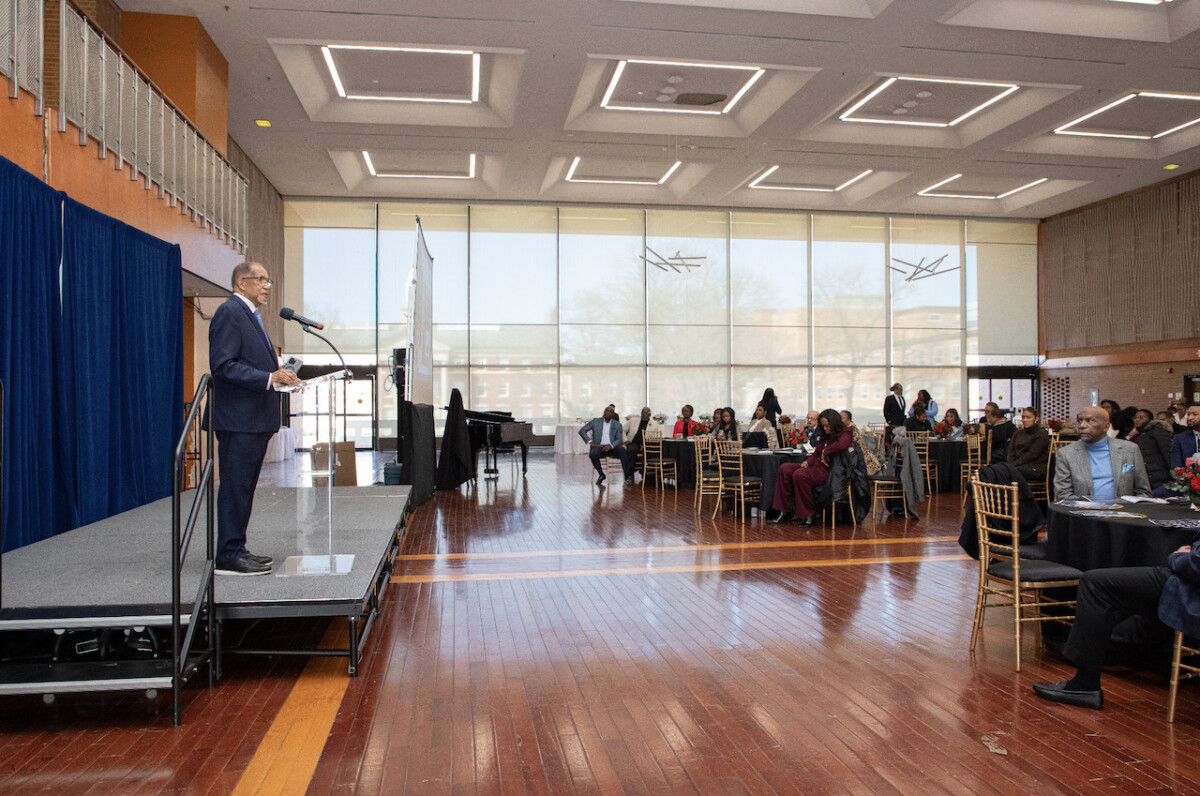
During the “State of the Black Press” address, Chavis issued a strong call for action centered around Black history, the identity of the Black Press and what lies ahead as it relates to young journalists and AI’s potential.
“From its birth in the early 19th century to its present-day digital evolution, the Black Press has stood as a prophetic voice in the wilderness of American democracy — challenging injustice while affirming the humanity and aspirations of African people in the United States and throughout the world,” Chavis said.
Chavis walked the audience through the history of Black slavery and oppression and how the Black Press liberated its community, mentioning how the biblical God helped them persevere through their persecution.
“My first affirmation then of the state of the Black Press in 2026 is that the God of all creation is the God who has been with us for centuries, and that God will not forsake or leave us in the captivity of non-truths, lies, stereotypes and fake ideologies that are running rampant in what is viewed as the houses and places of power, might, and unlimited greed and avaricious conduct.”
He also expressed how Black journalism and advocacy have always possessed a relationship, since the Black Press’s debut in 1827 with Samuel Cornish and John B. Russwurm’s Freedom’s Journal.
“The Black Press of America has never been just about news,” he said. “It has always also been about freedom, justice, dignity and self-determination.”
Moreover, Chavis posed the question to the audience of what realities the Black Press and the Black community are sharing among themselves and are handing down to the generation that comes after them, and if they are liberating or oppressive. He also urged greater emphasis on Black journalism and its impact.
“In our era of misinformation, political division and technological disruption, the role of the Black Press is more vital today than ever before.”
Later in his speech, he addressed the capabilities of AI, noting how the publishing industry is evolving and the Black Press cannot be allowed to be excluded from this progression.
“Emerging technologies, including artificial intelligence, offer powerful tools for growth and sustainability. We need a strategic grasp of how we’re going to innovate. AI-assisted journalism enhances research, data analysis, content production [and] audience analytics. We need to better understand not only who our audiences are, but how we can represent those audiences.”
Chavis also presented a three-part strategy in how to uphold the Black Press. This plan entails allocating resources and time into journalism development programs and HBCUs.
Additionally, he stresses the importance of creating membership pipelines and connecting experienced publishers with the new generation of leaders. The final component is the promotion of youth engagement and involvement in digital media, investigative reporting and storytelling.
“We have an opportunity, as well as a responsibility to raise up a new generation of freedom fighters,” Chavis asserted.
AI and the Future of the Black Press
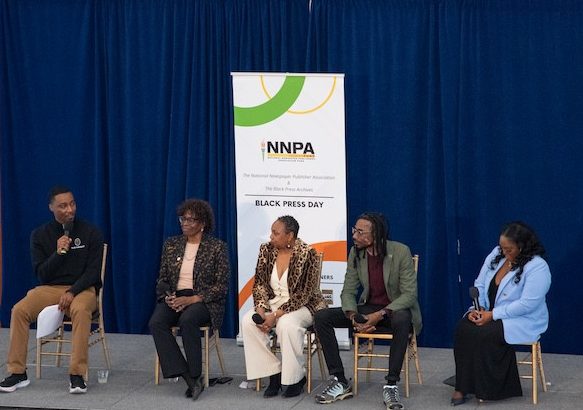
Facilitated by Phil Lewis, deputy editor at HuffPost and president of the Washington Association of Black Journalists (WABJ), the AI Fireside Chat that followed raised questions on how AI can function as a tool for progress, areas of concern, and how this technology can and will shape the content produced by the Black Press.
The panelists, Paris Brown, Ra-Jah Kelly, Ingrid Sturgis and Alexandria Green-Jones, discussed how the technology aided in completing efficiency tasks, content creation and business operations. They also addressed points of vulnerability such as overreliance, accuracy and reliability, and potential job displacement.
Clint C. Wilson II, former journalism professor and associate dean of Howard University’s School of Communications, underscored the dual nature of AI in shaping the Black Press.
“It can harm the same way it can harm the mainstream media,” Wilson said. “You always have a concern about having your information being used and distorted in another way than it’s intended for our audience. That’s always going to be an issue. … [However], the Black Press will never die as long as we have our own needs and purposes to pursue.”
Belle White, national social media correspondent and digital director console for Black Press USA, acknowledged the modern world as characterized by technology and innovation and expressed how there should be more of a focus on Black technological advancement.
“Blacks in technology need to be amplified,” she said. “Those are not really amplified. We say ChatGPT, but we don’t say Aisha, [which] is produced by Onyx Impact. We say Claude and OpenAI and Anthropic, but where are the other Black owned technologies?”
“The Black Press will never die as long as we have our own needs and purposes to pursue.”
– Clint C. Wilson II, Journalist and Black Press Historian
From the academic perspective, Professor Ricky Clemons, Howard University sports management professor, is a champion of the Black Press, working for the Carolina Times and regularly reading a variety of Black newspapers. Reflecting on one of the speeches given on the topic, he also articulated exuding cautiousness in how the technology is used and its limitations.
“Today’s event, AI is not here,” Clemons said. “It can’t cover this event. So, we have to use it for what we can use it for. But, we still need journalists to cover live events and get live, on-the-spot reporting. … So I think AI can be good for research and be good for putting together content, but in terms of actual reporting, I think that has to be done by a live person.”
Junious Whitaker IV, a third-year doctoral student in African studies and archivist at the Moorland-Spingarn Research Center, worries about the technology fostering the misleading notion that Black stories and culture can be easily understood or adopted.
Still, he values partnership with AI as more effective versus non-involvement, which he claims could lead to a loss of human control.
“When it comes to things like AI, there are possibilities and opportunities in terms of expanding the Black experience, but it’s something that we continue to study,” Whitaker said.
Black Student Journalists Weigh In on the Conversation
As Black Press leaders turn their gaze to their successors, Black student journalists are navigating their role in preserving legacy and telling authentic stories in a constantly evolving industry.
Several Howard students attended the reception, gaining further insight on Black Press history and the responsibilities that come with being a Black journalist.
Stephanie-Collins Stewart, a third-year journalism major and history minor, believes that “it’s very vital to show up to these spaces” for emerging professionals in the field like herself. She also deems it crucial for the Black Press to invest in itself and the greater community.
“I feel like sometimes, the press can try to look marketable for the white corporate side, but at the end of the day, this is who we are, and we are creating stories for each other, so we need to make sure that Black people are up front and the receivers of all the fruits of our labor,” she said.
Stewart says that during this period of time, she will continue to adopt a “trainee” outlook as she matriculates throughout her career and furthers her understanding of the Black Press.
“I’m just a learner,” she said. “I can’t speak on a Dr. Chavis level of being the pillar in the community, but I can say that I’m a student of the game, quite literally. Even when I graduate, I will continue to be. … I take note of everybody around me because I know that their experience is only going to help me in my journey as well.”
She also added how she would like for more positive Black stories to be at the forefront of the media and how this change would be narrative-shifting for Black communities.
“A lot of the times our stories [center] around [division] or some sort of heinous event. I would like to see more uplifting pieces, because we are more than our oppression,” she said.
Third-year student Zion Williams, who is majoring in broadcast journalism and minoring in political science, also conveys that the romanticization of corporate media is a primary challenge to the flourishment of the Black Press.
She calls for up-and-coming reporters to embrace Black journalism, regardless of its perceived shortcomings.
“I think that’s just important to keep that in mind as a young journalist,” Williams said. “Don’t ignore the Black Press or the Black media because you won’t get paid as much. But instead, understand the significance and importance of the legacy of where you’re going and how you need to contribute to the Black community and tell our stories.”
Williams also mentioned the issue of funding and awareness as hindrances to Black news organizations, and how AI can both assist and damage the industry.
“While I do think it’s gonna be detrimental to entry-level jobs, I don’t think it’s gonna harm journalism as a whole, because I feel like journalism is too strong,” Williams noted.
Morghan Langston, a fourth-year student studying journalism, reflected on the AI Fireside Chat and how it calmed her in knowing that experts were navigating how best to use the technology, while still maintaining productivity and ethics.
“As students, we hear [about] AI from the youth’s perspective and we see how [and why] they use it,” Langston said. “Seeing [AI] as a positive thing, and as a resource and a tool that can help us in our industry and in our career was really interesting.” Langston also agreed with the remarks delivered by the speakers about devising new strategies to increase readership and engagement from Black audiences with Black media.
“If people aren’t reading the press, and especially if they’re not reading the Black Press, [we have to] figure out what we have do to connect to the next generation up and coming to be more relevant, whether that is changing onto more social media channels, changing your content from written form to video form — things that can just help bridge the gap.”
Kree Anderson is a reporter for HUNewsService.com and an intern at The Washington Informer.