A copybook containing the handwriting of poet Phillis Wheatley sits among the historical materials in “To Hear Her Speak: Black Women and Shakespeare,” an exhibition at the Folger Shakespeare Library looking at Black women’s interactions with Shakespeare across four centuries.
The exhibition, running from Oct. 16 to May 2, 2027, traces how Black women have made Shakespeare’s work their own despite exclusion and stereotyping in theater. The copybook includes pieces from Shakespeare and other works that Wheatley valued, highlighting history that curator Patricia Akhimie, Ph.D., said is often overlooked.
She explained that Black actors were largely excluded from professional theater during much of the 400-year period covered by the exhibition because of segregation.
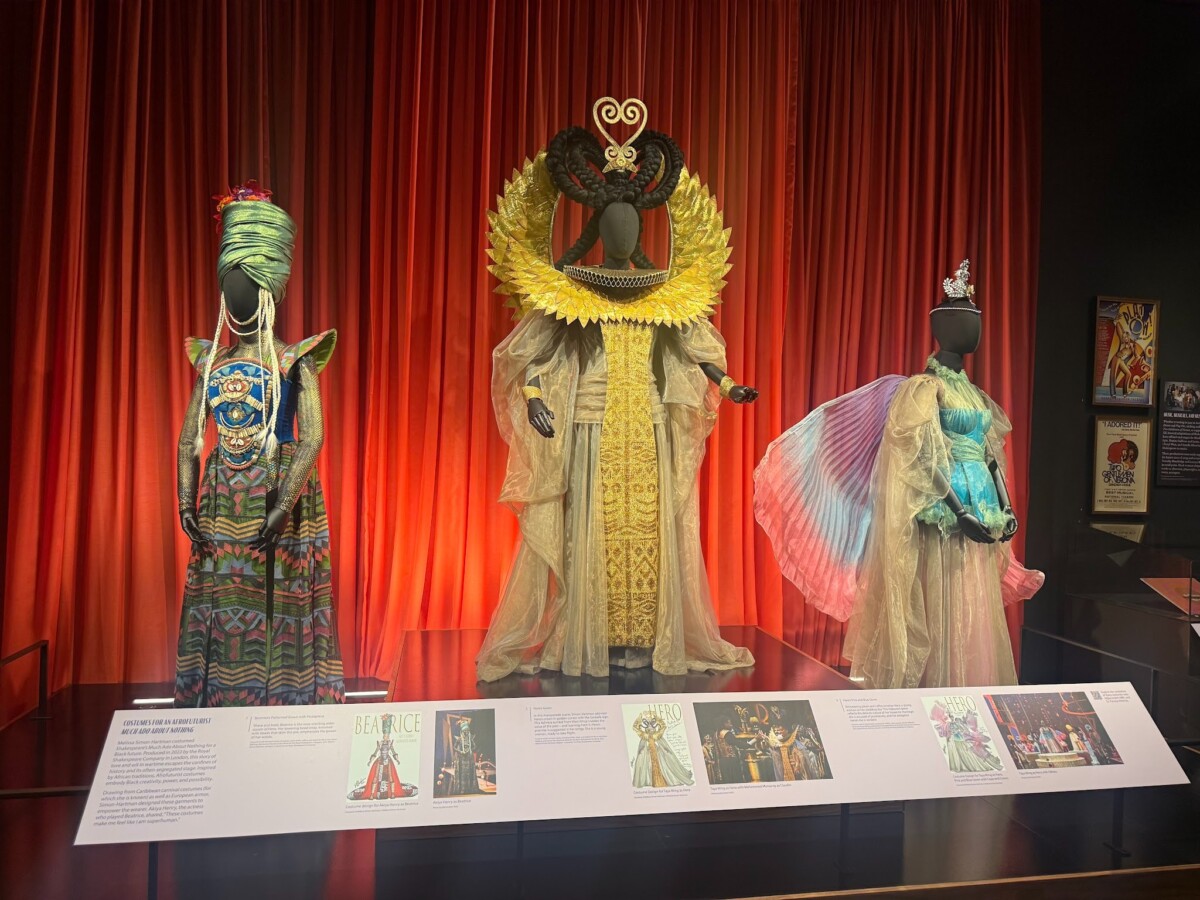
On view in the Folger’s Stuart and Mimi Rose Rare Book and Manuscript Exhibition Hall, the exhibition brings historical materials and contemporary interpretations together.
Its title references Shakespeare’s Sonnet 130, “My mistress’ eyes are nothing like the sun.”
Akhimie said the exhibition moves beyond speculation about the sonnets’ “Dark Lady” to draw attention to the woman’s voice and perspective.
She added that archival evidence shows that early modern London was home to people from different backgrounds. A map places locations associated with Shakespeare alongside locations where Black women lived and worked during the same period.
The exhibition included all aspects of the longer history, with a framed portrait by artist Kennedi Carter, across the room detailing how parts of the exhibition have widely unknown details about the connection back to Black women.
Akhimie also highlighted actor Henrietta Vinton Davis, who pursued Shakespearean performance in alternative venues, including churches and community centers, before becoming involved in political activism.
“I was struck by how much of this story is a D.C. story, and that means the inclusion of several figures like her. Howard is a place where Black intellectuals and Black theater professionals are coming to practice their craft and to teach it,” Akhimie said.
The exhibition also connects that history to Howard University. Akhimie pointed to Toni Morrison’s time with The Howard Players, a Howard theatrical organization, and generations of Howard students who performed Shakespeare.
“Opportunties for [Black women] like me have taken me to places I’ve never expected, It’s the most beautiful chaotic thing ever,” London White, a sophomore theatre arts administration major from Atlanta, Georgia said.
At Howard, she has participated in the Junior Dance Performance, managed a step show and joined Quad Step.
“What we put on stage matters, and Black women, we are the ones who set the tone,” White said.
For Aaliyah Gibbs, a sophomore acting major from Atlanta, the exhibition’s history connects to opportunities available to young performers today. She believes that Black women aren’t properly represented in the industry.
Gibbs first encountered A Midsummer Night’s Dream and Romeo and Juliet in elementary school, where she realized the range in roles versus the ones she reads.
“A lot of us are stereotyped and casted in roles like the sassy best friend, and the angry Black women and we don’t book unless we appear softer, like for example, changing our hair textures,” Gibb said.
Gibbs said seeing Black women in classical roles is important because those works often form part of actors’ training. Without performers who look like them or stories that reflect their experiences, she said, young Black actresses may feel discouraged from pursuing acting.
“I hope to see more love stories for Black women, like Romeo and Juliet, something classic and known as a household tale,” she said. “We are always left out when it comes to love. We deserve to be seen on stage and television that we are loved.”
The exhibition traces how Black women have made Shakespeare’s work their own despite exclusion and stereotyping in theater.
Akhimie said she hopes visitors leave with a sense of joy and a new understanding of how Shakespeare can be used to tell stories that matter to them.
“And so I hope that visitors will see themselves as a part of that legacy, that they will think, what can Shakespeare do for me?” Akhimie said.
Copy edited by Jori Johnson