Hip-hop was built on four foundational elements: MCing, DJing, breakdancing and graffiti. Often recognized as the fifth element, knowledge of self highlights hip-hop culture’s deeper roots of social and political awareness.
Yet, despite its influence, hip-hop’s presence in mainstream music has seemingly diminished in recent years. For a genre built on creativity, experimentation and challenging conventions, mainstream hip-hop appears to be too comfortable repeating familiar formulas.
For decades, hip-hop artists have built their standing in the music industry on individuality, artistry and experimental sounds that challenged audience expectation. Missy Elliott, for example, challenged conventional expectations of how women in hip-hop should look, sound and present themselves. What once made her unconventional ultimately became part of what cemented her status as an influential figure and cultural icon.
This is due to her avant-garde music videos and her multifaceted musical presence in production, writing and performance skills. Hip-hop’s resilience never stemmed from a single sound but from artists’ ability to reinterpret the genre’s foundations, bring their own influences and experiences to the music and make it distinctly their own.
For the first time since 1990, rap disappeared entirely from the Billboard Hot 100’s Top 40. Hip-hop’s share of the U.S. music market also fell from nearly 30% in 2020 to 24% in 2025. While rap albums in 2026 are hitting No.1, there is still a drought of rap singles on the charts.
Kendrick Lamar and SZA’s “luther,” which spent 13 weeks at No. 1, was removed from the chart after 46 weeks under Billboard’s recurrent-song rule, which removes older tracks once they fall below certain ranking thresholds. While that rule change contributed to hip-hip’s absence, it does not tell the whole story. Chart positions alone cannot measure a genre’s cultural influence or overall success, but the declining market share points to a clear shift in hip-hop’s commercial standing.
And commercial success, while not synonymous with creativity, can reflect broader changes in the music being produced. A 2024 study published in Scientific Reports, analyzing more than 353,000 songs across five genres, including rap, found that lyrics have become increasingly repetitive over time, accompanied by a decline in lyrical complexity.
Some hip-hop listeners are increasingly turning away from the genre and while most good things eventually come to an end, hip-hop is not the first genre to experience a decline in mainstream popularity. Lack of creative invention, a crowded market and the shifting preferences of musical tastes as key factors contributing to the genre’s declining prominence, according to Medium.
While repetition is hardly exclusive to hip-hop or inherently detrimental to songwriting, the findings raise questions about whether the genre is becoming increasingly reliant on familiar lyrical structures at the expense of linguistic diversity.
Hip-hop has always been more than a commercial product; it has served as a cultural record, offering the rest of the world a window into the lived experiences of Black communities and the social issues affecting Black Americans.
Hip-hop reflected the lives people were living, not just producing chart-topping hits. A prime example is the music produced by Atlanta rapper JID.
In his 2022 album, “The Forever Story,” JID uses gospel-backed tracks, conscious hip-hop artists including Yasiin Bey (formerly known as Mos Def) and spoken word prose to tell a story. Before its release, many listeners primarily associated him with rapid-fire delivery, but his intricate lyricism and technical versatility challenged that perception, according to WRBB Radio. His work demonstrates that audiences still value substance and storytelling in music
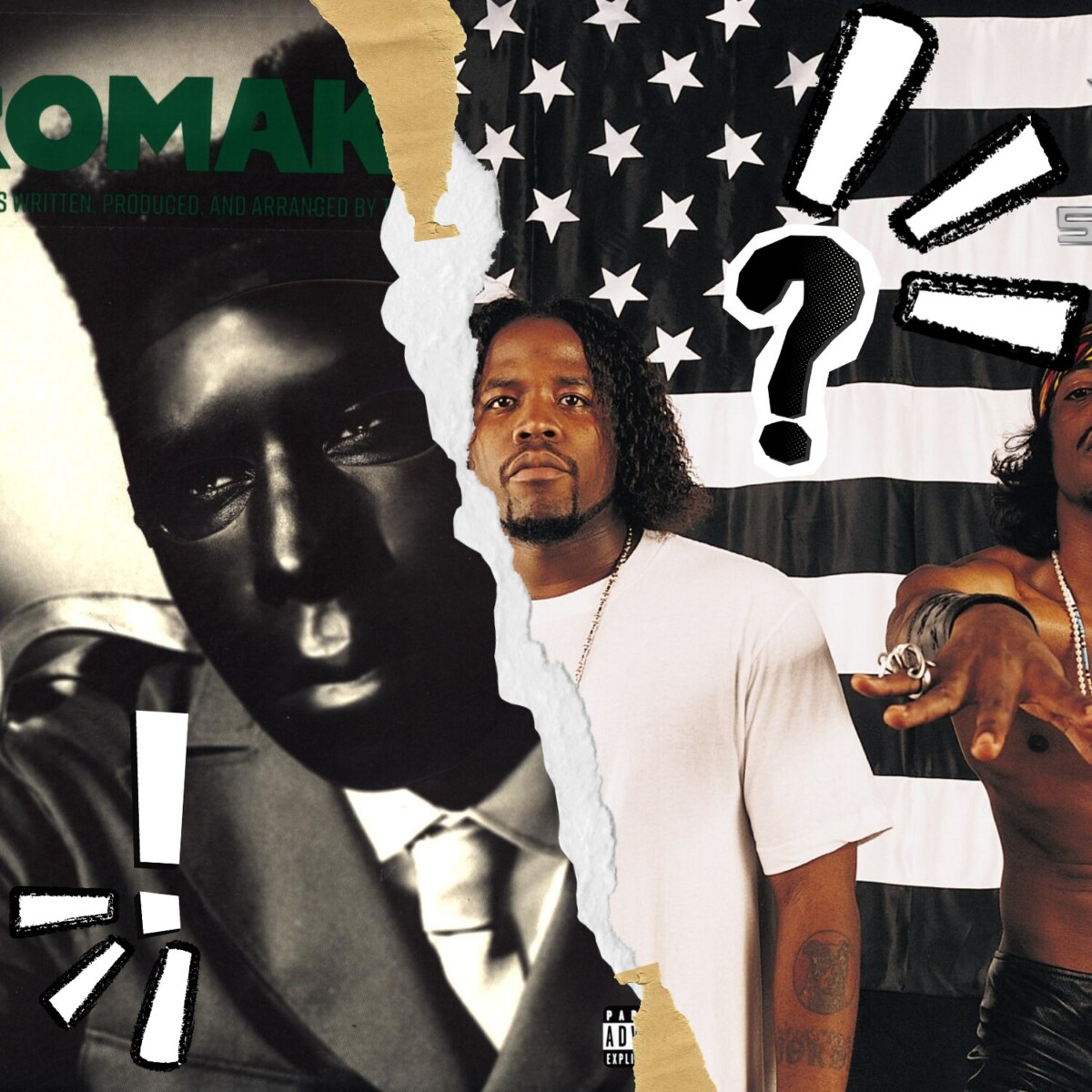
History is also part of the reason experimentation matters. Outkast’s 2000 “Stankiona” album gave the world hits including, “Ms. Jackson” and “B.O.B (Bombs Over Baghdad).” Not only did it gain commercial success, it combined electronic, unconventional sounds and still maintained hip-hop’s identity. Diversity in the genre makes people pay attention.
More recently, Tyler, The Creator’s “Chromakopia,” released in 2024 blends soul, jazz and live instrumentation into his own real-life memories. Both “Stankiona” and “Chromakopia,” showcase how artists can expand the hip-hop genre without abandoning its identity.
Artists are still experimenting with new sounds and styles. The bigger question is whether those pushing creative boundaries are receiving the same mainstream attention as artists following more familiar formulas.
Hip-hop was never built on the expectation that every artist must reinvent the wheel with each new album release. Familiar sounds and proven formulas have always had a place in music. However, when mainstream audiences are repeatedly exposed to the same styles and structures, the diversity of sounds, perspectives and lyrical approaches that once made hip-hop exciting risks getting lost.
The issue is not a lack of creativity, but whether the industry is giving that creativity enough room to reach a wider audience. Hip-hop does not need to retreat to its past structures to reclaim its mainstream dominance. Instead, it must embrace creativity, prioritize storytelling and dare to be audacious. The genre rose to prominence because artists refused to remain stagnant, and its future depends on that same willingness to innovate.
Copy edited by Jori Johnson