“Wow, this is never going to end.”
That was Shawn Mitchell Yon’s reaction to the persistence of racism in college athletics, following the distribution of materials with Ku Klux Klan hoods to tennis clubs competing in the University of Maryland’s Fall Invitational.
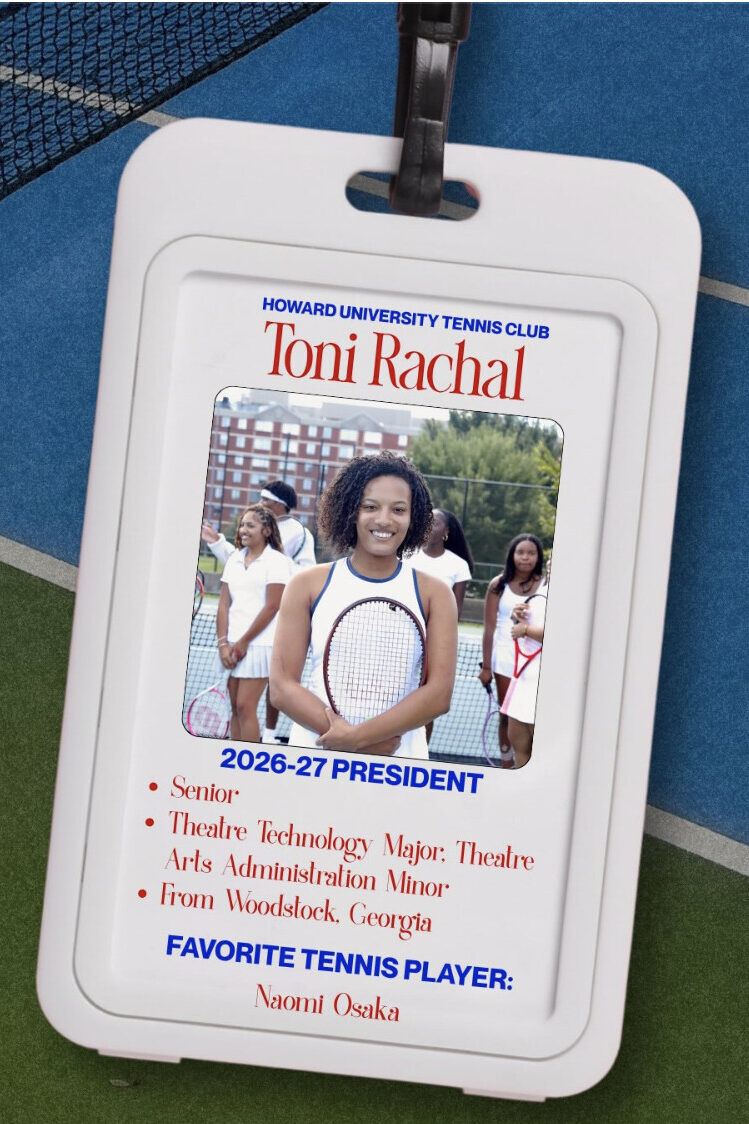
Yon, a senior sports management major on Howard University’s men’s tennis team, said the controversy echoed his experiences with racism in the sport. Still, he was shocked that such an incident occurred at a university so close to Howard.
That shock extended beyond the tennis court and into the pool.
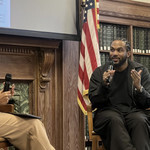
Ameer Bashir, a Howard senior majoring in political science, said he had attended swim meets at UMD since childhood. He described the incident as unsettling because it happened so close to campus.
“With UMD being so close, it kind of hit a little bit closer to home, and it just kind of made my skin crawl,” said Bashir, a member of the men’s swimming and diving team.
“With UMD being so close, it kind of hit a little bit closer to home, and it just kind of made my skin crawl.”
Ameer Bashir, athlete on Howard University men’s swimming and diving team
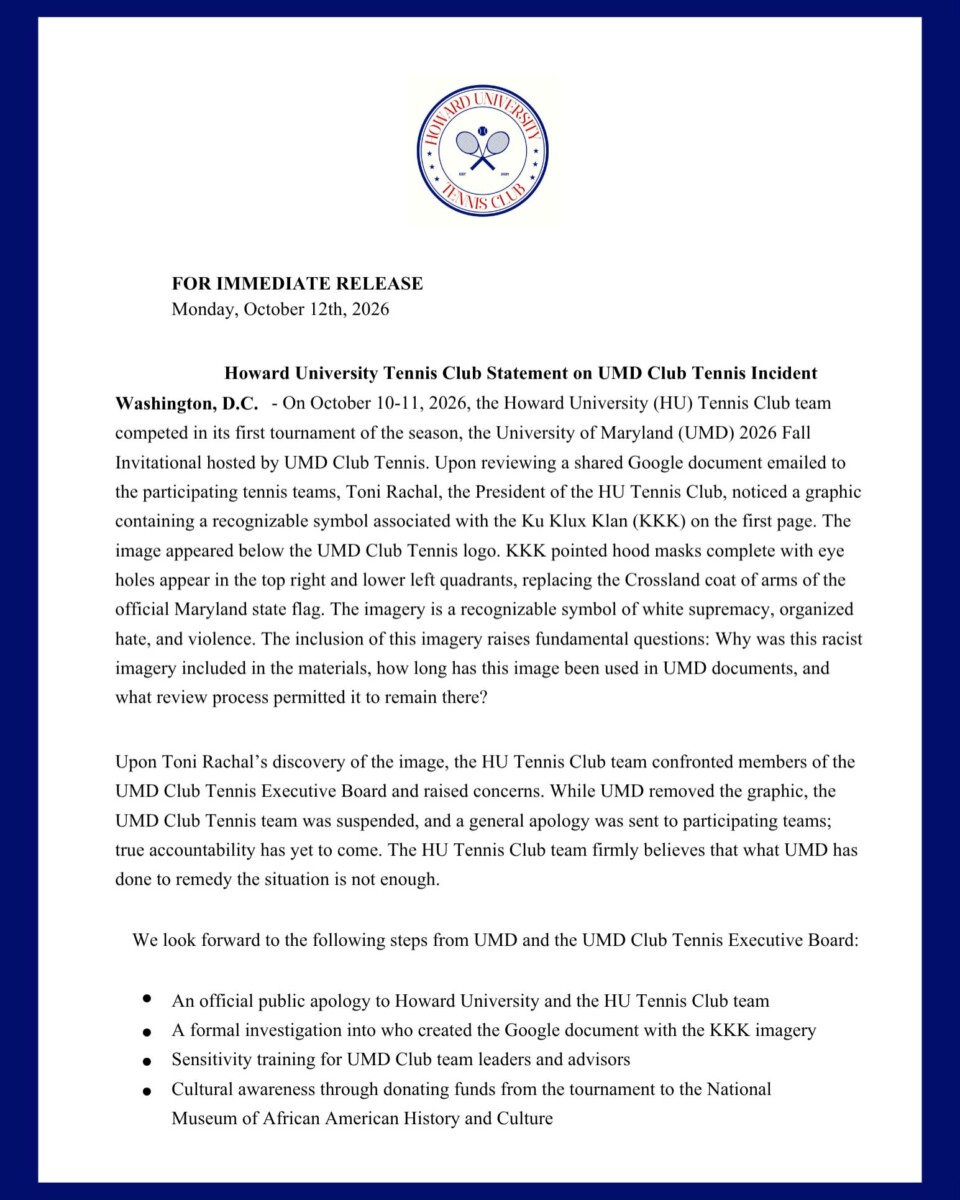
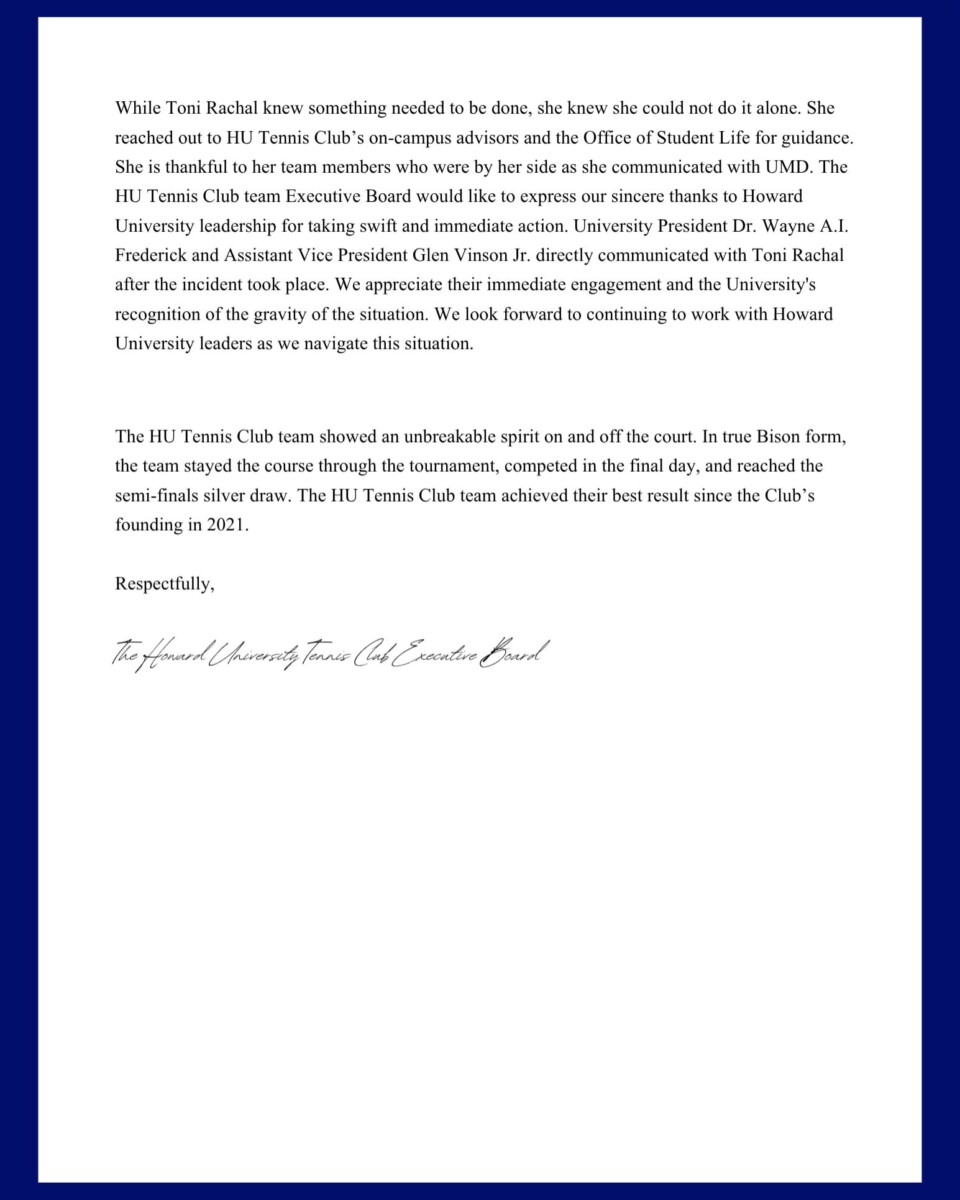
The Howard University Tennis Club said, “True accountability has yet to come” in a statement on Monday after its players encountered imagery
just before competing in its first tournament of the season last weekend in College Park, Maryland. Club President Toni Rachal discovered the graphic on the first page of a shared Google document emailed to participating teams.
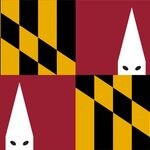
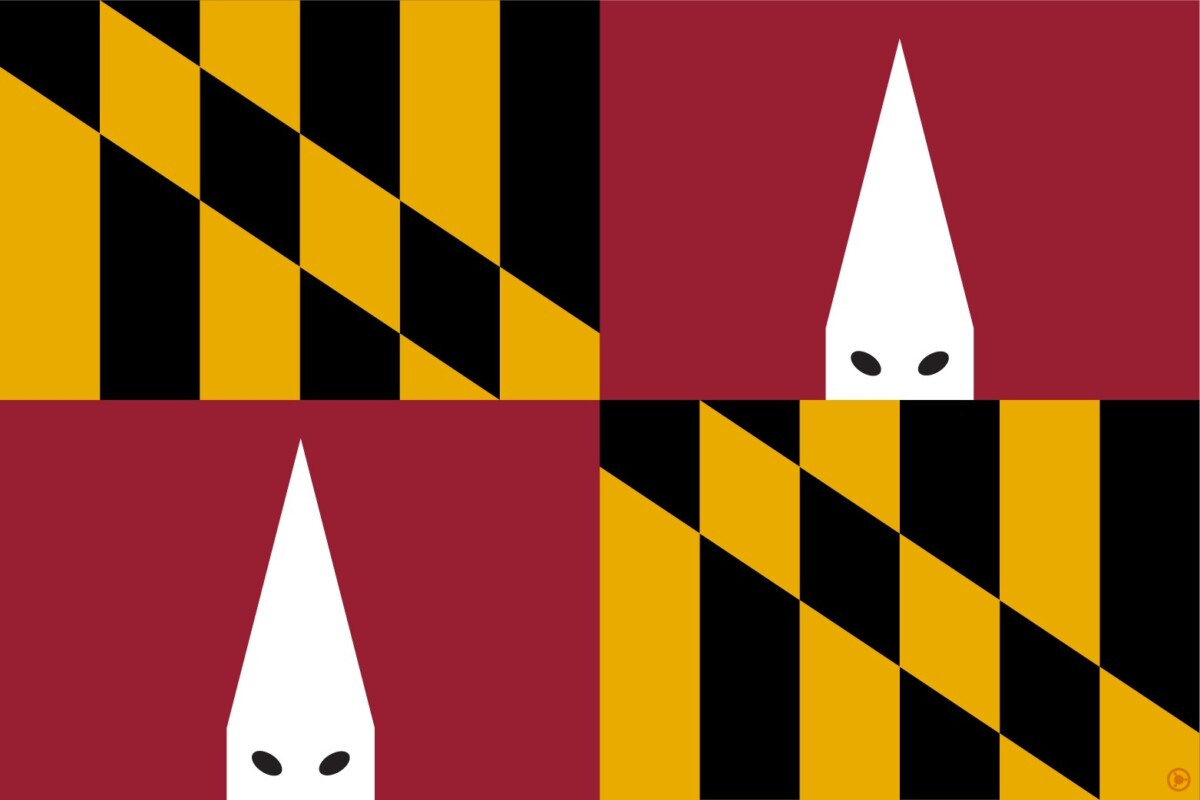
The image appeared beneath the logo for Maryland Club Tennis with pointed white hoods and eye holes in two sections of an altered state flag.
“Why was this racist imagery included in the materials, how long has this image been used in UMD documents, and what review process permitted it to remain there?” the club asked.
Origins of the KKK Imagery
Who selected the image for the tournament materials remains unclear. Its origins, however, are known, but the illustration was not created for the tournament.
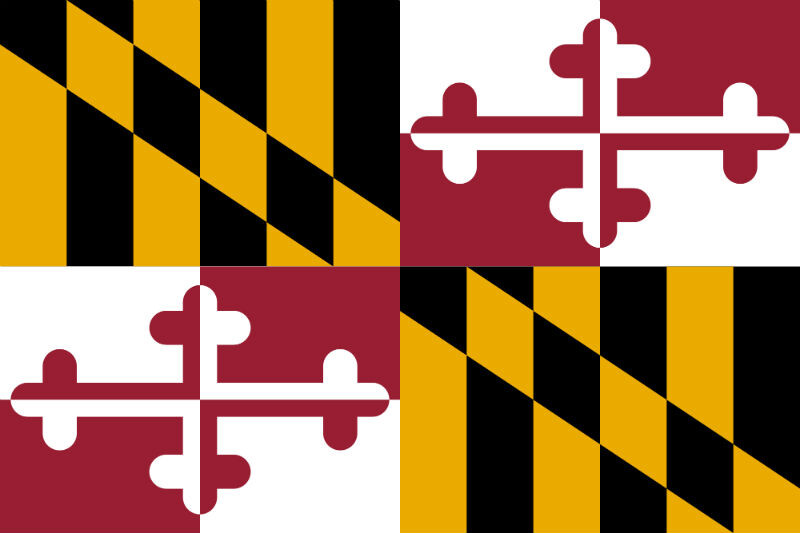
Artist Benjamin Jancewicz created the image in 2017 to accompany an article examining the Confederate history of Maryland’s state flag, as represented by the red-and-white Crossland pattern from the first Lord Baltimore’s family coat of arms. The design replaced the Crossland pattern with figures resembling Ku Klux Klan members.
In an interview with Howard University News Service, Jancewicz explained that he created the illustration to confront Marylanders with the history behind a symbol displayed throughout the state.
“And so in order to drive home what it actually means, I made this little illustration, you know, to be controversial and make people look at it and read the article,” he said.
In his original essay, “The Confederate Roots of the Maryland Flag,” Jancewicz examined the flag’s Confederate symbolism. After moving from Canada to Maryland, the graphic artist was struck by the flag’s widespread display. His research led him to question why Black Marylanders had been “excluded from decisions about the symbols representing their state.”
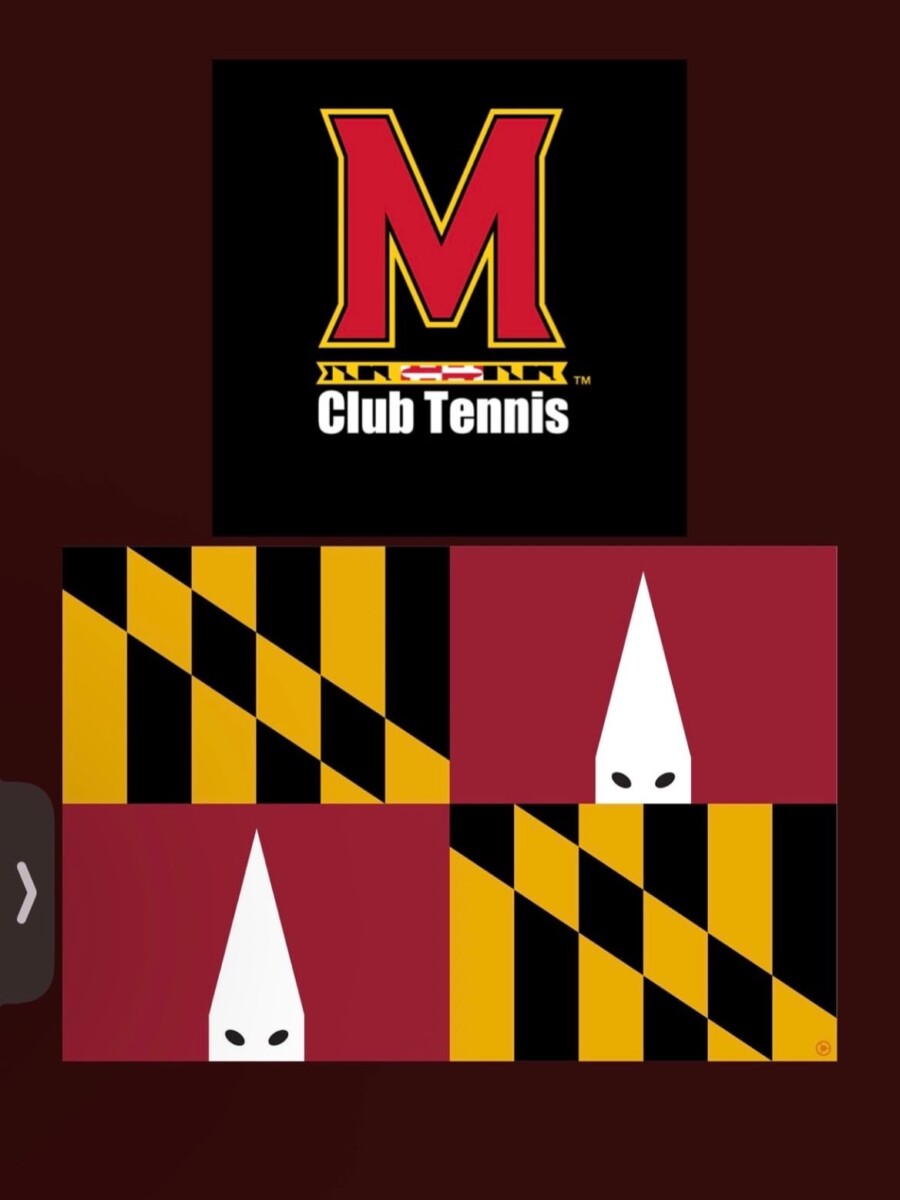
Nine years after the essay’s publication on Oct. 5, 2017, the illustration resurfaced in materials for UMD’s Fall Invitational. Jancewicz learned of its use when a reporter contacted him.
Jancewicz questioned claims that the image was selected accidentally, citing his own attempts to find the illustration through Google searches.
“The only way the flag came up before a couple days ago was if you search for racist Maryland flag,” he said. “I don’t know if I trust any of that.”
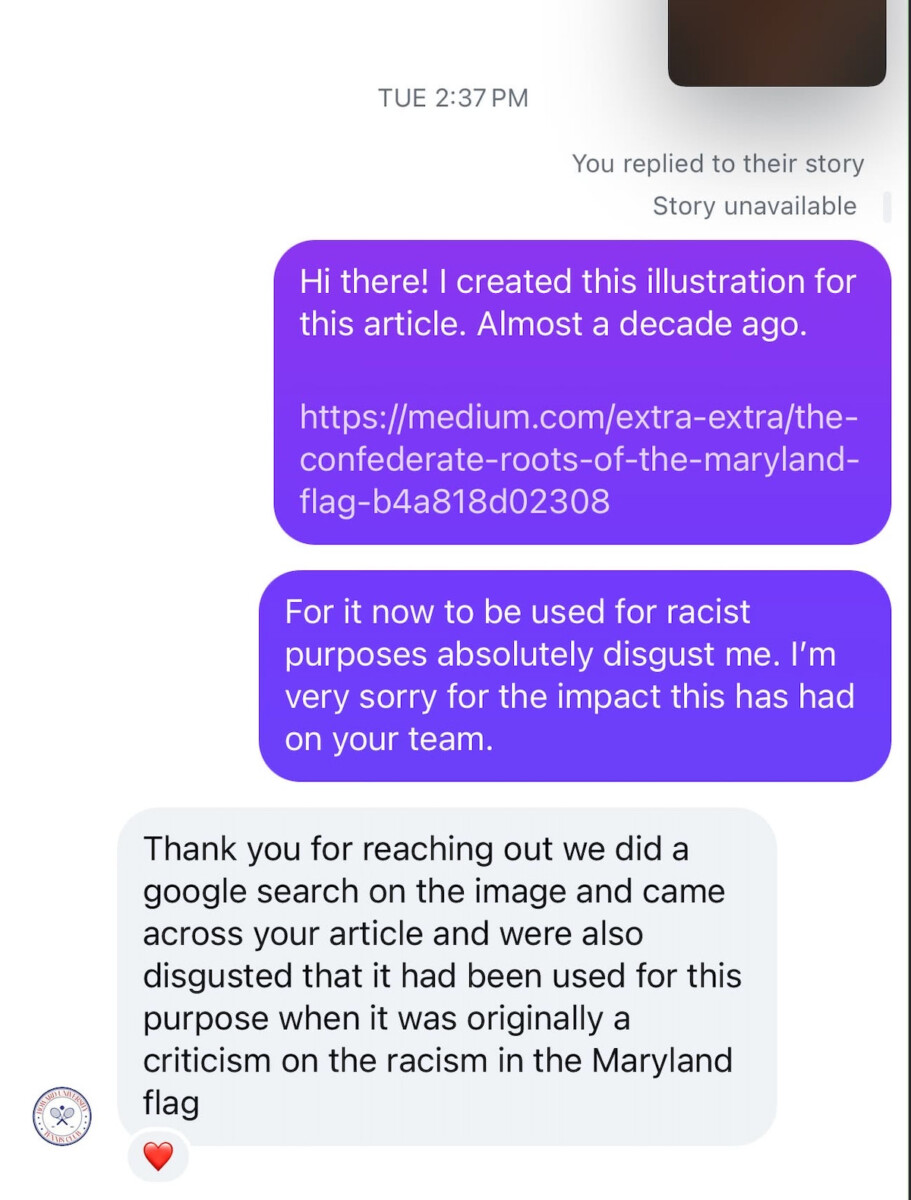
He said no one representing Maryland’s administration or tennis club had contacted him about its use, as of his interview with Howard University News Service on Thursday.
Jancewicz said he contacted Howard’s tennis club through Instagram to express his sorrow and disgust for how his illustration had been used. Howard’s tennis club found his original article and recognized that the illustration was intended to criticize the racist history of Maryland’s flag.
He also criticized news coverage that has focused on him rather than the students who encountered his illustration. “You should be talking to the people who are affected by this, not the dude who made it 10 years ago,” he said.
Demands for Accountability
Howard’s tennis club called for a public apology to the university and its team, an investigation into who created the tournament document containing the imagery, sensitivity training for Maryland club leaders and advisers, and a donation of tournament funds to the Smithsonian’s National Museum of African American History and Culture.
Maryland Recreation and Wellness staff learned of the materials Saturday, university officials said. Maryland suspended its tennis club indefinitely pending an Office of Student Conduct investigation and referred the matter to campus police.
University of Maryland President Darryll J. Pines also announced a review by the Office of Civil Rights & Sexual Misconduct and plans to work with the Social Justice Alliance on cultural sensitivity training for club members in a campus message about the incident on Tuesday.
“It was deeply harmful and offensive, and I offer my apology for its detrimental impact on one and all,” Pines wrote.
Black student leaders at Maryland raised similar demands for accountability as those at Howard.
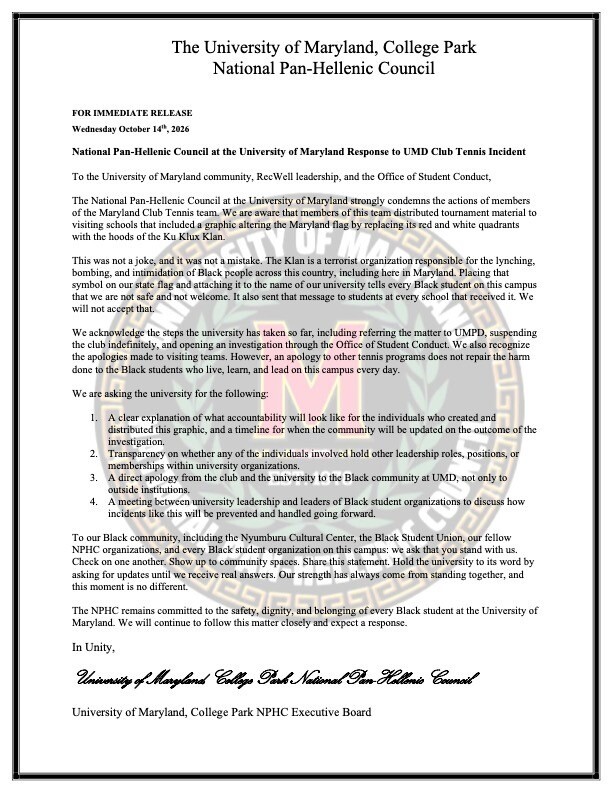
The university’s National Pan-Hellenic Council called for further action Wednesday in a statement posted on Instagram.
“An apology to other tennis programs does not repair the harm done to the Black students who live, learn and lead on this campus every day,” the council wrote.
The council requested a clear explanation of accountability for those who created and distributed the graphic, a timeline for investigation updates and disclosure of whether those involved hold other organizational leadership roles. It also sought a direct apology to Maryland’s Black community and a meeting between leaders of the university and Black student organizations to discuss prevention and future responses.
Those concerns also surfaced in a campus demonstration on Thursday. More than 100 students confronted Pines during his State of the Campus address, chanting “Stand up; fight back!” and “Whose campus? Our campus!”
A History of Racial Bias
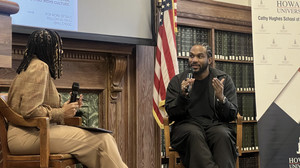
Mohammed Salih, student ambassador at the Nyumburu Cultural Center, documented the confrontation and connected it to longstanding concerns about racial bias on campus.
“The underlying issue is that UMD administration witnesses incidents of hate crimes and racial bias over and over again throughout the years,” he said, criticizing what he described as a lack of preventive measures to ensure Black students feel safe on campus.
Salih, who also collaborates with UMD’s Black Student Union and NAACP chapter, said the incident reflects broader concerns about racial bias on campus.
In a video posted before the protest, Salih pointed to previous student complaints, including concerns about a noose discovered in a fraternity house, disputes over demands submitted by Black students and an earlier campaign involving the Nyumburu Cultural Center.
He described meetings, demonstrations and an appeal to the University System of Maryland’s Board of Regents as part of students’ earlier efforts to push administrators to make changes.
“I’m not surprised about the Ku Klux Klan imagery,” he said in the earlier video. “I’m not surprised about any of the racism, because this has been the environment that UMD’s administration has actively cultivated over years — whether through their action or through their lack of action.”
‘An Apology Has to Be Very Sincere’
In an email to Howard University News Service, Jordan Dunklee, a communications coordinator for Maryland, described additional efforts to address the incident.
“UMD club tennis team student leaders met with other tournament team captains to take responsibility, apologize for their actions and acknowledge the harm caused,” Dunklee wrote.
In a separate public apology posted on Wednesday, Maryland’s club tennis team acknowledged its failure to identify and remove the image from tournament materials.
“Although we did not intend to share an image evoking hate and racism, we take full responsibility for failing to identify and remove it,” the club wrote.
The team committed to education and training on racism and hate symbols and said they have donated to the Smithsonian’s National Museum of African American History and Culture, one of the actions Howard’s club requested.
The university’s director of Recreation and Wellness also apologized to the participating clubs. Pines acknowledged the harm to Howard’s players and Black members of Maryland’s own team, who also lost the opportunity to compete when their team was suspended and forfeited its matches.
Yon said an apology alone would not be enough without a sincere acknowledgment from those responsible. “An apology has to be very sincere,” he said. “The person who was really in charge of everything, they should be the one apologizing.”
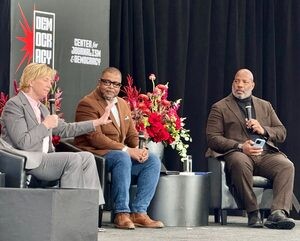
Howard Interim President and President Emeritus Wayne A.I. Frederick condemned the imagery in an Oct. 12 statement, saying it evoked a history of racial terror and exclusion.
“Our students should never have to question whether they will be treated with dignity and respect when representing our university,” Frederick wrote.
Frederick said Pines apologized directly and described Maryland’s initial actions as a commitment to accountability. He said that two club leaders directly involved had been referred to Student Conduct and that Howard would remain engaged as the investigation proceeds.
The Howard club has also publicly questioned the suspension’s reach. In an Instagram post, it shared a screenshot of tournament chat messages that included an invitation to a social gathering.
“UMD Tennis Club socializing post suspension. Is this accountability?” the caption read.
The screenshot shows no calendar date and doesn’t establish whether the gathering occurred. The available university statements do not specify whether the suspension restricts social gatherings.
Beyond the suspension, Maryland has introduced changes affecting its entire club sports program.the university’s Recreation and Wellness department now requires club sports teams to obtain written staff approval at least 48 hours before distributing external communications, including emails, social media posts and tournament materials, according to an article in The Diamondback on Wednesday.
Club presidents and treasurers were instructed to acknowledge the requirement by Friday. Their acknowledgement is unconfirmed at the time of this reporting.
The new requirement addresses how club teams should communicate with people and organizations outside the university. For Bashir, accountability starts with the host university’s responsibility to visiting athletes.
“You got to be accountable to the people you are inviting.”
La Tetra Metts-Owens is a senior reporter for HUNewsService.com. She covers Prince George’s County and the arts. Additional reporting by Yacine Ba, who specializes in international coverage.