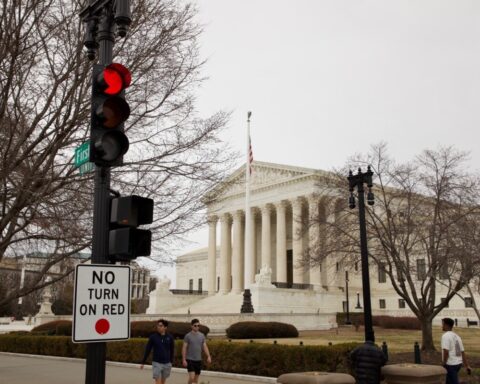
WASHINGTON (HUNS) — U.S. Supreme Court justices expressed reservations about whether marijuana users can be blocked from owning guns as they heard oral arguments in the case of United States vs. Hemani on Monday.
It began with a search warrant at a suburban home in Denton County, Texas in August 2022.
FBI agents executed the warrant at the Texas residence of Ali Daniel Hemani, a native-born U.S. citizen, after opening an investigation that included alleged ties to a foreign terrorist organization.
Inside, agents found a Glock 9mm pistol, 60 grams of marijuana and a small amount of cocaine that Hemani said he bought several months earlier, but that was hidden from him by his mother. Hemani told agents he used marijuana “about every other day.”
The government did not immediately charge Hemani, but sought to detain him based on suspected involvement with Iran’s Islamic Revolutionary Guard Corps.
Although Hemani and his family members were not charged with any crime related to terrorism, he spent seven months in pretrial detention.
About six months after the search, a federal grand jury officially charged Hemani with a single count of possession of a firearm by an “unlawful user” of a controlled substance in violation of 18 U.S.C. 922(g)(3).
Hemani was not charged with any drug distribution offenses, and court filings say there was no evidence he was under the influence of drugs when the firearm was found.
He moved to dismiss the indictment, arguing the statute is unconstitutional as applied to him because it strips his Second Amendment right to keep and bear arms based solely on his past marijuana use.
A federal district court granted the motion and dismissed the case, and the U.S. Court of Appeals for the 5th Circuit affirmed.
The justices considered how the court’s 2022 decision in New York State Rifle & Pistol Association v. Bruen should apply to modern firearm restrictions and whether historical firearm regulations support disarming individuals like Hemani.
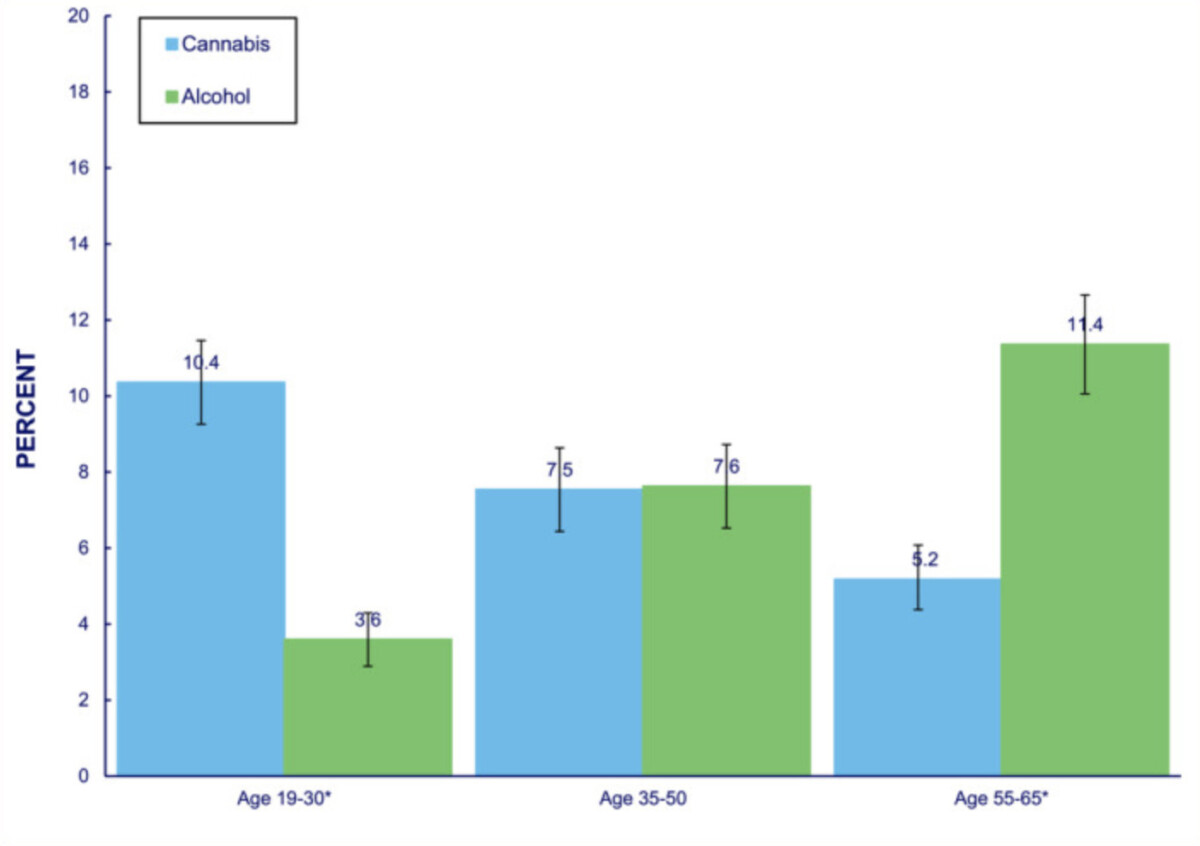
A striking theme in Monday’s oral arguments was the government’s attempt to anchor Hemani’s prosecution in common law by likening it to historical restrictions on “habitual drunkards,” in which founding era lawmakers limited their ability to bear arms, believing they posed a threat to public safety. The government argued that drug users like Hemani are the equivalent of “habitual drunkards.”
Several justices wrestled with whether marijuana can be treated as the modern equivalent of alcohol. Justice Neil Gorsuch suggested the government hasn’t made a sufficient case for what constitutes someone as an “unlawful user,” pressing on how much use is enough to trigger a long-term ban on firearm possession. The distinction created much of the tension with the government’s analogy — in which alcohol is legal and historical bans were tied to drunkenness at the moment — not to categorical bans based on a person’s general drinking habits.
Justice Amy Coney Barrett questioned Sarah Harris, lawyer for the Trump administration, whether any form of drug use makes a person dangerous under federal law.
“Is it the government’s position that if I unlawfully use Ambien or I unlawfully use Xanax, then I become dangerous?” Barrett asked. “What is the government’s evidence that using marijuana a couple times a week makes someone dangerous?”
The justices’ questions reflected concerns that, without clear principles, the statute could sweep in a wide range of people based on undefined levels of drug use and not demonstrated danger.
Erin Murphy, Hemani’s defense attorney, said the government’s prosecution of a defendant under 922(g)(3) requires an individualized determination of whether the person is an unlawful user of a controlled substance.
Murphy argues that Congress’s law “can’t constitutionally be applied to because the statute fails to provide fair notice of what makes someone an unlawful user of a controlled substance.”
During the hearing, the Court appeared divided over how broadly the historical-tradition test should be interpreted and how lower courts should evaluate contemporary gun regulations under the Constitution.
Justice Ketanji Brown Jackson pointed out the flaws within the “Bruen test,” explaining that the historical tradition test makes it difficult for the courts to apply “analogs” without becoming inexperienced historians.
Hayley Lawrence, executive director at the Duke Center for Firearms Law, believes that Jackson’s pointing out the methodological holes in the Bruen framework is consequential in the context of Hemani.
“We don’t get to cherry-pick the history simply because it was insidious at its point of enactment,” Lawrence said. “If you have a problem with it, then that’s a problem with the test.”
She believes the case can have broad consequences. The federal law continues to classify cannabis as a Schedule I drug, even though many states have legalized it, and the Trump administration issued an executive order to reclassify it to a less dangerous drug. A broad ruling could affect millions of gun owners in states where cannabis use is lawful under state law but remains illegal federally.
“The narrowest ground I could see for a decision is along the lines of questioning that Justice Gorsuch had, which were, effectively, whatever the government’s definition of unlawful user is, Hemani doesn’t meet it,” Lawrence said.
Kostas Moros, director of Legal Research and Education for the Second Amendment Foundation (SAF), was surprised the court had agreed to hear United States v. Hemani instead of other marijuana-related cases.
“One of the reasons I think the government pushed this [case] to the front of the line and asked to review in this case is because Mr. Hemani has other unrelated allegations about him that were not charged,” Moros said, referring to Hemani’s alleged association with a terrorist group. “Even Justices Alito and Roberts, who seem to take the government’s position, did not bring up all these extraneous allegations.”
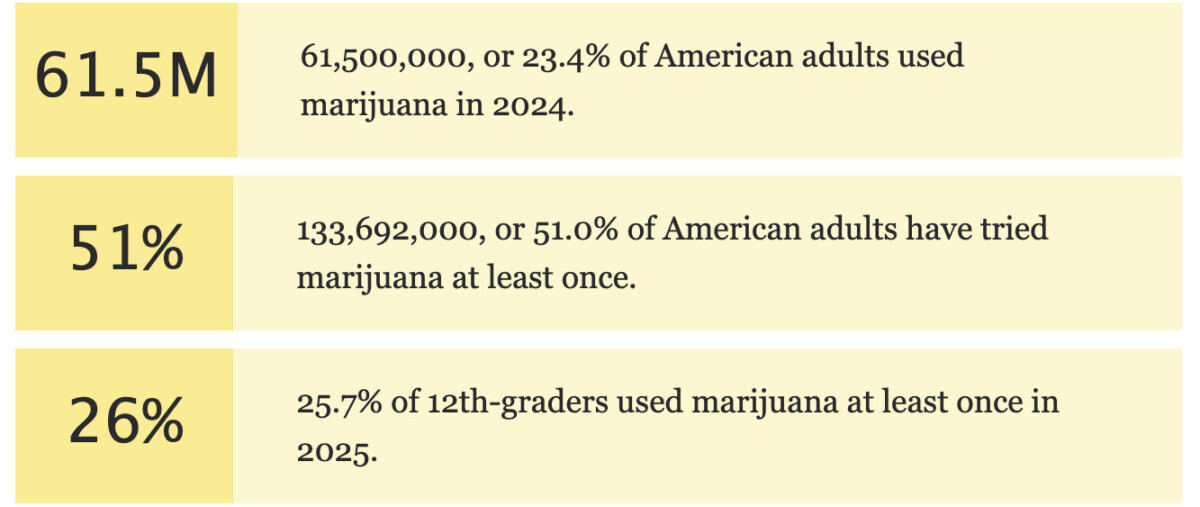
Moros argued the case resonates with many Americans who view marijuana use as common and not inherently dangerous.
“I think everyone nowadays either uses marijuana themselves or knows somebody who does,” he said. “Most would conclude that just being a marijuana user alone doesn’t make you a dangerous person.”
Similar to the justices, he drew a distinction between serious addiction tied to criminal behavior and occasional marijuana use when discussing public safety concerns.
“Just like if he was a heroin addict that couldn’t control his urges and was breaking into houses to steal money to buy heroin, nobody would argue that that’s a public safety threat,” Moros said. “But, on the facts of this case alone, that he uses marijuana ‘sometimes,’ I understand caring about public safety, but there’s nothing in the record to indicate that he was a public safety risk,” he said.
The Brady Background Check stems from the Brady Handgun Violence Prevention Act, a federal law enacted in 1993 that requires background checks for most firearm purchases from licensed dealers.
The law led to the creation of the National Instant Criminal Background Check System (NICS), a database operated by the FBI. When someone attempts to buy a gun from a federally licensed dealer, the seller contacts NICS to determine whether the buyer can legally possess a firearm.
Requiring individualized fact-finding in every case could weaken the existing system, said Shira Lauren Feldman, senior director of constitutional litigation for Brady: United Against Gun Violence, a national nonprofit organization.
“If the court were to say there always has to be individualized fact-finding, that would be very problematic for the administration of the background check system and very bad things can happen,” Feldman said.
She added that the court’s ruling could clarify how categorical firearm restrictions are treated under the Second Amendment framework.
“It’s possible that [the justices] are going to say some categories are fine and might even reaffirm their language from Heller and Bruen that some categories are presumptively constitutional, like people who have been convicted of felonies,” Feldman said. “It’s also possible that if they call into question the use of categories, at least in certain circumstances, people may take that as an invitation to challenge other prohibitors.”
However the court rules, the implications can reach far beyond a Texas search warrant and one admitted marijuana user.
“If the government can’t make informed decisions about who presents a risk of danger, who presents a risk of misuse, that imperils a significant number of gun violence and prevention laws,” Lawrence said. “If what the court does is large, it will be highly consequential.”
Morgan Knight and Dru Strand are reporters for HUNewsService.com.