With the search for a new Howard University president underway, members of the community are sharing their desires for the next leader. The common consensus: the next university president should rebuild trust.
When former President Ben Vinson III, Ph.D., stepped down in August 2025, he left Howard without a permanent successor. Last month, the university announced the official search for the next president, after over a year with President Emeritus Dr. Wayne Frederick serving as the university’s interim president. In the last 14 months without a permanent leader, the university has found itself in the media for many reasons including an enrollment scandal and a student arrest.
Kessonga Allen, a first-year student in the Howard University School of Law (HUSL) from Detroit, said he wants the next president to keep Howard out of the media to preserve the university’s reputation.
“There’s a lot of legacy and history but when [Howard] gets dragged in the mud in the media for poor leadership decisions, it doesn’t make people want to come to the school,” Allen said.
Following the presidential search announcement, alumni and current students took to social media to share some of the qualities they would like to see. Some, including Savant Moore, a 2016 graduate, want the next president to be a Howard University alumna.
Moore said this would appropriately represent most of the university’s demographics, of which the undergraduate population is about 70% female.
“It’s a majority woman school, why is there not a woman that’s leading?” Moore asked.
Moore first attended Howard from 2004 to 2007, while Frederick was serving as the 17th president, but did not finish his degree at the time due to a family death and then joining the United States Army. During his time at Howard, he recalled Frederick also calling for the next university president to be a woman.
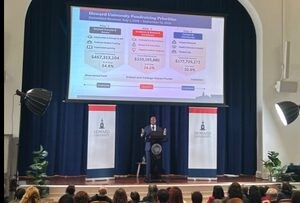
During the 159th Opening Convocation Ceremony on Sept. 18, Frederick reiterated this thought.
“We are not just going to recruit a president, we are going to support her after she is appointed,” he said.
Although he did not explicitly call for a woman president, throughout his remarks, he consistently used “she” and “her” pronouns when referring to his successor.
While being a woman and a historically Black college or university (HBCU) graduate were common ideas shared on social media, offline, some members of the Howard community say they just want the best person for the job.
Courtney Diggs, a 2021 alumna and first-year student at HUSL from Prince George’s County, Maryland, said although it would be nice to have, she is indifferent to having a woman president. She would prefer a Howard alum, but above all, someone who prioritizes communication and transparency is most important to her, she said.
“A lot of things are delayed, a lot of processes are not efficient,” Diggs said. “I just feel like somebody that is more boots on the ground, really getting stuff done…would be great.”
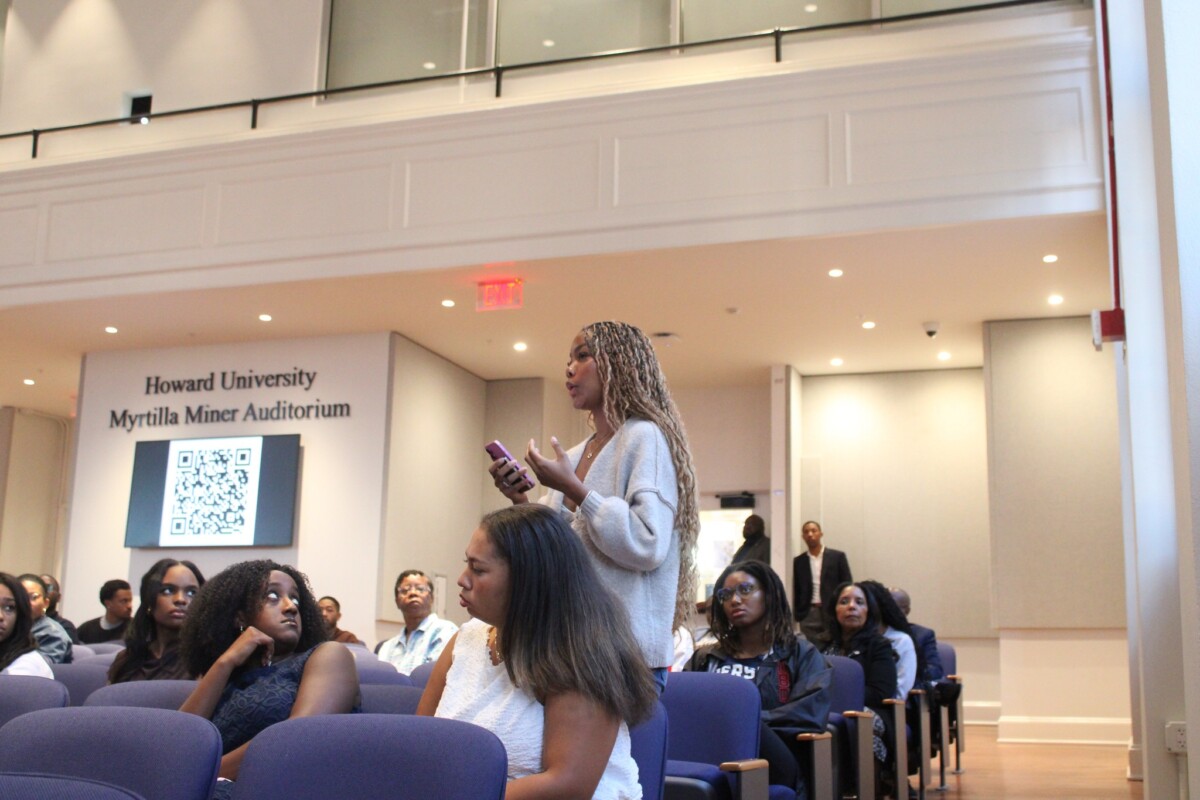
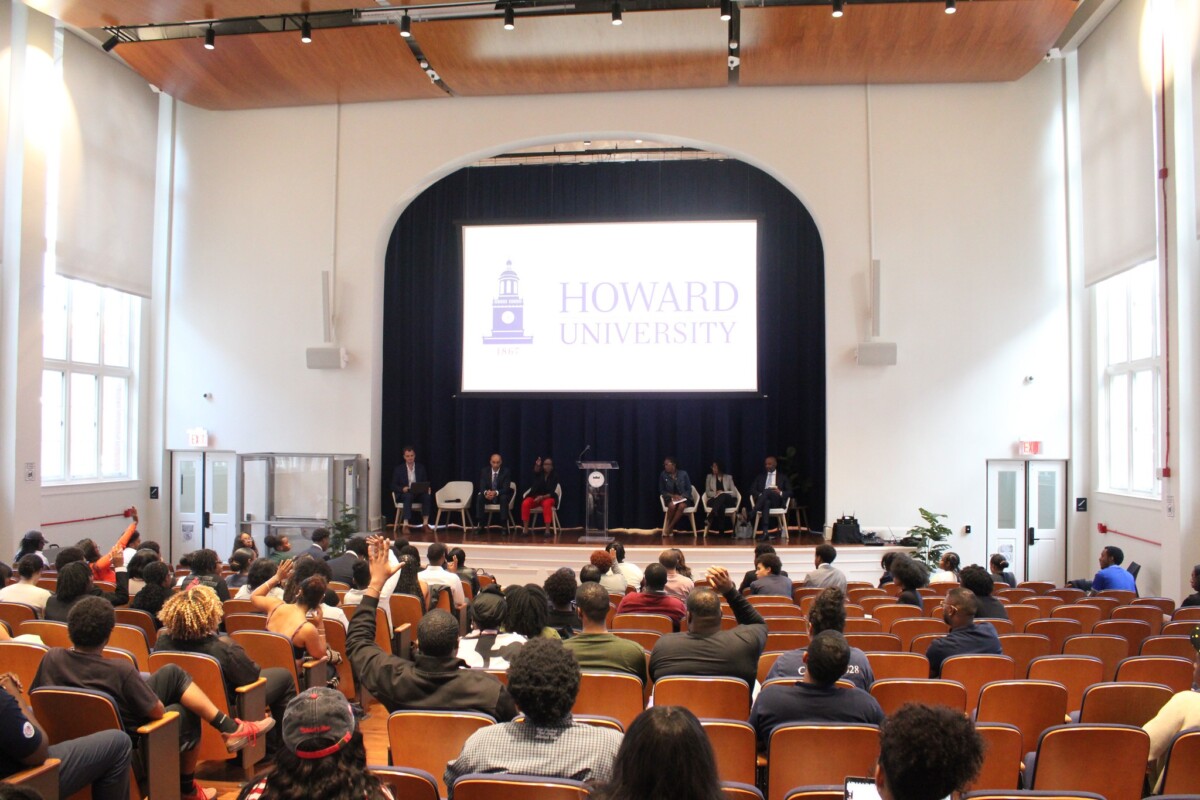
A similar sentiment was shared by multiple students at the presidential search committee’s first student listening session on Oct. 1. The search committee is composed of 12 members, eight of which come from the board of trustees. Other members provide faculty, staff and student representation.
Guericke Christopher Royal, DMA, a member of the search committee and chair of the faculty senate, declined to comment about the presidential search. Royal obtained a bachelor’s and master’s degree from Howard in 1985 in 1992, respectively.
Meliah Bell, a senior computer information systems major from Charlotte, North Carolina, said she wants someone who feels familiar.
“Even if it’s not an alumni, somebody that can come and be with the students, that can go into the dorms and actually understand this is what we’re going through,” said Bell during the session. “Servant leadership is really important and actually seeing their face — I don’t want to be distant from the president.”
Additional listening sessions will be held both in-person and online for students, faculty, staff and alumni and are hosted by the presidential search committee and Russell Reynolds Associates, an advisory firm aiding in the search.
During the session, around 100 students from varying undergraduate, law and doctoral programs came together in the auditorium of the Myrtilla Miner Building.
Receiving their comments on stage were three representatives from Russell Reynolds and three members of the search committee — chair of the board of trustees, Leslie Hale, and the two vice chairs, Danette Howard, Ph.D. and Mark Mason. All three are Howard alumni.
The comments shared during the listening sessions will help to create the job description and the rubric for the presidential candidates, according to Joi Hayes-Scott, a consultant with Russell Reynolds.
In opening remarks, both the board and the advisory firm stressed the importance of student representation in the search process.
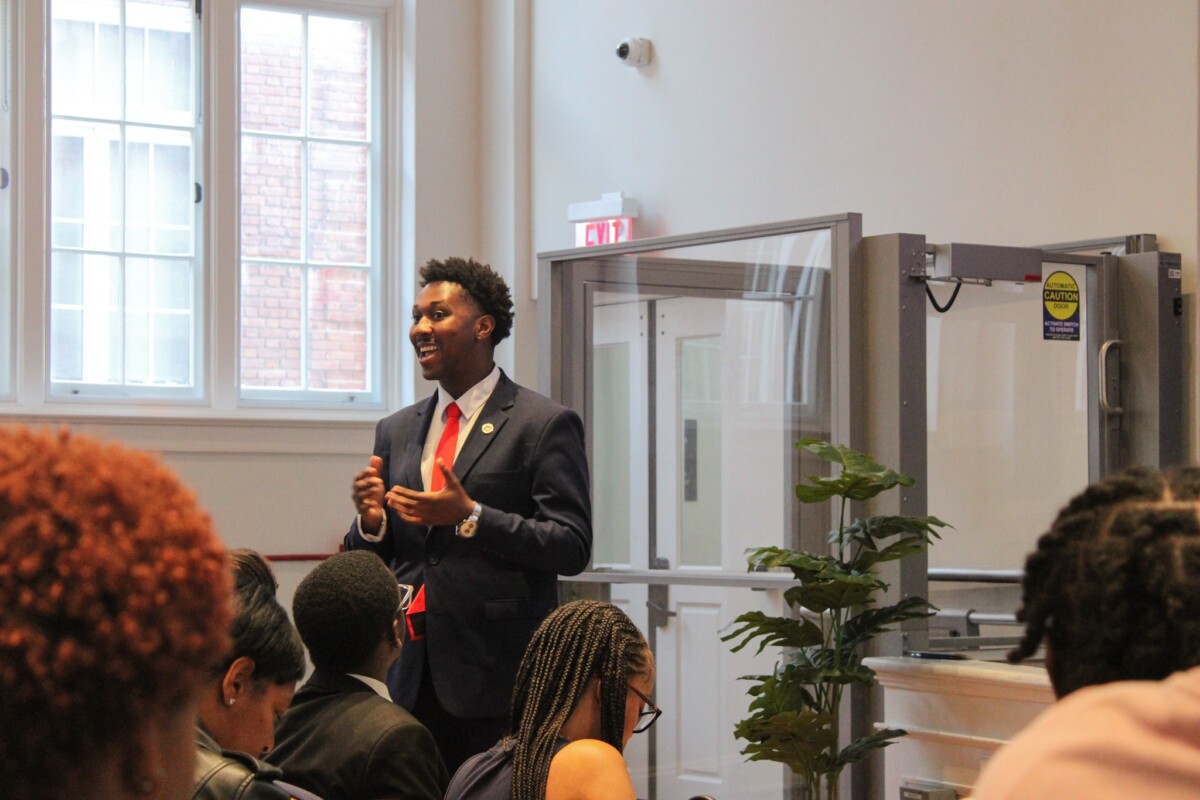
“Having student perspective as part of that process is incredibly important because this is your institution and the next president will impact your experience and the students who come after you,” said Howard, who is a 1997 alumna. “It would not be a helpful and legitimate process if students were not an integral part of that process.”
The sole student representative on the presidential search committee, Payton Garcia, was also in attendance, sitting in the audience. A senior honors economics major from Chicago, he said he shares similar sentiment to students but ultimately wants to do what he can to best represent the larger student body.
“One of the most important stakeholders, if not the most important stakeholders that are involved, are the students that will, of course, have to receive this new president,” Garcia said in an interview with The Hilltop.
Garcia, who is also the former vice president of the Howard University Student Association, said he understands that he is not representative of all students and can only speak to his personal experiences as an undergraduate student.
He encourages students to have constructive conversations with him so that he can take varying perspectives into account.
Garcia, who is a voting member of the search committee, added that students can come to him “brutally honest” about both what they do and do not want, even if the input feels harsh.
“If we don’t get uncomfortable, we’re not going to get down to the root issues of what made presidents in the past excellent, what made them disappointing, what made them unacceptable or even what made them step down,” Garcia said.
Hale, a 1994 alum, said the decision to have one student on the search committee came from looking at “best practices” from other universities. She added that listening sessions also elevate the larger student voice.
“I’m hoping that the next president addresses all the concerns that were shared this evening,” Hale said in an interview after the session.
The search process typically takes five to six months and is confidential, meaning the public will not know potential candidates, according to Hayes-Scott. The hope, she said, is to announce the next president at the end of the academic year allowing for the next president to begin their term in July 2027.
Copy edited by Sydney Middleton