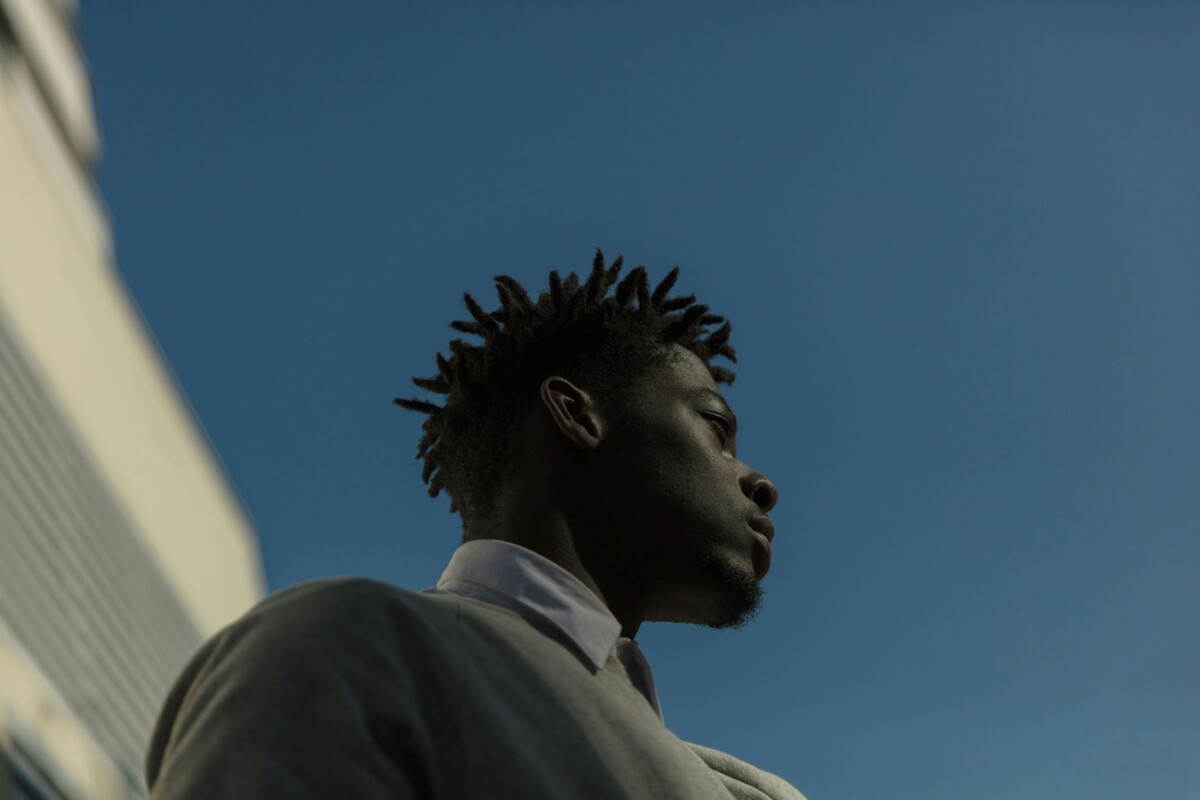
Walking across the campus of Howard University, you can see a plethora of Black hairstyles.
From afros and locs to sew-ins and lace-front wigs, The Yard has it all. When surrounded by like-minded young people at an historically Black college or university (HBCU), freedom of expression through style comes naturally to many. However, when leaving the “Howard bubble,” young Black men who choose to grow out their hair are unfortunately met with judgement.
It is widely known that hair discrimination and bias against Black hairstyles remain common in predominantly white spaces, where authority figures often label these styles as “unprofessional” or “messy.” However, less attention is paid to how hair bias can also exist within the Black community, particularly among older generations.
These generational differences are often rooted in respectability politics. Many older Black Americans were taught that conforming to white beauty standards, including conventional hairstyles, could improve their opportunities for social mobility.
These beliefs can limit how young Black men choose to wear their hair, as family members and others within their communities sometimes discourage natural styles, including locs, twists and afros, in favor of shorter, more conventionally accepted haircuts like fades and tapers.
Esau Mahir Price, a sophomore English major from Dallas, said that he’s heard members of the Black community back home make “snide comments” about his long locs, saying his hair made him look like a “stoner.”
These expectations extend beyond family dynamics and into predominantly Black institutions. In 2001, Sidney Howard Credle, the former dean of Hampton University’s School of Business, banned young men in the MBA program from wearing locs and cornrows in class. Eleven years later, despite facing criticism, he doubled down on the ban.
But Black history has never been defined by a single appearance. From members of the Black Panther Party and their signature afros to Malcolm X’s iconic conked hairstyle, Black cultural figures and revolutionaries have embraced different expressions of Black identity. As Price said, a hairstyle “does not have any bearing on someone’s professional ability.”
Young Black men should be encouraged to emulate respected figures in Black history, regardless of their hairstyle. After all, Black cultural figures and revolutionaries have sported a variety of hairstyles. Take the Black Panther party and their signature afros or Malcolm X’s iconic red waves. As Price said, a hairstyle “does not have any bearing on someone’s professional ability.”
Beyond respectability politics, these attitudes can also reflect internalized racism. Black children can experience bullying over their natural hair as early as elementary school, while media representations have historically reinforced associations between straight hair and professionalism and natural hairstyles and negative stereotypes. Over time, these messages can influence how Black people perceive their own hair and the standards they impose on others.
In the media, these tactics are used to make Black characters digestible to white audiences and enforce negative stereotypes about natural hair within the Black community.
However, not every negative reaction to natural hairstyles stems from prejudice. Some families may be motivated by concerns about how young Black men will be perceived by the outside world.
Marquis McCleod, an honors sophomore legal communications major from Vallejo, California, was the first male in his family to wear his hair in twists. He said his family worried that the hairstyle would make him “look more grown” or associate him with criminal activity.
Their concerns are not entirely unfounded. The adultification of Black boys remains a persistent problem in the United States, with cases such as the Central Park Five and Trayvon Martin demonstrating the devastating consequences of viewing Black boys and young men as older, more threatening and less deserving of protection.
But while these concerns may come from a desire to protect young Black men, discouraging their natural hairstyles risks reinforcing the same stereotypes that make their experiences more difficult. Rather than teaching young Black men to change their appearances to avoid discrimination, we should challenge the discriminatory attitudes that make such precautions feel necessary.
Fortunately, these expectations are not universal. Milaki Gilchrist, an honors sophomore TV and film major from Silver Spring, Maryland said he had not experienced hair discrimination or judgment from older Black people in his community.
“A lot of…older men in my life actually had locs before me,” he replied, seemingly surprised by the question.
Gilchrist’s experience illustrates the potential of having a support system that encourages rather than restricts self-expression. If more young Black men had that support, they could feel empowered to embrace their natural hair without internalizing the negative perceptions attached to it.
White America will not necessarily treat young Black men more fairly because they wear conventional hairstyles instead of locs, twists or afros. Protecting their mental well-being means equipping them to navigate discrimination, not teaching them to conform to it.
Our communities should be places where young Black men can develop their identities without having to defend their appearances. We cannot dismantle white beauty standards while continuing to enforce them among ourselves.
Copy edited by Jori Johnson