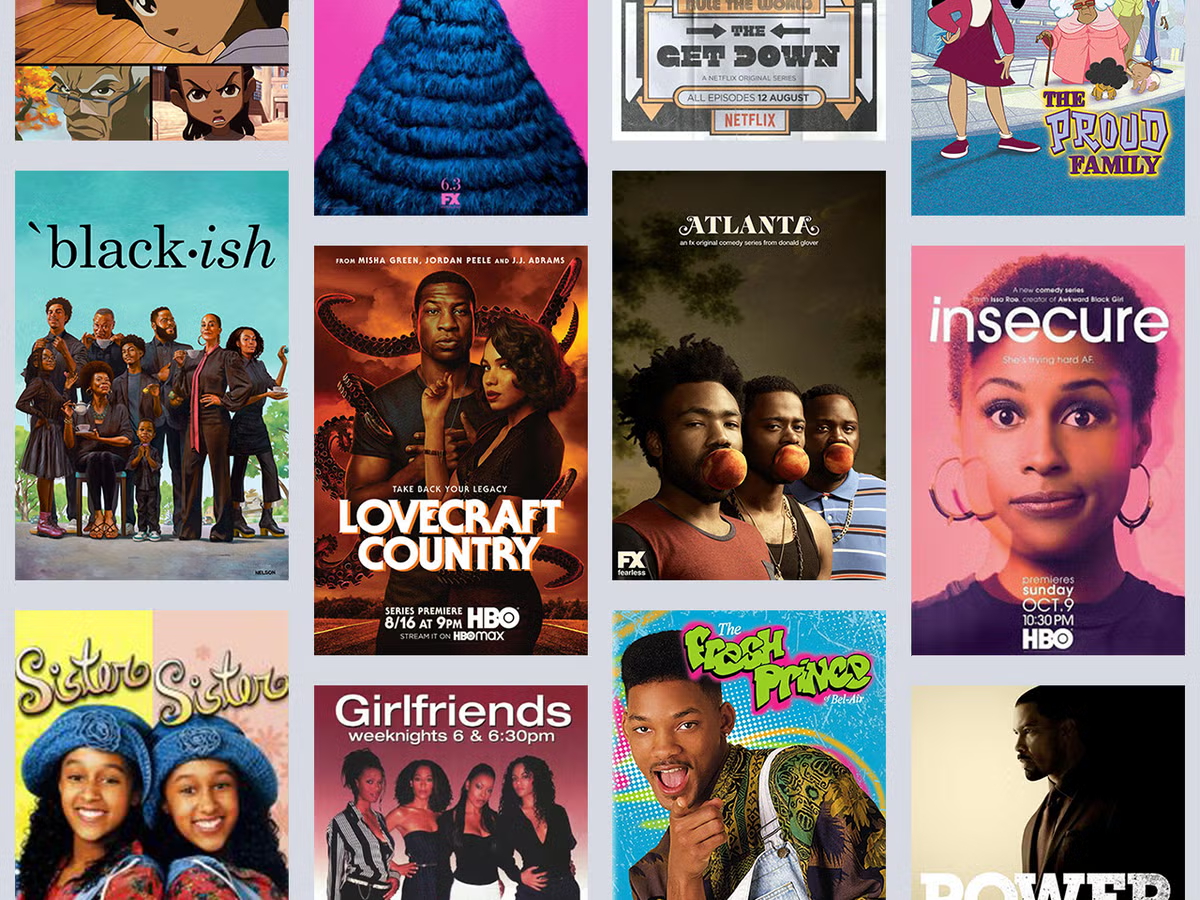
WASHINGTON (HUNS) — Black-led TV shows continue to face shorter lifespans than their white-led counterparts, raising long-standing concerns about equity in funding, marketing and support within the entertainment industry.
Despite public diversity and inclusion commitments from studios, networks and streaming platforms, many Black-led series featuring Black actors in leading roles and Black-centered shows focused on Black experiences are shelved before they have time to build an audience.
Industry data and media analysis indicate Black-led series often receive fewer episodes, smaller marketing budgets and quicker cancellation decisions, even as streaming platforms expand their content libraries.
This pattern of early cancellations fuels conversations about the differing standards between Black-led shows and similar white-led productions.
“A lot of Black-led and Black-centered shows are either being canceled or put on the back burner because that is allegedly what is not popular now,” Howard TV and film student Evan Aldrige said.
Like many other Black student filmmakers who study industry patterns, Aldrige believes those decisions are not rooted in audience disinterest, but in systemic bias.
“It depends on who the distributor or production company behind the show is,” Aldrige said. “Black shows are seen as too experimental, or like they do not have a place in entertainment, even though there is a whole demographic that has seen negative images of themselves since the beginning of this country.”
Streaming platforms often point to viewership data when justifying cancellations, but critics argue those metrics are misleading when shows are not equally promoted.
Howard TV and film student Noah Greene said metrics alone do not explain the disparity.
“I do not believe streaming metrics specifically hurt Black-led shows because the community will show up to watch them,” Greene said. “Shows like “Abbott Elementary” and “Insecure” prove that when audiences connect, the numbers are there.”
For example, “Insecure” drew about 1.1 million viewers for its HBO premiere and regularly reached around 1 million viewers per episode during its early seasons, according to network data.
“With “Abbott Elementary,” you always hear about a new season or a special episode because ABC is promoting it,” Greene said. “There are a lot of other shows that are not being marketed at the same level.”
Greene believes that marketing discrimination makes a big difference.
The lack of promotion that many Black series face creates a perpetuating cycle: Shows that are not advertised fail to reach broader audiences and are canceled for underperforming.
Issa Rae, creator of “Insecure,” addressed this issue in a 2021 interview with The Hollywood Reporter.
“We have to fight twice as hard for the same resources,” Rae said. “If the marketing is not there, the audience cannot find the show, and then it is blamed on lack of interest.”
Even shows that exceed viewership expectations are dropped.
After investing more than $120 million, Netflix canceled the hip-hop drama “The Get Down,” although it drew millions of viewers in its first month.
This, like many other cancellations, sparked negative reactions from audiences who felt promising shows were prematurely cut.
Media and entertainment professionals said the treatment of Black TV shows reflected broader historical patterns.
TV writer and executive producer Josef Sawyer said the disparities in TV and film mirrored the long-standing inequalities across other American institutions.
“That sounds like the Black experience in America, being underneath a more dominant society and having fewer opportunities,” Sawyer said.
He explained that marketing alone could not determine a show’s success. The lack of representation behind the scenes also influenced what stories reached audiences.
“Most TV shows are still created by people who are not people of color,” Sawyer said. “When opportunities do come, the pressure can be higher.”
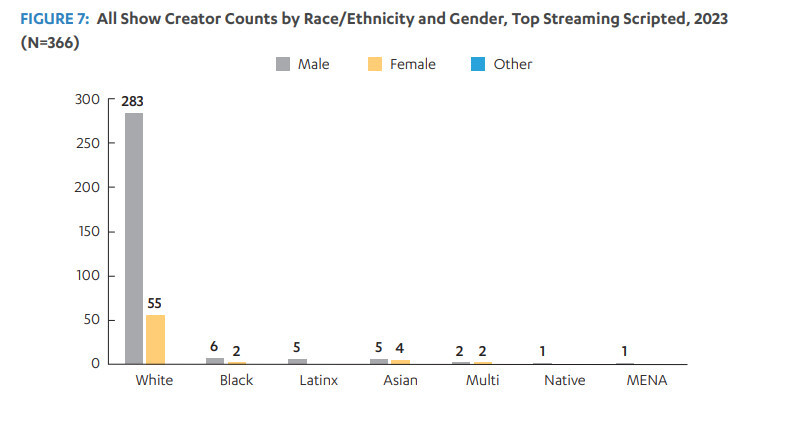
Representation among creators of top streaming scripted shows in 2023 shows a large imbalance, with White men accounting for the vast majority of creators while Black and other minority creators remain significantly underrepresented.
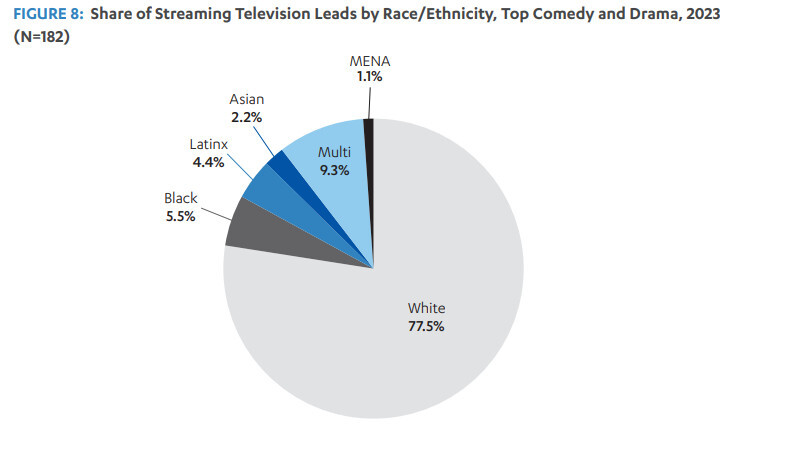
White actors made up the majority of lead roles in top streaming comedy and drama series in 2023, accounting for 77.5% of leads, while Black actors represented just 5.5%.
When Black-led shows are canceled early, the impact goes beyond a single project.
Aldridge said the cancellations push people out of work and make it harder for new Black filmmakers to break into the industry.
He argued that those who succeed are often boxed into limited roles, while others in power sometimes gatekeep rather than helping expand opportunities.
Greene said storytelling choices also matter, but audiences are hungry for variety.
“We need more stories instead of the same generic narratives,” he said. “We are the next wave of filmmakers bringing new ideas. Hollywood just has to be ready for us.”
Sawyer said many writers simply try to portray the diversity that already exists in real life.
“When we’re in writers’ rooms, we’re just trying to be honest about what’s happening in society,” he said. “If you’re telling stories in cities like Chicago, Atlanta or New York, those places are diverse. You don’t have to force representation; you just show reality.”
As conversations about representation continue, critics argue that true equity will not come from greenlighting more Black-led shows alone, but from giving them the same time, promotion and creative freedom afforded to others.
Until then, the uneven playing field remains a defining challenge for Black creators trying to tell stories on screen.
Grant Roundtree is a reporter for HUNewsService.com