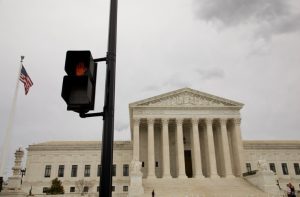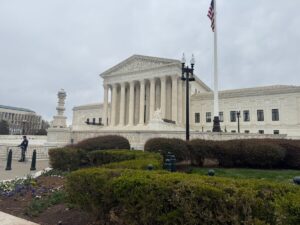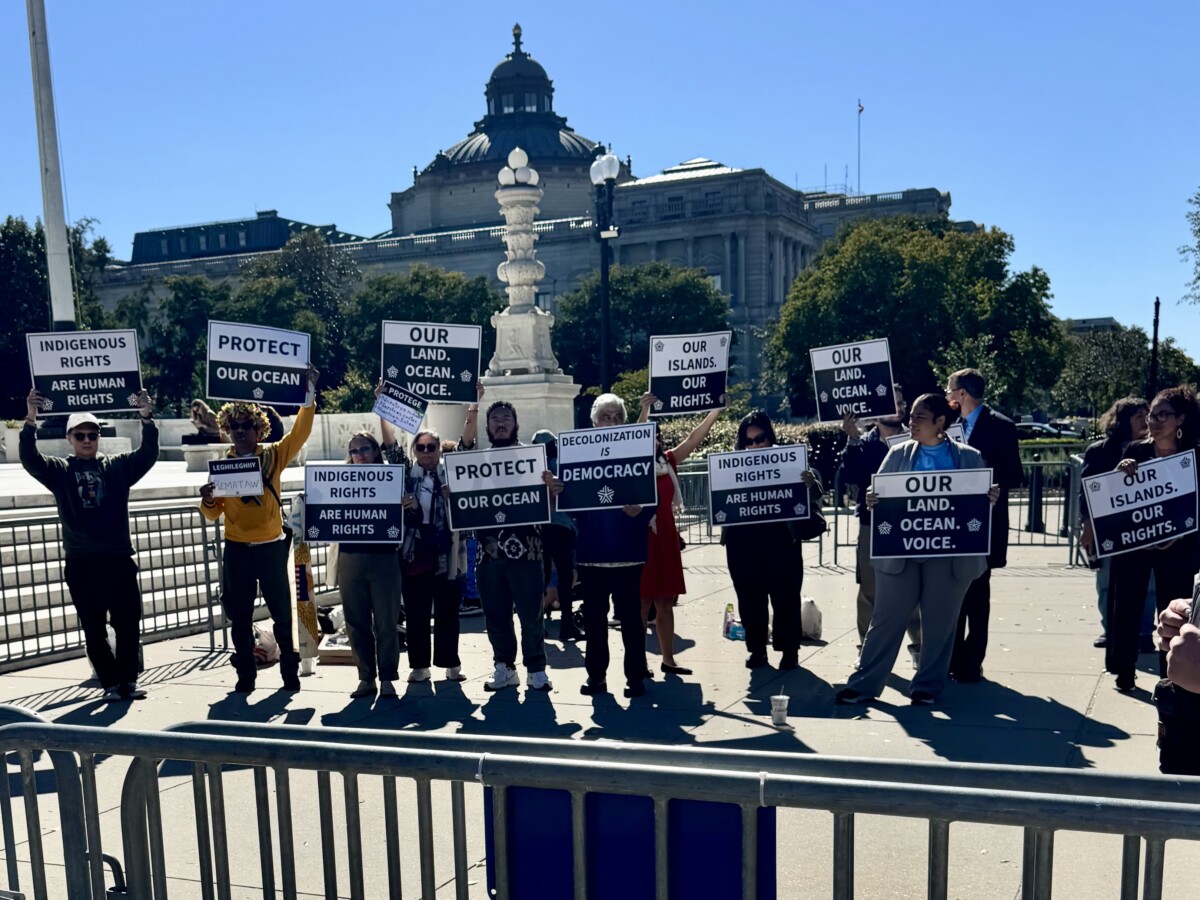
WASHINGTON (HUNS) — Outside the U.S. Supreme Court on Wednesday morning, demonstrators chanted behind barricades, then fell quiet for what one described as a “moment of meditation” before oral arguments began in Department of the Air Force v. Prutehi Guåhan.
That scene was calm. The case inside was anything but simple.
Inside the court, the case came down to a technical legal question: When has a federal agency — in this case the Air Force — gone far enough with a plan to be challenged in court?
That question occupied much of Wednesday’s argument as the justices repeatedly pressed both sides over a 2021 application by Andersen Air Force Base to renew a hazardous-waste permit.
The Air Force wants to continue disposing of military explosives at Tarague Beach in northern Guam by burning and detonating them in the open. Tarague lies above Guam’s sole-source aquifer, which supplies most of the island’s drinking water, according to the 9th U.S. Circuit Court of Appeals.

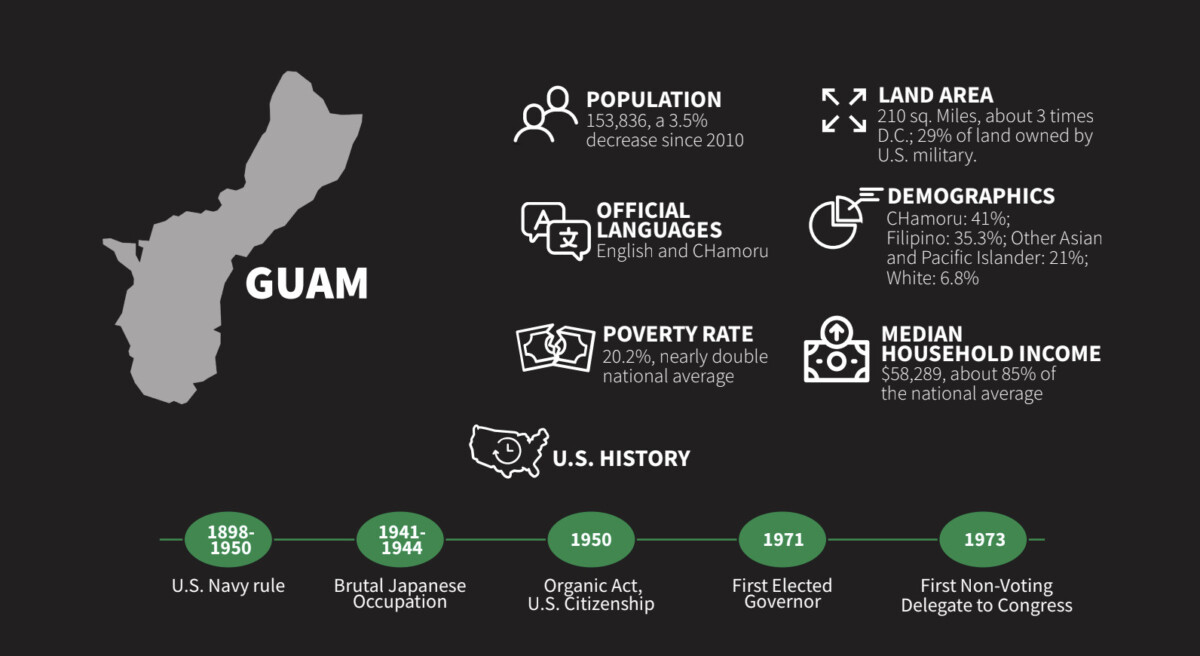
Prutehi Guåhan, a Guam-based environmental group, says that by the time the Air Force submitted that application, it had already made important decisions about where and how the waste would be disposed of — decisions the group argues should have undergone federal environmental review first.
The Air Force says the application was not the end of its decision-making. It says filing the permit simply started a regulatory process in which Guam environmental officials could review the proposal, require changes or reject it.
For Alyssa Burmeister, director of the St. Croix Environmental Association and an environmental advocate in the U.S. Virgin Islands, the stakes extended beyond the legal arguments to who gets a voice in federal decisions affecting U.S. territories.
The National Environmental Policy Act, or NEPA, requires federal agencies to consider the environmental consequences of certain major actions and gives the public opportunities to weigh in during that review.
“NEPA is one of the three ways that we have to share our opinion, to contribute, to consent to things that the U.S. government is doing in our territories,” Burmeister said.
The act does not give residents the power to approve or block a federal decision. For Burmeister, however, that process represents one of the limited ways territorial residents can formally make their views part of federal decision-making.
Sopan Joshi, an assistant to the solicitor general, opened for the Air Force by arguing that filing a permit application could not constitute final agency action, because it begins a regulatory process rather than ends one. He told the justices the outcome remains a “moving target” until regulators act on the permit.
Joshi also warned that treating a permit application as final agency action could invite repeated lawsuits as the permitting process changes. He said that could lead to a “multiplicity of suits,” undermining the finality requirement meant to keep courts from reviewing agency decisions too early.
Chief Justice John Roberts pressed that argument to its logical endpoint.
“The Air Force’s action is never final and, therefore, never reviewable?” Roberts asked.
Joshi responded that the permit application itself would never become final agency action.
Justice Sonia Sotomayor focused on the opposite risk: waiting too long. If a court later determined that the environmental review had been required earlier, she said, litigation could “unravel perhaps years of work.”
Justice Brett Kavanaugh raised a related problem. If the Air Force’s action was not yet final but NEPA review was still required, he said, the agency could complete the hazardous-waste permitting process under the Resource Conservation and Recovery Act, or RCRA, only to begin a NEPA review afterward. He called that result “completely counterintuitive.”
Kavanaugh also questioned whether it made sense for the court to decide when the Air Force’s action became final without also deciding whether NEPA applied at that point. The questioning moved quickly across the case’s competing legal issues.
At one point, Justice Elena Kagan apologized for tossing Joshi around before steering him back to the final-agency-action question. She then asked whether the government’s reasoning would mean that other federal decisions requiring outside regulatory approval — including major construction or cleanup projects — would also remain non-final, a question that gives this case significance beyond Guam.
The broader issue is how long someone challenging a federal agency must wait before a court will hear the case — and whether, by the time that door opens, the agency has already made the choices the lawsuit was meant to question.
Justice Clarence Thomas later focused on the dispute over the timing of the application while questioning Caroline A. Flynn of Earthjustice, who argued for Prutehi Guåhan. Thomas said the question was whether there could be final agency action “when the government is the applicant.”
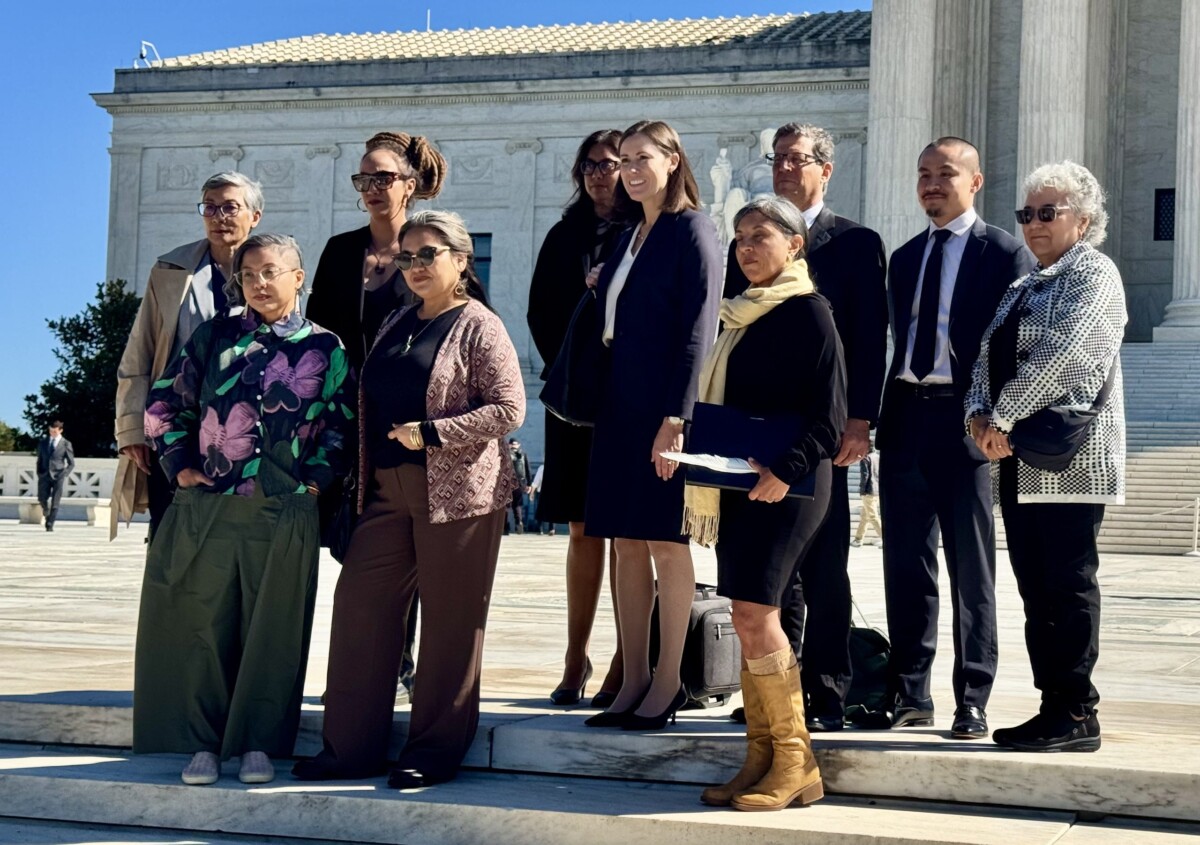
Flynn said yes, arguing that the Air Force had reached the end of its decision-making process and that the decision carried legal consequences.
The case also turns on how two environmental laws interact.
The dispute is over whether the Air Force was required to conduct environmental review under NEPA before reaching the point reflected in its permit application.
David Henkin, an Earthjustice attorney representing Prutehi Guåhan, said NEPA is also intended to give affected communities a voice before federal decisions are made.
“One of the reasons that we’re fighting this fight is to ensure that the people of Guam have a say in the future of their land and their environment,” Henkin said.
He said the law requires agencies such as the Air Force to involve the public in decision-making rather than make decisions “behind closed doors.”
Joshi argued that Prutehi Guåhan’s position would “shove” NEPA “into the application stage,” duplicating requirements the government says are already built into the RCRA permitting process.
Justice Ketanji Brown Jackson challenged that reasoning, pointing to Supreme Court precedent requiring compliance with two congressional mandates when the requirements do not conflict.
“You don’t get to pick and choose,” Jackson said, simply because one requirement is more specific.
A federal district court initially dismissed Prutehi Guåhan’s lawsuit, but the 9th U.S. Circuit Court reversed that decision in February 2025.
The appeals court concluded that the Air Force’s permit application reflected a sufficiently definite choice about the location and method of disposal to qualify as final agency action. Judge Lawrence VanDyke dissented from that portion of the ruling, arguing that submitting the application continued the permitting process rather than ending the Air Force’s decision-making.
The Supreme Court agreed in March to hear the Air Force’s appeal.
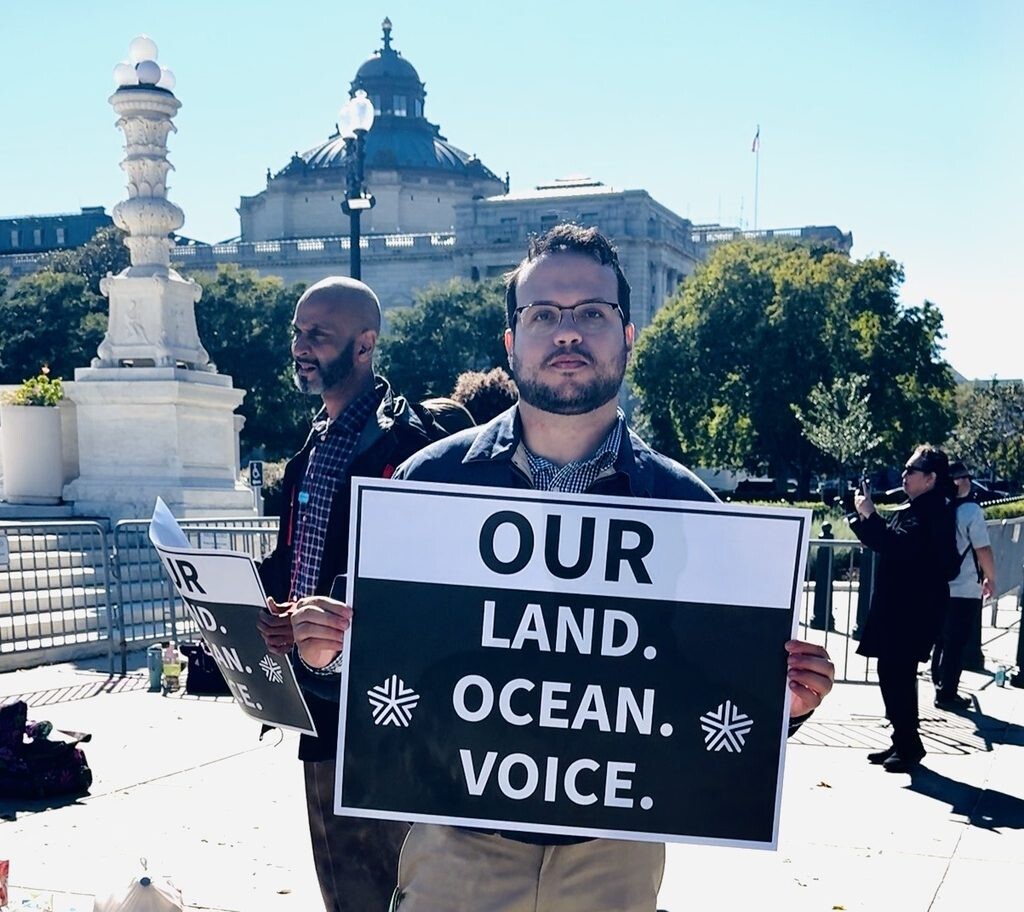
Outside the court, the legal questions were reflected in signs reading “Our Islands. Our Rights,” “Our Land. Ocean. Voice.” and “Indigenous Rights Are Human Rights.”
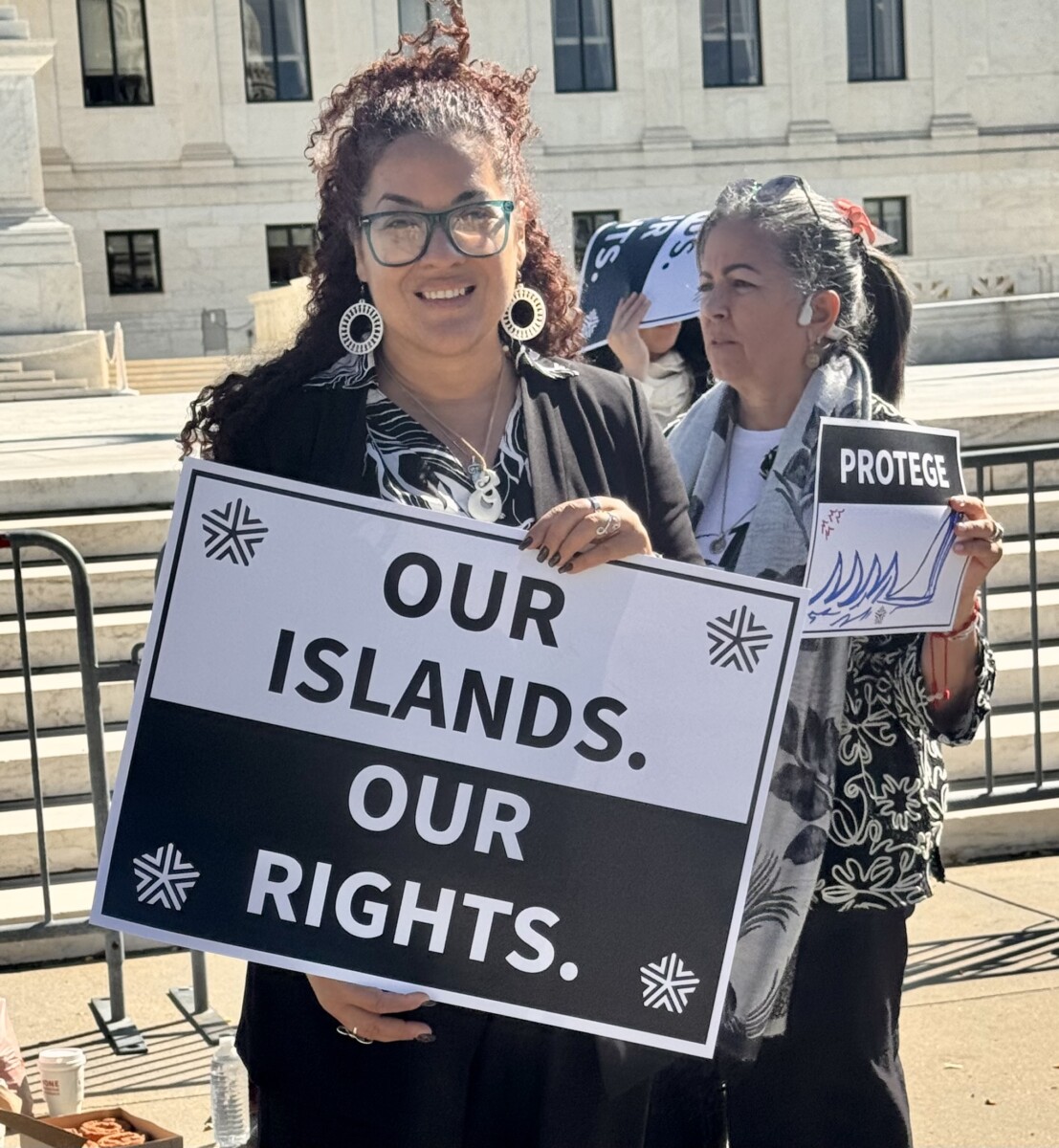
Burmeister, who demonstrated with Right to Democracy “in solidarity with other territorial partners,” said the ability to participate in federal environmental review carries particular weight for people living in U.S. territories because of their limited political representation in Washington.
“Territories don’t get to vote for president,” she said. “We don’t have senators.”
For Nicole DeLisle Dueñas, the case remained rooted in what happens at Tarague.
“Tarague is such an important and special place,” she said, describing a landscape that has undergone “devastation” and “desecration.”
“There’s really a lot at stake here,” Dueñas said.
The court’s ruling could determine whether Prutehi Guåhan can continue pursuing its challenge to the Air Force’s actions and could clarify how NEPA applies to the permitting process at issue.
A decision is expected by the end of its current term in June 2027.
La Tetra Metts-Owens is a reporter for HUNewsService.com. She also covers Prince George’s County.