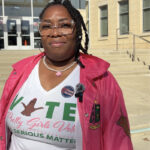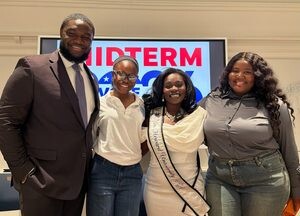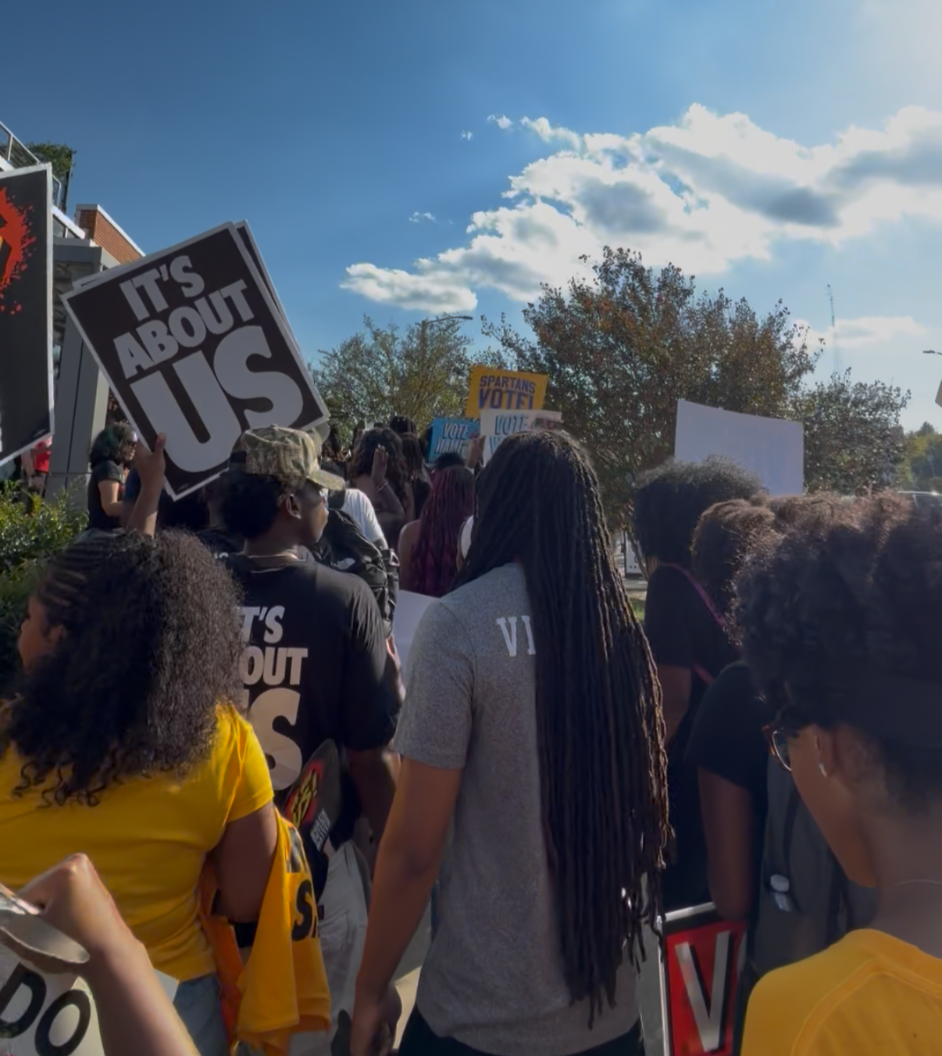
Hundreds of students from three North Carolina schools marched 45 minutes to the nearest polling site in Union Square to cast their ballots on Oct. 15, the first day of early voting in the state.
The students from North Carolina Agricultural and Technical State University (NCAT), the University of North Carolina (UNC) at Greensboro and Bennett College did this during an ongoing dispute over the removal of on-campus polling sites, which Guilford County Board of Elections members attributed to low voter turnout.
Dihanna Williams, a sophomore political science major at NCAT, said the march was intended to challenge the perception that college students do not participate in elections.
“We wanted to prove to not only ourselves as students, but to them, that we actually do go out and vote, no matter the circumstances that they make for us,” Williams said.
The march followed months of opposition to the removal of campus early voting sites. In January 2026, the College Democrats of North Carolina and students from NCAT, UNC Greensboro and Western Carolina University (WCU) challenged the removal of campus early voting sites in a lawsuit against the state election board.
They argued the decision specifically targeted college-age students and violated the 26th Amendment by placing a disproportionate burden on younger voters who might not have reliable transportation to travel to off-campus sites.
The lawsuit’s civil complaint outlined the barriers students would face off campus.
“The students who most rely on on-campus early voting sites are less likely to have reliable access to private transportation, have mobility constraints, often juggle busy schedules and are navigating the voting process for the first time,” states the complaint.
The 26th Amendment lowered the voting age for all Americans to 18 from 21, and guarantees protection against age based discrimination in the exercise of their voting rights by the United States government or any of the 50 states.
The legal effort ultimately did not restore the campus polling sites. In February 2026, the College Democrats of North Carolina dropped their lawsuit after a federal judge rejected their request to restore early campus voting sites.
Williams was among approximately 40 students who traveled to Raleigh, North Carolina in January 2026 to oppose the removal of their polling sites, protesting outside of the state capitol building. Williams said that she and other students were frustrated by the election officials cementing the decision despite students raising concerns about transportation and accessibility.
At NCAT freshmen are not permitted to have cars on campus, but exceptions may be made for students with medical needs or those who are employed off campus. The nearest Greensboro Transit Agency bus stop is a four-minute walk. Williams also noted that many out-of-state students lack access to vehicles, leaving them to rely on public transportation, rideshares or long walks in the heat to reach polling locations.
Beyond individual students, campus organizations also played a role in mobilizing participation in the march. Alexis Cox, a junior political science major at NCAT and founder of the student advocacy organization Speak Out, said the removal of polling sites and comments directed toward NCAT students contributed to the motivation behind the march.
Cox founded Speak Out as a space where students could talk candidly about their political opinions and issues that concerned them without fear of repercussions. The organization aims to amplify student voices and drive meaningful impact both within their university and throughout the wider community.
She became involved in the walk to the polls after an organizer from the university’s College Democrats chapter reached out to Speak Out for assistance promoting it and encouraging student participation.
The march also received support from the broader Greensboro community, including students from University of North Carolina Greensboro and Bennett College. NCAT alumni, students from neighboring institutions and local organizations joined or assisted the demonstration, according to Williams. Campus police helped guide participants and ensure they had access to water and other supplies during the walk.
Community organizations like When We All Vote and Registration Nation Action Fund’s March On For Freedom Bus Tour helped to provide transportation back to campus, including shuttle services for students who could not make the return trip on foot.
To many participants, the march also carried significance beyond the immediate dispute over polling locations. Both Williams and Cox emphasized the importance of maintaining voting rights for students at historically Black colleges and universities.
“We can see from history that people try so hard to take our ancestors’ right to vote away. So that alone shows how important it is for us to use our voice,” Williams said. “So when we don’t have access to something that is our right – because it is our right to vote – it shows all of us that clearly our vote matters, because they’re taking it away.”
For Cox, the march represents a commitment to preserving voter access for future generations.
“Even if you don’t think you’ll see change today, you have to fight for the people for tomorrow,” Cox said.
Although North Carolina’s early voting period ended on Oct. 31, the students continue to focus on fully participating in the upcoming midterm elections and advocating for the restoration of on-campus voting sites.
Copy edited by Daryl R. Thomas Jr.