After her sister’s death, Brenda Alford inherited years of research on her family’s history—and an unanswered question about an ancestor who disappeared during the Civil War.
When Brenda Alford’s phone rang a few hours before dawn, she contemplated calling an ambulance. Her sister, Jacquelyn, was on the other end.
“What’s wrong with you?” Brenda recalled asking.
Brenda had to be up at five for work. Meanwhile, Jacquelyn said she had been awake for hours, trying to connect fragments of their family’s history. She believed she had identified Lydia Alford, an ancestor she had been trying to place in the family tree, among post-Civil War records. Excited, she could not wait until morning to tell her sister.
Behind that excitement sat at least a decade of painstaking research. Jacquelyn, the family historian, had spent years tracing relatives across generations separated by slavery, emancipation and time.
“She would stay up half the night, put this puzzle together,” Brenda recalled.
Brenda described Jacquelyn’s discovery as a “spiritual awakening.” Finding Lydia, the Alfords’ earliest known ancestor, was the starting point for tracing generations of relatives whose histories had been scattered across records and family lore.
Before she died in 2013, Jacquelyn shared her findings about many of the 900-plus descendants she’d documented at family reunions, many held in their ancestral home, Madison, in Montgomery County, Georgia. After Jacquelyn’s death, Brenda took up the search, a responsibility she connects to a promise she made to her sister. But despite decades of research, gaps in the historical record have left parts of the family’s history unresolved.
The challenge is hardly unique to the Alford family. For descendants of enslaved African Americans, tracing family history can mean confronting what genealogists and historians call the “1870 wall.”
According to the National Archives, the first federal census after emancipation generally identified formerly enslaved people by name. Earlier slave schedules—separate census records compiled in 1850 and 1860—typically recorded them by age and sex and race under their enslavers’ names. Following a family line beyond that divide can require reconstructing relationships from scattered and sometimes conflicting evidence.
For Brenda, continuing Jacquelyn’s work has also meant honoring the history surrounding the family’s missing ancestor.
On Sept. 30, Brenda attended the reopening of the African American Civil War Museum in Washington. The museum, closed for renovations in 2022, reopened a year behind schedule following an $8 million renovation and expansion funded by public and private partnerships, District of Columbia government funding and private fundraising led by Frank Smith, the museum’s founder and executive director.
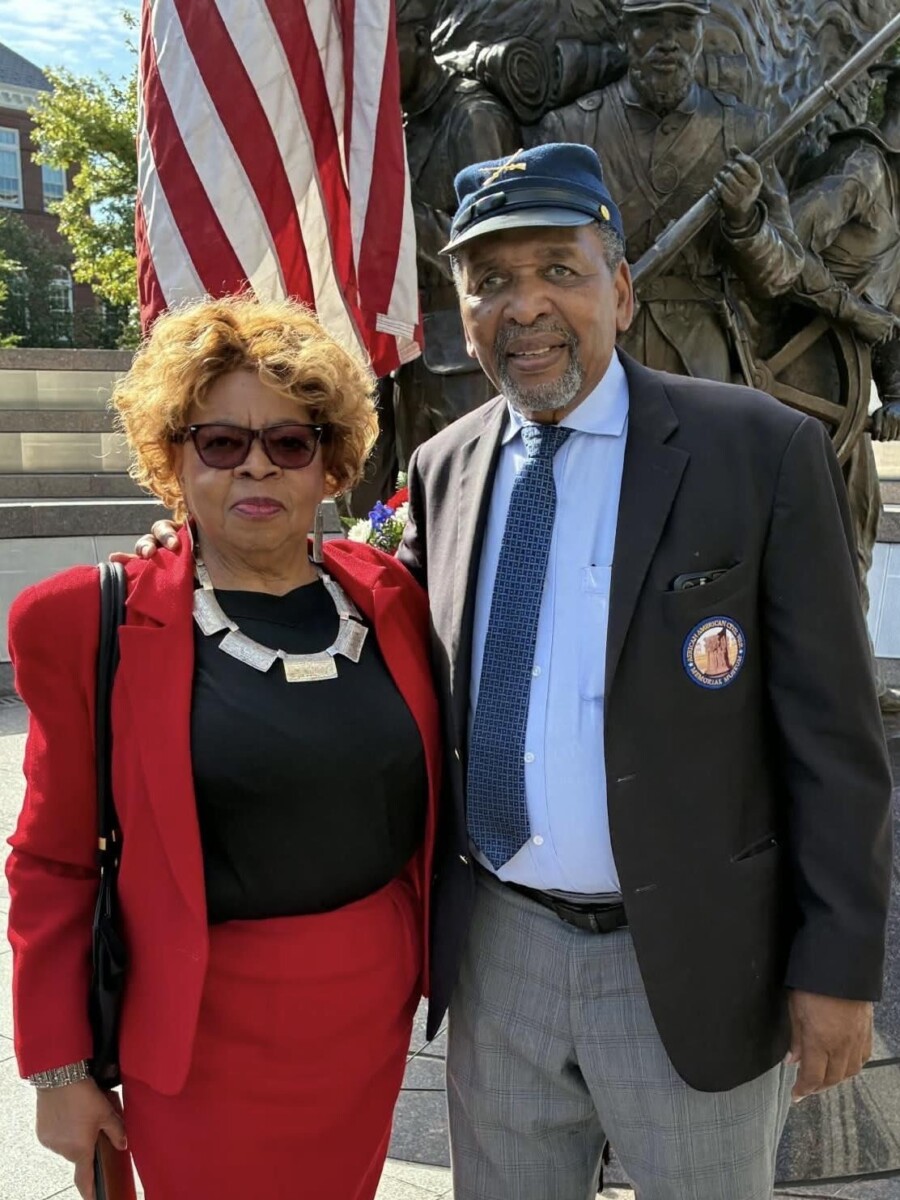
A Virginia resident, Brenda, drove just under 30 miles to partake in the milestone. While she attended to celebrate decades-long efforts to preserve the history of Black Civil War soldiers, the event became another way to keep her promise to Jacquelyn.
With the speeches over and the ribbon cut, Brenda felt compelled to join the Committee of 100, a group of the museum’s financial supporters—her family’s unfinished search top of mind.
“Well, we’re still trying to find my great-grandfather,” she said.
His name was James Alford.
Searching for James Alford
In November 1864, Union troops on Sherman’s March passed through Madison, near the farm where Brenda said James and his wife, Lizzie, lived. As the army advanced, enslaved people left farms and plantations, some hoping the soldiers would offer a path to freedom. The Alford family believes James was among them.
Brenda said the family also believes that if James did leave with the army, it is possible that he “may have been drowned or shot at Ebenezer Creek.”
There, that December, Union troops removed a pontoon bridge, leaving Black refugees stranded as Confederate cavalry approached. Many drowned while trying to cross. Civil War historian Bennett Parten noted that the region where James lived lay along the broader route of the advancing army, making an encounter possible.
Parten, author of ‘Somewhere Toward Freedom: Sherman’s March and the Story of America’s Largest Emancipation,” said those who followed the troops faced uncertain protection, shortages and the risk of being left behind.
Historical accounts and maps document the army’s movements, but according to Parten, the identities and eventual fates of the Black refugees who followed are much harder to establish.
“The army didn’t take any sort of census about the people that were following them,” Parten said.
For descendants searching generations later, that absence can leave a family account without the documentation needed to confirm it.
No record examined by HUNewsService.com places James among those refugees, establishes that he followed Sherman’s troops or confirms he served in the Union military.
According to the Alfords, James may have had other motivations for leaving. Family stories hold that James was furious when he discovered that he and Lizzie shared a father, Will—or William—Alford, whom Brenda identifies as one of the family’s enslavers.
“The only definite thing we know is that oral history indicated that he never returned to Morgan County,” she said.
Tracing even that much took persistence. Jacquelyn’s obituary credits her aunt, Cora Alford Williams, with passing down the family’s account to her two youngest children, Eula Williams Youngblood and Willie Williams. Brenda said Cora was reluctant to discuss details surrounding James’ disappearance and its fallout because of her grandmother Lizzie’s subsequent actions. According to Cora, Lizzie continued to live with the enslavers after emancipation.
“And she had some other men,” Brenda said. Remembering Eula’s craftiness, she added, “My dad’s baby sister was not proud of her, but my cousin got it out of her, and she secretly taped her.”
What Records Can Reveal—and Conceal
The surviving records fill in parts of the story, but create more questions. Brenda’s grandfather Charles Alford’s 1943 death certificate names James as his father, yet records his mother as Elebeth Alford. A 1930 census instead identifies Lizzie as Charles’ mother. Whether Elebeth and Lizzie were the same woman remains unresolved.
Lizzie’s 1931 death certificate adds another unexplained name: It lists a man named ‘Green’ Alford as her father, even though Brenda identifies William Alford as Lizzie’s father and lists a separate enslaver named Greene.
Ozier encountered a similar challenge in her own family research when she found three men named Sam Johnson living in the same area around the same time. Comparing their spouses and children helped her determine which one belonged to her family.
Other relatives’ records can provide clues when a direct line of research stalls.
“You want to go not just back, but like sideways,” said genealogical researcher Walter English. “You want to check every aunt, uncle and cousin and everything else because sometimes those people may have answers that can help you get over your wall.”
Ozier also emphasizes establishing family relationships through more recent records before attempting to trace them further back.
“Before I even get to the antebellum information, I want to make sure I have gotten all my family to the 1870 census,” Ozier said.
Surnames can complicate the search further.
“African Americans did not necessarily take on the last name of their last enslaver,” Ozier said.
The Alford family’s research reaches back before emancipation, but conflicting names, ages and relationships continue to complicate efforts to establish ancestral connections.
Heirlooms, Reunions and DNA
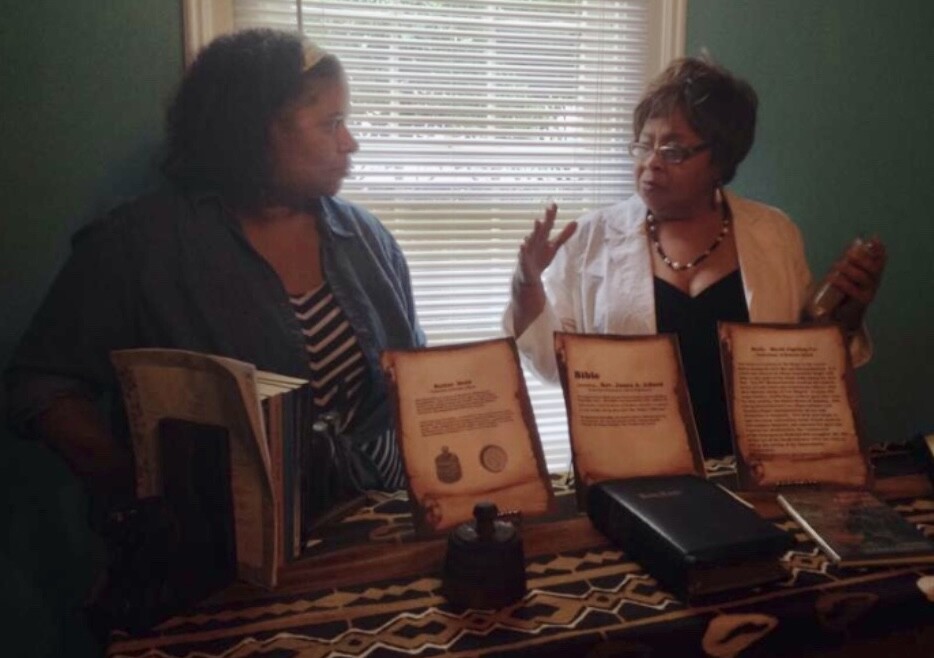
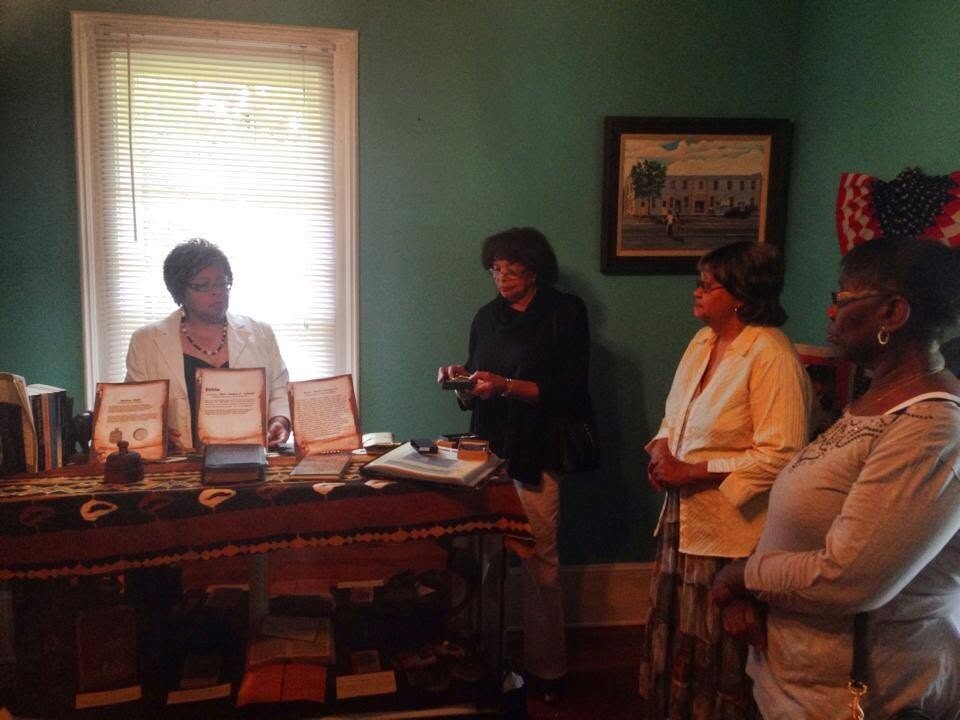
While James’ fate remains elusive, other parts of the family history have survived in more tangible forms. In 2014, a year after Jacquelyn’s death, the Morgan County African American Museum in Madison presented “The Alford Family Exhibit: Celebrating Seven Generations of Family History, 1785–1950.” Family trees, photographs, documents and heirlooms brought the research beyond the reunions.
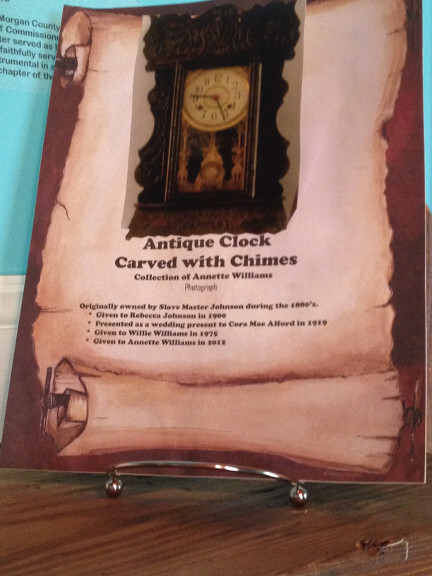
On view were a wooden butter mold associated with Rosette E. Alford and a display highlighting cast-iron irons and an oil lamp. Another board traced an antique clock’s reported passage through generations. A wall of family portraits preserved faces alongside names.
For Brenda, preservation has become as important as discovery.
The exhibit could not establish what happened to James or resolve every disputed family connection. But it brought together names, photographs, objects and accounts that might otherwise remain scattered among relatives. In a search marked by gaps in the written record, preserving the origins of those materials is crucial to preserving the history itself.
In the years since, however, Brenda said relatives have not organized another reunion.
“We don’t meet anymore. [They’re] too lazy. Nobody wants to do anything. So we haven’t met in a long time,” Brenda said.
Although the reunions have stopped, the research has continued. At a June 23, 2018, DNA coaching session, Brenda presented more of the family’s research, including its family tree and history reaching back to Lydia Alford, according to the Alford Family DNA Memory Project newsletter. Genealogist Michael Williams helped relatives examine Ancestry and 23andMe results, and the group discussed how additional testing might clarify family connections.
One question remains unresolved: whether James fathered Lizzie’s third child, Dave. Although Brenda initially identified James as his father in writing, she later acknowledged that Dave’s paternity is uncertain because no one knows exactly when James left.
“I would like for the descendants to do the DNA,” Brenda said.
So far, some relatives have been reluctant to participate.
Ultimately, she hopes to trace her ancestry back to Africa. For now, she wants to protect what her sister and other relatives established, investigate what remains uncertain and leave younger family members fewer unanswered questions.
Despite her own efforts over the years, Brenda is unequivocal about who laid the groundwork.
“It was my sister that traced it back,” Brenda said. “I cannot take credit for that.”
Passing the Torch
Brenda wants future generations to understand their family histories beyond documents spoke not about a particular document but about the people behind the names.
“I would want them to know, first of all, that these people respected life, that they thought well of their family,” she said.
She pointed to relatives who sought legally recognized marriages, voting rights and property ownership after emancipation. Their choices, in her telling, were part of a larger determination to secure a future for the family.
For genealogists like English, preserving the past also means engaging those who will carry it forward.
During a June 2026 Juneteenth celebration at Fergusons Downtown in Las Vegas, English organized a scavenger hunt that introduced children to genealogical research through a series of questions and clues.
“They’re learning genealogy in a fun way,” English said.
Alford is finding her own ways to engage younger relatives.
Years ago, she photographed a young niece at a Civil War memorial. That niece is now grown and has a child about the same age the niece was in the picture. Brenda hopes to return with another generation and recreate it.
“So to me, that’s full circle,” she said.
Before she can recreate the moment at the memorial, though, she has another task: finding the original photograph.
For African Americans hoping to preserve their family histories, genealogists recommend starting with what is already known. Interview older relatives, identify people in family photographs and document stories that may not appear in official records.
Genealogist Tammy Ozier advises working backward through known generations and verifying information against historical records. When direct ancestral lines become difficult to trace, researcher Walter English recommends investigating extended relatives for additional clues.
Preserving photographs, recordings and documents—and identifying the information’s origin—can give future generations a stronger starting point.
Brenda Alford plans to continue examining historical records and pursuing DNA evidence to resolve unanswered questions about her ancestry.
Much of that work builds on years of her sister Jacquelyn’s research. She is clear about what remains hers to do.
“And now it’s my turn to take it over,” she said.