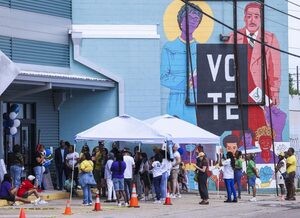
Lailah Terry, a sophomore architecture major from Atlanta, had quite the time trying to vote away from home. Her ordeal started during the summer. She submitted a mail-in ballot request three times, and nothing happened.
Then her mother attended Howard University’s homecoming in mid-October and helped Terry submit a final request. Terry sent her mail-in ballot by U.S. Postal Service Priority Mail to ensure it arrived in Atlanta.
“It was really stressful,” she said. “I’m just glad I was able to vote because last year I wasn’t able to.”
At Howard, many students like Terry have had to figure out the best method to vote in the midterm election. (See “Voting 101, below.) The terrain can be daunting, but Terry and other students were determined to navigate it.
The 2026 midterm elections reflect a pivotal point for change in America. Under the current administration, Terry said that voting can seem hopeless and that she does not trust the U.S. voting system. “I don’t see the point in voting, but that doesn’t mean it’s not empowering,” she explained.
Esayah Edghill, a sophomore history and English double major from Brooklyn, New York, also voted early. He took a quick trip home on Oct. 24 to vote in person at a polling site near his house. For Edghill, the process was quick because he used a sample ballot and did his research.
Edghill believes that voting is of the utmost importance. “I do feel that everyone has personal stakes in this election,” he said.
“Politics isn’t just what we see on the news. Politics is what we pay for gas, what we pay for groceries, the streets we walk on, the funding our university gets, the safety in the neighborhoods that we hang out in. Politics is everything and everywhere in our lives.”
Edghill serves as external affairs chair for the Coalition for Good Trouble at Howard University, an organization that focuses on social justice and wellness, with an emphasis on voting rights and civic engagement. He and other members of the organization have sponsored events to help people register to vote and ensure they had enough information to vote on Election Day.
Talia Watson, a sophomore journalism major and hip-hop studies minor, said that “young adults need to remember how much power we actually have.”
“Something that really bothers me,” she said, “is how many people my age don’t seem to care about exercising their right to vote.”
Watson said she understands that politics can be overwhelming, but choosing not to participate doesn’t mean that the decisions being made will not affect her generation.
“We are the generation that will have to live with the consequences of today’s decisions, so we should be actively involved in shaping them,” Watson said. “Change doesn’t happen overnight, but voting is one of the ways we can start.”
Sharae Birden, Riley Evans and Erin Wiley are reporters for HUNewsService.com.
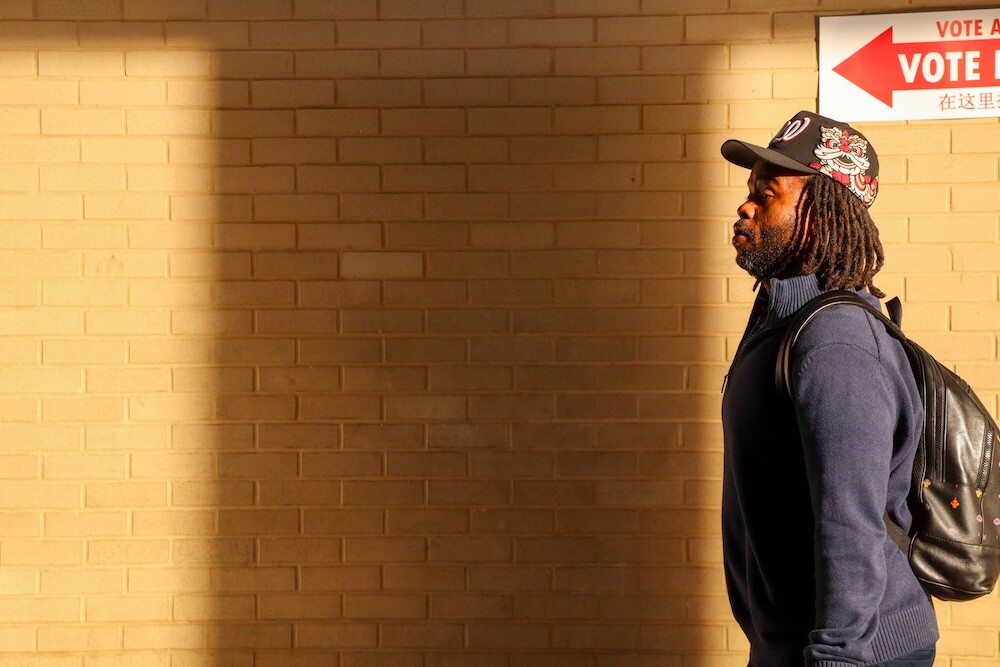
Voting 101
The process of voting and getting there can take some twists and turns. The one day reserved for national elections is the first Tuesday in November. However, voting season offers different methods beyond Election Day. Here are different ways for voters to cast their ballots:
Eligibility
First, there are requirements that determine who is eligible to vote in the United States. A voter must be a U.S. citizen living in or outside the country or a dual citizen living here or abroad, according to the website usa.gov. Even if citizens are experiencing homelessness but meet their state eligibility requirements, they are eligible to vote.
It’s important to note that non-citizens, including permanent legal residents, cannot vote in federal, state and most local elections. In addition, some people cannot vote after being convicted of a felony, according to the website. Eligibility can vary by jurisdiction for those serving time for other types of crimes.
In-Person Voting on Election Day
The main voting method is in-person on Election Day. This is the most common method used by voters in the United States. Regulations and requirements that outline in-person eligibility for voting differ from state to state. Even registering to vote varies by state, but most require some form of registration to add a person to the voter rolls.
On Election Day, the polling places where people may vote typically are determined according to where the voter resides. However, Washington residents can vote anywhere in the District of Columbia on Election Day. Voter ID is required in 36 states and must be presented when voting in-person.
In-Person Early Voting
Early voting is a period of time that allows voters to vote in person before Election Day. The time period for voting varies by state. Most states allow residents to vote early with no need for an excuse.
Mail-in and Absentee Voting
Some states require voters to request an absentee ballot. Mail-in and absentee voting is available to those who are not able or do not want to vote in-person. Absentee voting requires the voter to request a ballot; some states require an excuse while others do not. For mail-in voting, some states mail ballots to voters before Election Day.
— Sharae Birden, Riley Evans and Erin Wiley