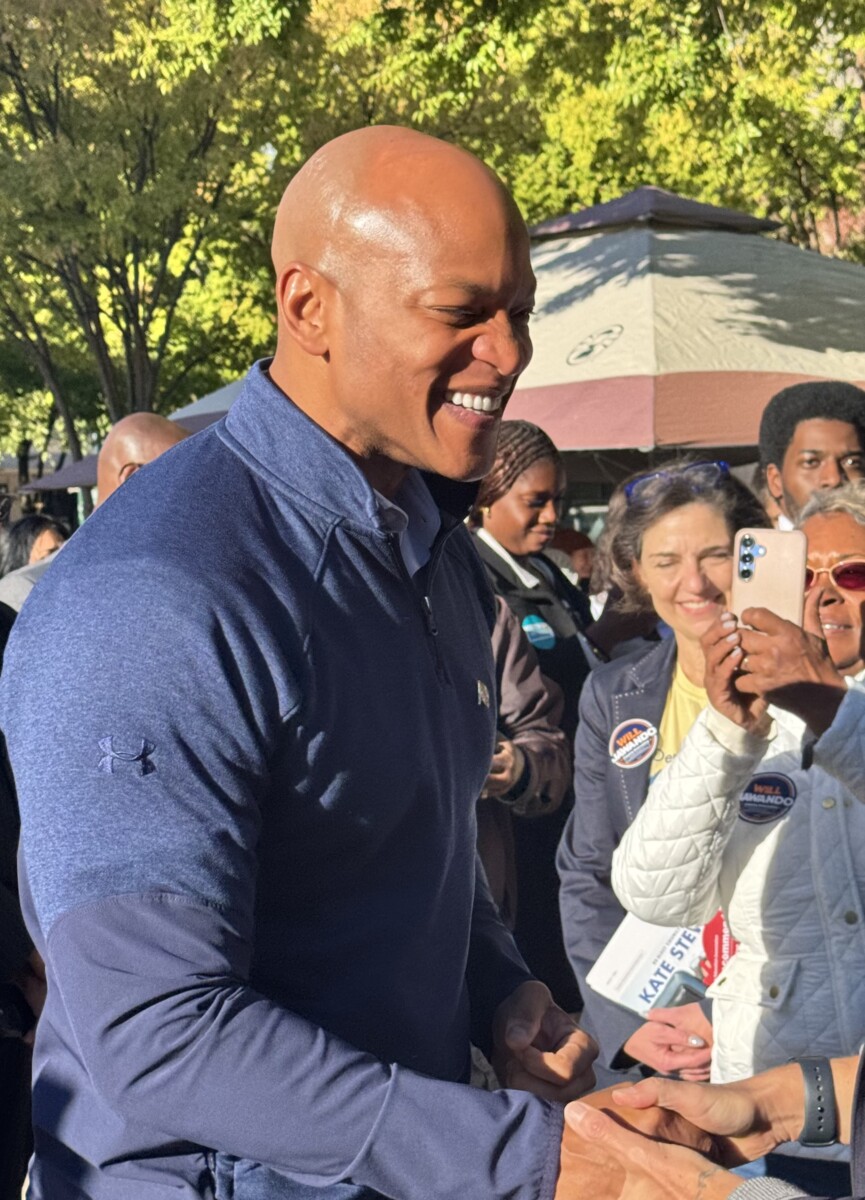
Maryland Gov. Wes Moore had a warning for fellow Democrats as early voting began: merely opposing President Donald Trump would not be enough. The party also needs to show it can solve problems that predated his return to office.
Speaking at the District 18 Breakfast Club in Silver Spring on Oct. 22, Moore argued that Democrats needed to move faster on housing, education and other concerns shaping Americans’ daily lives.
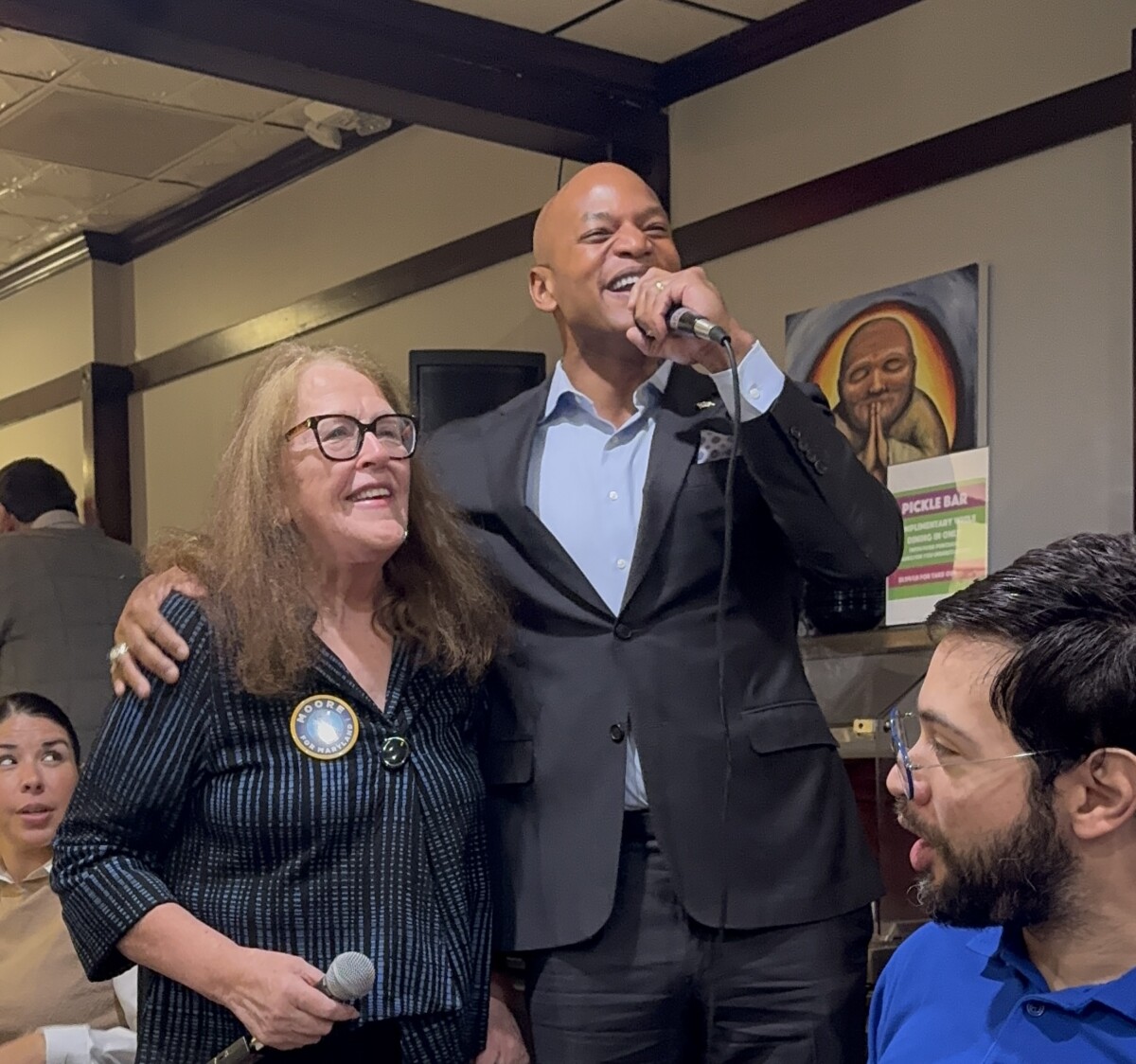
“It’s not just a messaging problem, it’s a results problem,” he said. “Because if you fix the results problem, you’ve now fixed your messaging problem.”
His remarks at Parkway Deli & Restaurant and a subsequent appearance at Veterans Plaza, about a 12-minute drive away, brought together two strands of his campaign message: resistance to Trump’s policies and an argument that Democrats must earn public trust through governing.
Moore, who is seeking reelection, urged attendees to mobilize voters for Democratic candidates. But he also acknowledged his party’s role in creating the conditions for Trump’s return.
“We have to be honest about the fact that we are partially, the Democrats are partially responsible for opening the window that he crawled back in,” he said.
Moore argued that Democrats should respond more urgently to housing and education concerns rather than offer lengthy plans or commissions. He cited a lack of affordable housing and schools that leave students unprepared for college or careers as examples.
He pointed to affordable housing and schools as problems requiring urgent action rather than lengthy plans or commissions.
“If someone says that my child’s school is not preparing them for college or career, no one wants to hear me say, and that’s why I’m going to do a seven-year blue-ribbon commission,” Moore said. “No. Fix the schools.”
The governor expressed optimism about Democrats’ chances in congressional and gubernatorial races while urging the party to distinguish accountability from revenge.
“I believe in accountability, but revenge, frankly, is what got us here,” Moore said.
That message accompanied sharp criticism of Trump throughout his remarks. Moore accused the federal administration of harming Maryland residents through its treatment of federal workers and its policies on health care, food assistance and trade.
“We will work with anyone, but we will bow to no one,” he said.
Responding to an attendee’s question about zoning and housing costs, Moore said Maryland’s housing shortage had developed over decades and required several approaches.
“I don’t think that there is a single cause for it and I don’t think there’s a single solution for it,” he said.
He pointed to development near transit, density bonuses that allow more homes on a property and the use of state-owned land as ways to increase housing supply.
Moore signed the Housing Expansion and Affordability Act in 2024. The law allows qualifying developments to exceed local density limits when they meet affordability requirements. It took effect in January 2025.
In September 2025, he also signed an executive order directing state agencies to identify state-owned properties for housing near transit and shorten permitting timelines.
Under the 2024 law, affordable housing costs cannot exceed 30% of a household’s income. Its designated affordable units serve households earning no more than 60% of the area median income, adjusted for household size.
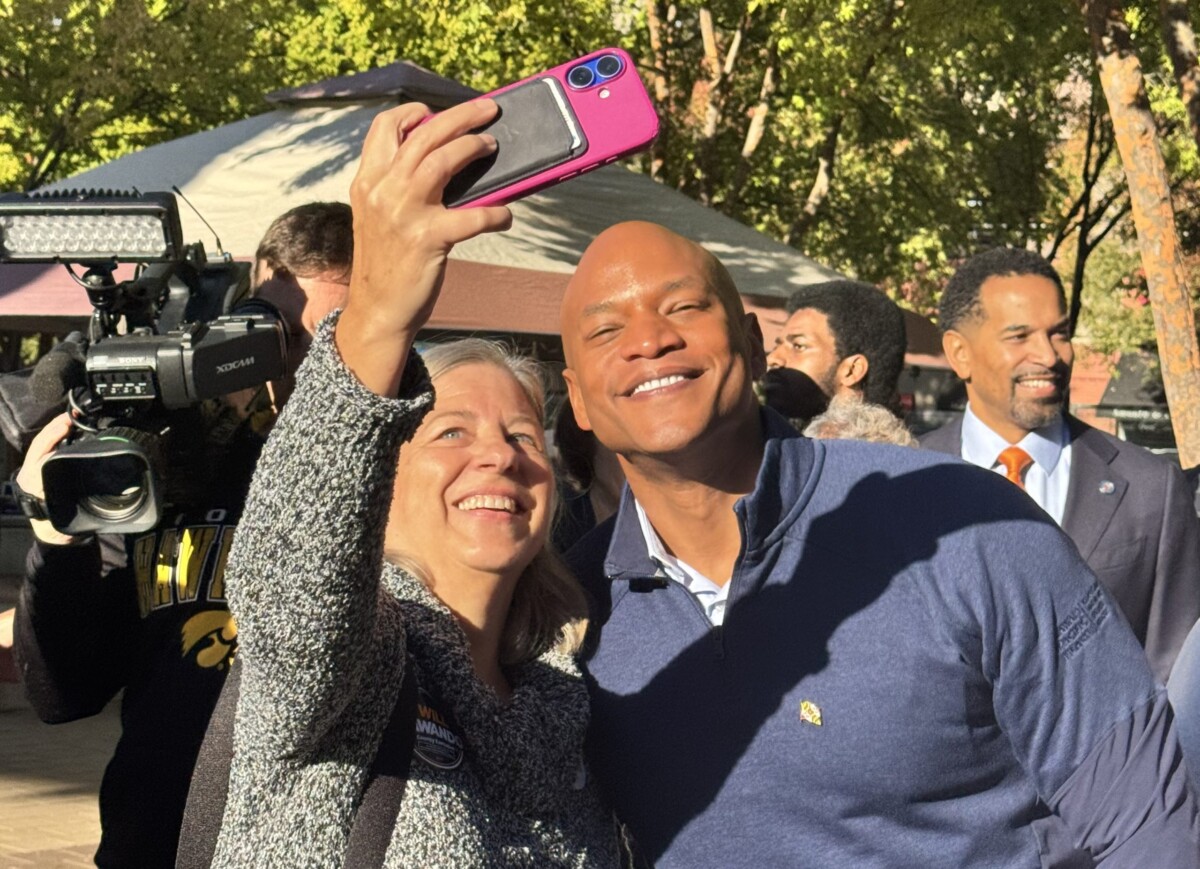
At Veterans Plaza, Moore faced another question about affordability from a member of the crowd that formed a tight circle around him: How would he address grocery prices and utility costs if reelected? He said the state needed to act where it had authority, even when it could not control decisions made in Washington.
“We’re going to do anything and everything in our power to make sure that we’re making life more affordable for the people of our state,” Moore said.
Moore blamed federal trade and foreign policy decisions for rising costs but said Maryland remained responsible for using its own authority to provide relief.
“But the things that we can control, we have to make sure we’re controlling,” Moore said.
For Silver Spring resident Caroline Delgado, voting early offered a measure of control and a way to serve her country.
“It’s my civic duty,” she said. “It’s the one time that I know I can serve my country and make a difference and let my voice be heard.”
Delgado said civic responsibility extended beyond casting a ballot to helping neighbors and holding one another accountable. She emphasized being considerate of people whose cultures or financial circumstances differ from one’s own, saying small, everyday acts of kindness could help bring about change.
“It’s not about just making money,” she said. “It’s about doing and being there and making sure that you make a difference.”
While Delgado described voting as a responsibility of citizenship, Moore emphasized what Democrats must deliver once elected.
“If we do that, we won’t just win an election; we will win an entire generation, which is what I think needs to be the goal for the Democratic Party,” he said.
La Tetra Metts-Owens is a senior reporter for HUNewsService.com, who specializes in the arts.