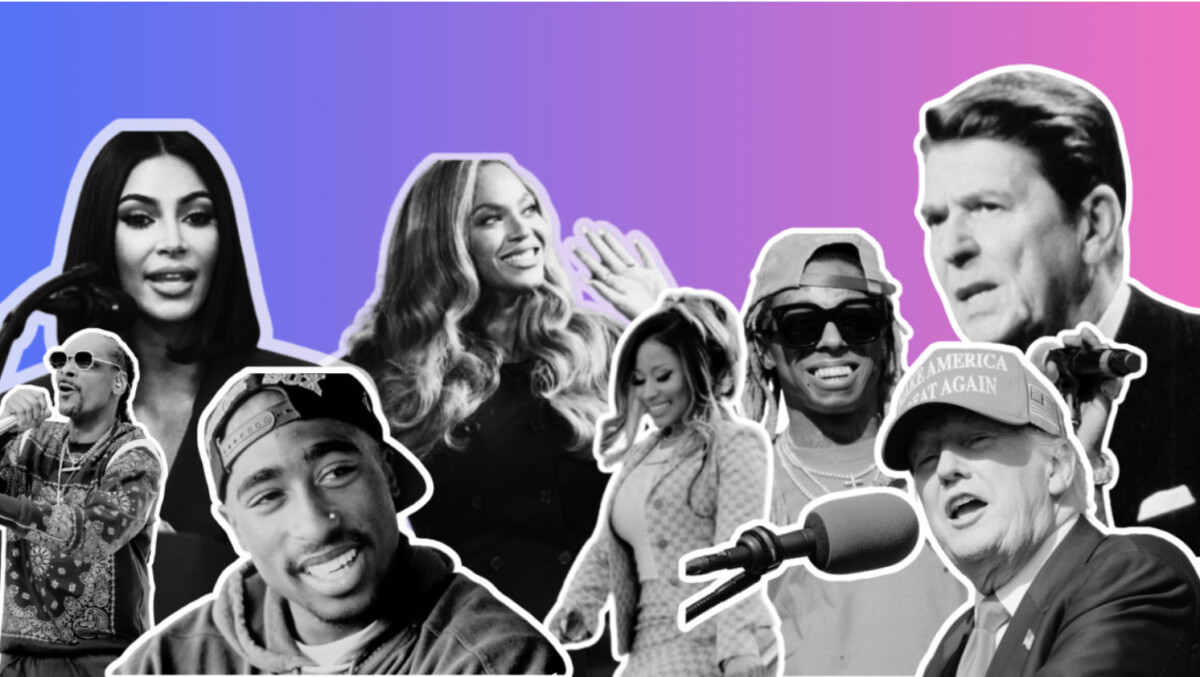
Millions of people turn to celebrities for inspiration, entertainment and advice. But what happens when these same celebrities influence the way people view politics? From political endorsements to controversial topics, celebrities are increasingly becoming pivotal in the political world.
Celebrities’ massive platforms give them the ability to reach niche demographics that politicians might not reach. But celebrity influence in politics isn’t a new concept; with the rise of social media influencers, the expectation for celebrities to be involved in politics has grown. Does having millions of followers actually qualify celebrities in their opinions? As celebrity endorsements increase, one key question arises: What value do celebrities actually bring to politics?
The turning point in celebrity influence on American politics came long before the emergence of social media influencers. One of the most notable examples of this phenomenon was former U.S. President Ronald Reagan. Reagan served as the 40th U.S. president from 1981-1989. Long before he became president, he was a celebrity. Regan was an actor and served as the president of the Screen Actors Guild (SAG). He starred as the host of the “General Electric Theater,” an American anthology series that ran from 1953 to 1962, which helped with his perception among voters, according to a research paper from the American Economic Journal: Applied Economics. Since “General Electric Theater” was broadcast every Sunday by CBS, it gave Reagan more exposure, which increased his visibility and resulted in Americans supporting his candidacy.
The way that Regan gained support through his TV performance was the blueprint for celebrities seeking political support. But once Reagan became president, many of his policies, like “Reaganomics” and social program cuts, drastically affected marginalized groups in America like Black people.
“Reaganomics,” or the Economic Tax Reform of 1981, disproportionately affected Black people by redistributing the tax burden from the wealthy to the middle and lower class. Additionally, during his term, he made cuts to education aid, food stamps, Medicaid, and more. Despite Reagan having higher visibility in his career due to his presence in TV and films, which increased his support with voters, the conservative policies he implemented during his time as president harmed Americans.
While Reagan showed that entertainers could transition from stardom into political leadership, his pathway outlines how visibility creates familiarity, builds trust, and with that trust gives celebrities the opportunity to impact the way people think and America’s socio-political landscape.
In the 1990s, hip-hop/rap influenced politics by serving as an opposing voice for the right-wing policies pushed by the government. Rappers like Tupac Shakur and rap group Public Enemy helped expand a sub-genre of rap called conscious rap, which heavily focused on the social and political issues in America.
In 1992, Shakur released his debut album “2Pacalypse Now,” which spoke about systemic racism and social commentary. After the release of Shakur’s album, Vice President Dan Quayle called on the Time Warner Inc. subsidiary, Interscope Records, to withdraw the album because he claimed it was responsible for the death of a state trooper in Texas, where the suspect was allegedly listening to the album.
This 1992 incident is also an example of how the music artists create can influence the mindset of the listener, but also how right-winged government officials try to regulate “radical” thoughts that oppose their political views. While Shakur used rap as a way to bring awareness to social issues, rappers’ influence in politics did not end in the 90s. As hip-hop continued to evolve, so did the presence of rappers on social media with the rise of social platforms like Facebook, Instagram and TikTok. Modern-day social media platforms make it easier for followers to track the consistency or inconsistency in celebrities’ political endorsements.
A great example of inconsistencies within endorsements can be found with rapper Snoop Dogg. His change in political views of President Trump from 2017 to 2026 shocked fans. The rapper’s views about President Trump have changed from critiques to endorsements. In 2016, Trump was elected into his first term in office and was inaugurated on Jan. 20, 2017. At his inauguration, Snoop Dogg called anyone willing to perform for the president “Uncle Toms.”
During 2017-2020, Snoop Dogg would take to social media to criticize President Trump on a variety of issues such as the 2019 government shutdown and his stance on racial issues. The shift from Snoop Dogg publicly critiquing President Trump to endorsing him happened in January 2021 when the president commuted the sentence of Michael “Harry-O” Harris, the co-founder of Death Row Records. Harris was arrested in 1987 for drug trafficking and attempted murder. In the 1990s, Snoop Dogg was signed to Death Row Records, where the label helped him become a breakout star in the rap world. Later in 2022, Snoop Dogg became the owner and CEO of Death Row Records. Snoop Dogg has a strong connection to Death Row Records and his support for President Trump started around the same time he commuted Harris’’ prison sentence.
On Jan. 17, 2025, Snoop Dogg performed during President Trump’s inauguration weekend at the Crypto Ball in Washington, D.C. He faced heavy backlash on social media because of his previous comments he made in 2017 about people willing to perform for President Trump being “Uncle Toms” just for him to end up performing for him. On May 28, 2025, President Trump issued a full pardon for Harris, granting him freedom from prison. Snoop Dogg’s shift in political opinions shows that celebrities’ viewpoints on politics can change, but when the shift is connected to federal pardons, it makes fans question if there is a hidden agenda behind the political support.
Celebrities’ opinions hold weight because of their amplified platforms and high visibility, but when these opinions are inconsistent, it can break the trust between the celebrity and their audience. Celebrities’ influence on politics becomes more extreme when celebrities hold political positions.
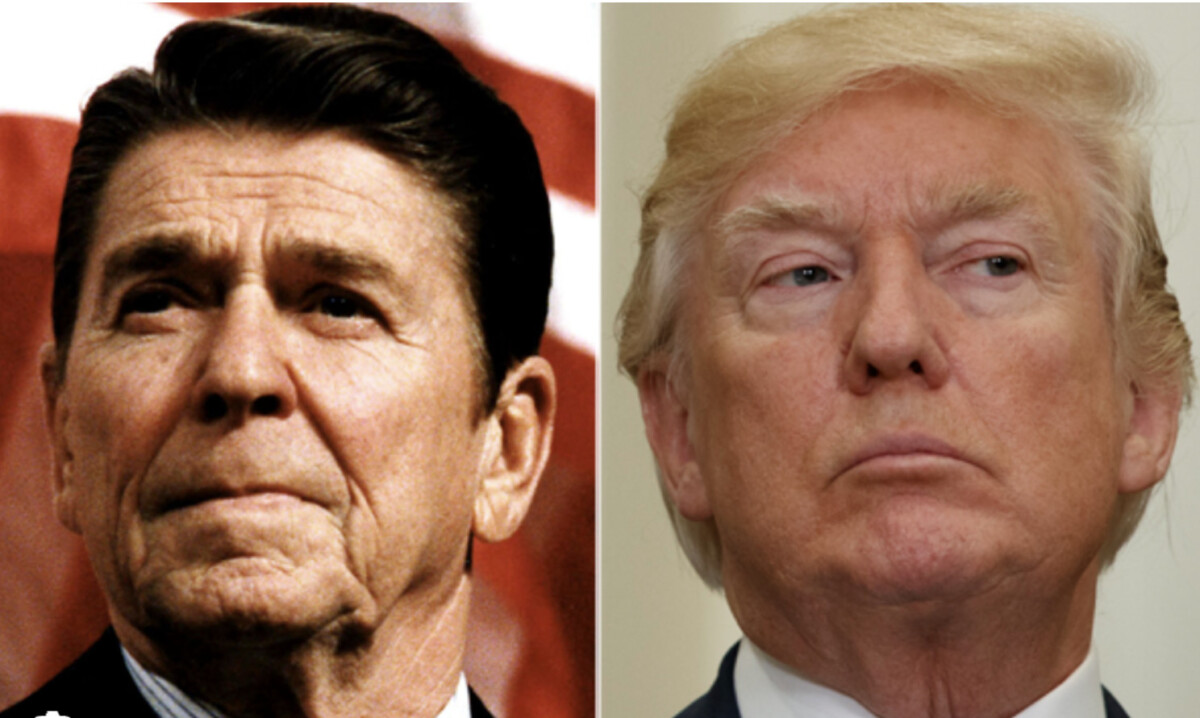
Like Reagan, President Trump’s pathway to power is an example of celebrities taking advantage of their influence on audiences to change the political landscape of America. Long before Trump became president, he produced and hosted the reality show “The Apprentice, ” a reality game show where contestants would compete in business-related challenges to win a spot working as an executive in Trump’s organization. President Trump also made cameos in TV shows such as “The Fresh Prince of Bel-Air” and movies such as “Home Alone 2: Lost in New York.” Trump has served as the 45th and 47th United States president from 2017-2021 and then 2025 to now.
During the 2016 election, two researchers found a positive correlation between TV ratings for “The Apprentice” and county-level Republican vote share, according to a paper they published in The Leadership Quarterly. Although the study says the correlation disappears once the researchers control for pre-existing voting and NBC viewership patterns, it still shows a relationship between celebrity appearances and voters’ attitudes.
“When we looked at the association between the popularity of “The Apprentice” in a county and its 2016 and 2020 Republican vote shares, we found a striking pattern. The more a county watched “The Apprentice”, the more it was likely to vote for Trump,” the researchers wrote in an article about their work.
This pattern is very similar to Reagan, suggesting that people equate higher visibility with positive attributes like trust and intelligence. Once Trump became president, he implemented policies that disproportionately affected Americans across the board. Import taxes, Immigration and Customs Enforcement (ICE) expansion, criminal justice reform, and attacks on education.
President Trump has implemented policies that adversely affect Americans. With the three branches of the government being led by right-wingers, it makes it easier for the president to uphold his policies.
While President Trump has demonstrated that his past in reality TV has paved the way for his career as a politician, his lack of experience in politics raises questions about why voters feel more comfortable with hearing celebrities’ political opinions as opposed to credible sources like politicians with a legal background or a political analyst.
The Fair Elections Center, a nonprofit focused on voting rights and election reform, analyzes the problems behind voters becoming too dependent on celebrity opinions in politics.
“The simplification of complex political issues through celebrity messaging can sometimes hinder meaningful policy discussions,” the Fair Elections Center wrote.
When voters rely too heavily on celebrity opinions, they may miss opportunities to engage with detailed policy proposals and nuanced political debates. This dependency can limit people’s ability to think critically if they are always looking for what their favorite celebrity or influencer has to say about elections and policy changes.
Celebrities and influencers play such a major role in shaping public conversations, but the line between celebrity and political credibility is one that the American people must draw themselves. While celebrities have the right to educate, inform, and push political participation with their platforms, that doesn’t automatically mean they have the knowledge to speak on certain issues. Are we listening because they are informed or famous? Ultimately, the question is left to the public.