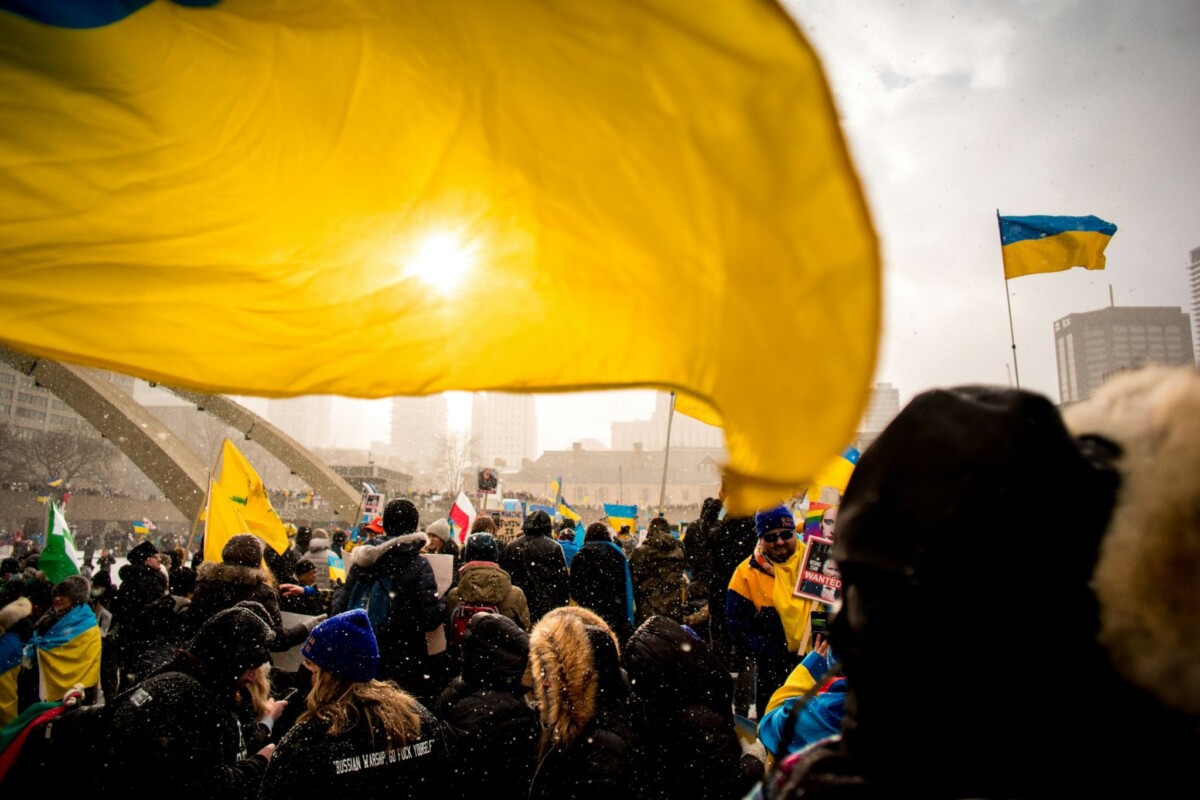
War and suffering have increasingly become background noise in our lives.
Surrounded by devastating statistics and graphic images of war on our timelines, growing anxiety over advancements in artificial intelligence and the everyday struggles of our personal lives, we are exhausted. In an era of fast-paced, sensationalized media, it is little wonder that many of us have grown desensitized to the suffering around us, turning a blind eye to conflicts both at home and abroad.
In a world defined by constant connection, we have never been more disconnected from one another. This exhaustion, however, leaves us vulnerable. When we stop paying attention to the world around us, we become more susceptible to the narratives spun by those in power and less equipped to challenge the injustices that once provoked our outrage.
This is especially dangerous today, as President Donald Trump pursues diplomatic negotiations with Russian President Vladimir Putin, raising concerns that Ukrainian sovereignty and security could become bargaining chips in an agreement negotiated without meaningful input from the very people whose lives hang in the balance.
Henry Hale, a professor of political science and international affairs at George Washington University, noted the importance of remaining aware of the conflict.
“If our attention is elsewhere, it directs our actions elsewhere. It directs decision making elsewhere,” Hale said.
As a Ukrainian-American, I find myself at a strange and painful crossroads, observing one side of my identity reject and humiliate the other on the international stage, while the latter continues to stand its ground on the battlefield.
Tetyana Dzyadevych, a lecturer at the University of Illinois Urbana-Champaign whose research examines Ukrainian and Russian national identity and Slavic culture, understands this suffering both academically and on a deeply personal level.
Having been born and raised in Kyiv, she said she has lost friends and former students to the war, while her cousin currently serves on the front lines.
“Part of my life, my heart, my soul is always in Ukraine,” she said. “There is a joke that we’re all connected to the president of America in seven handshakes, but we’re all connected to the victims of [this] war in the first or second.”
While America may watch from the sidelines, the war is far from an abstraction to those who have lost loved ones. If we approach the conflict with detachment, we risk reducing suffering to just a statistic.
Since returning to office, Trump has cast uncertainty over U.S. support for Ukraine, criticized Ukrainian President Volodymyr Zelenskyy’s approach to peace and pursued settlement terms that could require territorial concessions and limits on Ukraine’s future security. This raises a central question: Will Ukraine, despite being invaded and terrorized at the hands of Russian forces, be forced to bear the greatest cost of ending the war?
This prospect is deeply troubling. If we accept the idea that the country subjected to aggression should be the one to compromise to maintain the sovereignty it is entitled to, then diplomatic norms are beyond extinction.
Isabelle Kaplan, a lecturer in Russian language, history and culture at Howard University, noted how political spectacle can shape media coverage of the war. During Zelenskyy’s February 2025 visit to the Oval Office, a conservative media correspondent challenged the Ukrainian president for not wearing a suit, questioning whether his attire showed sufficient respect for the office.
The exchange, which interrupted an initially cordial meeting with Trump, reflected broader criticism from Trump himself and his allies that Zelenskyy had not shown enough gratitude for U.S. military aid.
Kaplan noted that the conflict generates “so many outrageous statements and sound bites” that attract attention for “the entertainment value of something so absurd going on at the highest level of international relations.” It is unnerving how the suffering of my people becomes secondary to political theatrics. When the focus shifts from the lives lost to arguments over gratitude, we risk forgetting the humanitarian abuses happening daily at the hands of Russian violence and American apathy.
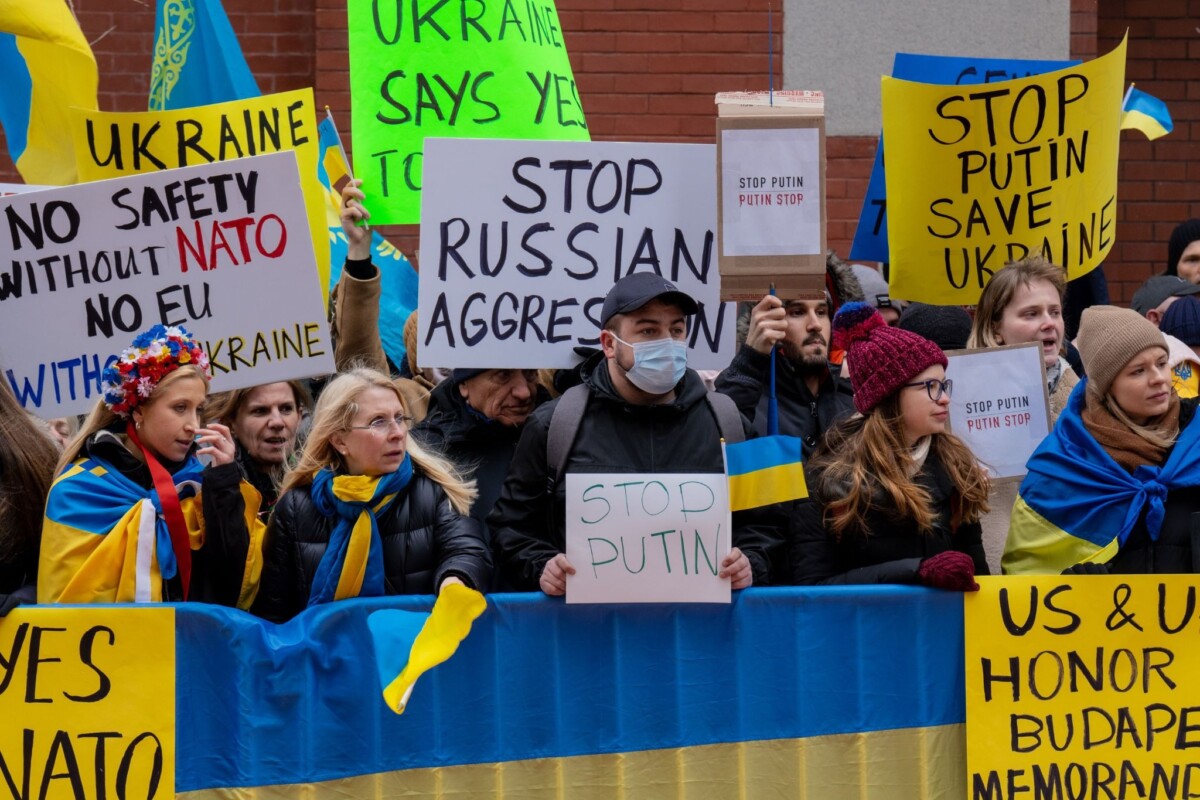
As of October, Russian missile and drone attacks continue to kill civilians and disrupt essential infrastructure. Strikes on energy facilities, ports and urban areas threaten civilian infrastructure and directly violate the core tenets of international humanitarian law.
Hale and Dzyadevych described Russia’s attacks on Ukrainian cities and civilian infrastructure as an effort to intimidate the population and break its morale, pressuring Ukrainians to surrender. However, Dzyadevych emphasized that Ukrainians remain determined to resist despite Russia’s greater military resources.
“I’m talking to my friends and family who are under attack, and they don’t want to surrender…there is no reason to say that Ukraine is losing this war,” Dzyadevych said.
However, Ukraine’s future remains uncertain, and the consequences of the conflict extend far beyond its borders. If the international community legitimizes Russia’s unprovoked aggression against Ukraine, what would prevent other governments from pursuing similar territorial ambitions?
Hale pointed to Germany’s reckoning with its history after the Second World War as an example of the transformation reconciliation requires: a deliberate process of accountability, reparations and reform that can span generations. Such a process, however, is difficult to imagine in Ukraine’s case, especially as Russia has shown no willingness to provide reparations for its destruction of Ukraine.
As public attention wanes amid the prolonged conflict, a feeling Hale noted as “Ukraine fatigue,” political disillusionment grows. The less attention we pay to implicated Ukrainian lives, the easier it becomes for consequential decisions, such as poorly negotiated peace deals, to unfold beyond public criticism.
Trump’s admiration for Putin reflects a more consequential parallel between their political approaches. Generations of Russians have grown up, completed their education and started families under Putin’s prolonged “presidential” rule. Americans, too, risk becoming desensitized to the erosion of democratic institutions; a concern made particularly striking by the fact that the United States has long championed its democracy abroad, even seeking to impose it on other nations through military intervention historically, like in Iran, Afghanistan, Iraq and Vietnam – to name just a few.
Where Americans may gradually become accustomed to the erosion of democratic norms without feeling an immediate change in their daily lives, each minor transgression shifts the public’s baseline perception of what constitutes normalcy (Immigration and Customs Enforcement, mass deportations, police violence, the war in Iran, etc.). Ukrainians, by contrast, are confronting the consequences of losing the freedom to autonomously determine their future.
Yet, even following four years of Russian occupation, Ukrainians continue to demonstrate their drive to preserve national identity. During an October 30 humanitarian mission in Russian-occupied Oleshy, Kherson region, reports showed that 17 buses carrying residents headed toward Ukraine, compared with four toward Russia.
As the Trump administration intensifies immigration enforcement, climate change accelerates and public health crises demand our attention, suffering can seem ubiquitous. Injustices unfold at our fingertips as we scroll from one tragedy to the next, each competing for our attention until even the most devastating headlines risk becoming ordinary.
Yet, we must resist the cynicism that accompanies political exhaustion. When people begin to believe their actions no longer matter, disengagement gives way to apathy, creating space for those in power to act without consequential public scrutiny.
Although Ukraine’s future remains uncertain, our responsibility is to remain attentive to Ukrainian struggle. We cannot allow ourselves to be united only by our grief and fear; we must also be united in our willingness to confront the conditions that produce them.
Copy edited by Jori Johnson