How Meighan Simmons Has Navigated Her First Major Injury After Over A Decade Of Professional Basketball
There are a few diagnoses that an athlete never wants to get. The rupture of the Achilles tendon, which is the muscle that connects the calf to the heel, is one of them. According to the Karlinsika Institute, the number of Achilles tendon ruptures, where the tendon has completely or partially torn, has increased by 25 percent in 2017. That means around 3,500 people are affected each year.
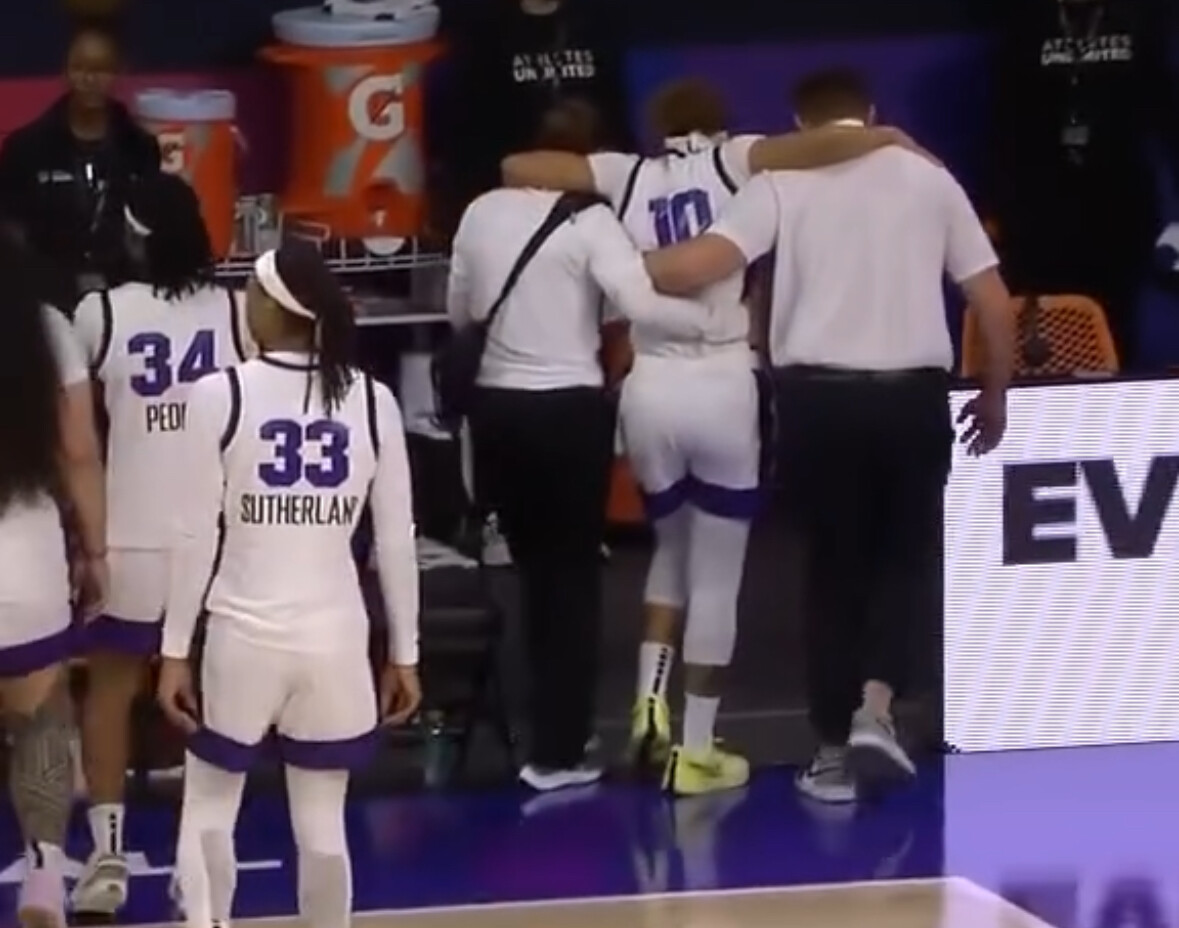
On Feb. 8, 2026 Meighan Simmons became one of those 3,500 people. She remembers the day well.
“I strained my right calf in a scrimmage the day before the first game and was kind of wobbly because of my right calf. Then, when I played in the very first game, and I was able to get in the game, you know, I came down, made two threes, and on the defensive side, I jumped up to get a defensive rebound. And when I jumped and tried to sprint, I heard a pop, and then I felt it,” Simmons said.
Simmons immediately knew something was wrong.
“I just fell to the floor after that., I just remember my foot going limp and the first thing I thought was, I literally just tore my Achilles. Mind you, I never had an injury in my career. I strained my LCL in Turkey, but it was nothing that was worrisome. But this was completely different,” Simmons said.
At the time of her injury, Simmons was playing in Nashville, Tennessee, at Athletes Unlimited. What was supposed to be her triumphant return to professional basketball was now a setback she had never faced before.
Like many athletes, her injury wasn’t just physical; it was mental.
“I’ve had my doubts because, of course, it makes you question if you’re going to be able to come back? Or if you are going to be the same player? Are you going to overcompensate because you’re nervous or have the fear of tearing it again?” she said.
Simmons joined The Athletes Unlimited league after two WNBA stints and multiple years playing overseas in countries like Turkey, Cambodia and Russia. Her basketball career started at the University of Tennessee, where she won 2x SEC Player of the Year, SEC Rookie of the Year and became the fifth player ever to score 2,000 points for the Lady Volunteers.
But the accomplished Simmons found herself in a place she had never been before, dealing with rehab from the Achilles injury and discussing the highs and lows of the process.
“The high of it was seeing my progress. The low of it was the negative thoughts every now and then,” Simmons said.
Simmons spoke further on the negative thoughts and learning about herself during rehab
“I learned that I really do have fears and that it’s okay to have them,” Simmons said. “I think that I don’t fear anyone, but I did, in some moments, have a fear of failure. I had that feeling of not being good enough. I had that feeling of maybe this is God’s way of saying, sit down, you need this right now. But I had so many different fears that popped up or questioned my ability, like, ‘What was I doing wrong?’”
Even with the negative thoughts, Simmons learned some positive things.
“I also learned how strong I was mentally. I realized how resilient I was,” Simmons said. “If I was going to be able to bounce back, or if I was going to be a better person, or what my real purpose was.”
Simmons didn’t go through this journey alone, though.
“It was just one of those things where I made sure that I surrounded myself with people that actually cared about me, besides what I did,” Simmons said.
But along with friends and family during this time, Simmons also relied heavily on her Christian faith.
“I would have to say it’s been a heavy thing for me to really consider because of the simple fact that I wouldn’t be where I am without it and without my mindset, because in the times where I felt weak, God was strong for me in the moment,” Simmons said.
One of the things that has worked in Simmons’ favor was laying the foundation for life after her playing career, starting her journey as a player development coach in Seattle, Washington.
“It’s been a blessing,” Simmons remarked when asked how the coaching journey has been.
“Basketball is such a great sport for me, but when teaching, I ask myself, ‘How can you actually reach the audience that you are with? How can you connect with them?’” Simmons said. “Being able to be that vessel that bridges the gap between the two people because basketball is such a universal language.”
Simmons, while reaching the youth and teaching them, has also been taught by other coaches in the NBA Coaching Development Program.
“I applied to be in the NBA Coaching Development Program and I actually was able to get into the program and just learning different things and have an opportunity to be in those rooms, to be seen in a different light outside of a player,” Simmons said.
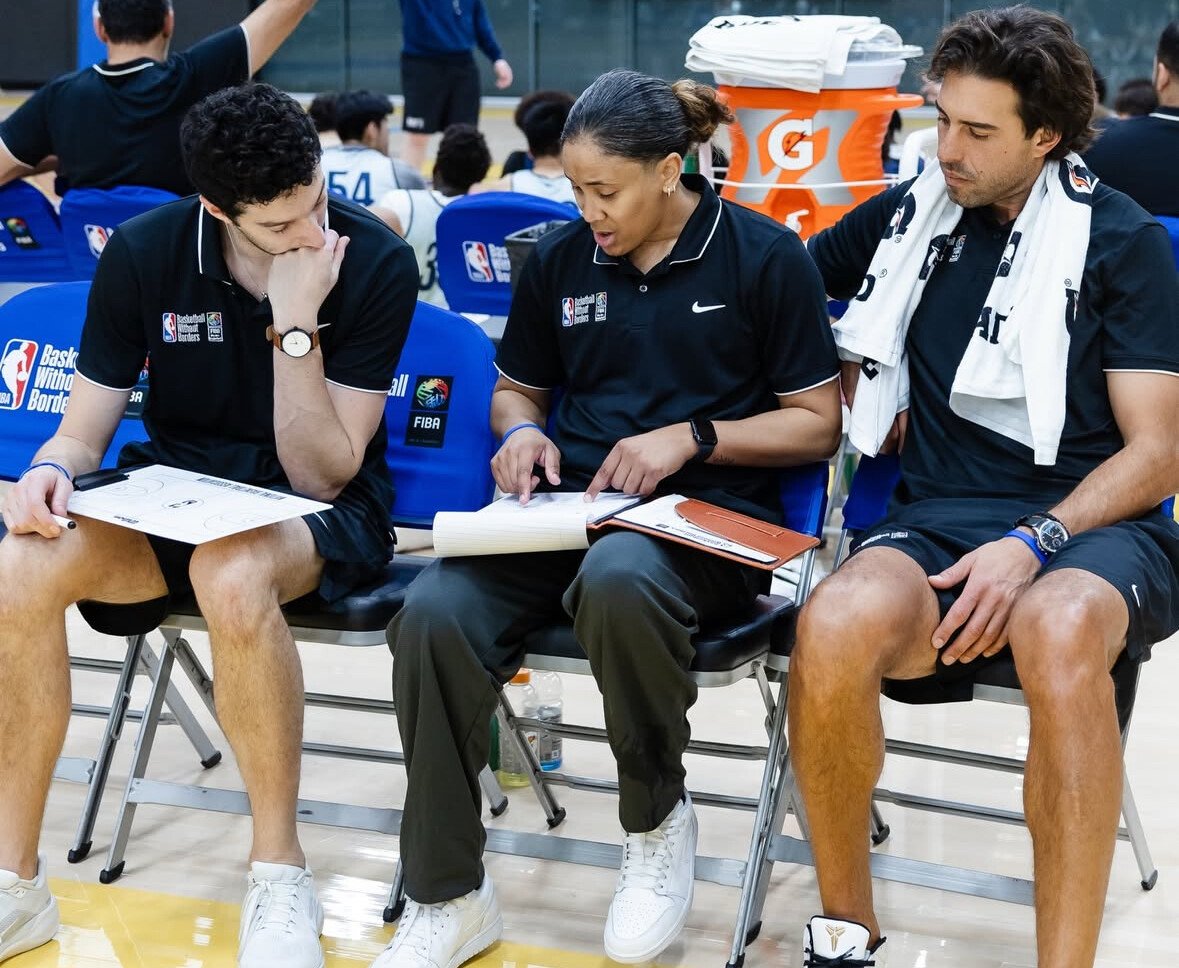
Meighan Simmons at NBA Coaching Development Program Photo Credit Meighan Simmons
With the blessing of coaching Simmons has also found reward in giving back to the generations behind her.
“It’s super rewarding,” Simmons said. “Some of the kids, they yearn to be seen and inspired. They want to play the game. But for somebody who’s been where they want to be, it inspires them to keep working hard to where they ask questions and that is the most rewarding.”
Simmons does hope to return to playing before she officially goes into coaching and said this experience has helped her game for when she returns.
“I have a different mindset about the game. So instead of just playing off of just my straight athleticism and my speed, I can play the game a little bit smarter and be a little bit more twitchy,” Simmons said. “The benefit of actually watching the game and studying the game has broadened my perspective on how the game should be played.”
DJ Harding is a reporter for HUNewsService.com.