This is an opinion piece by a Hilltop columnist.
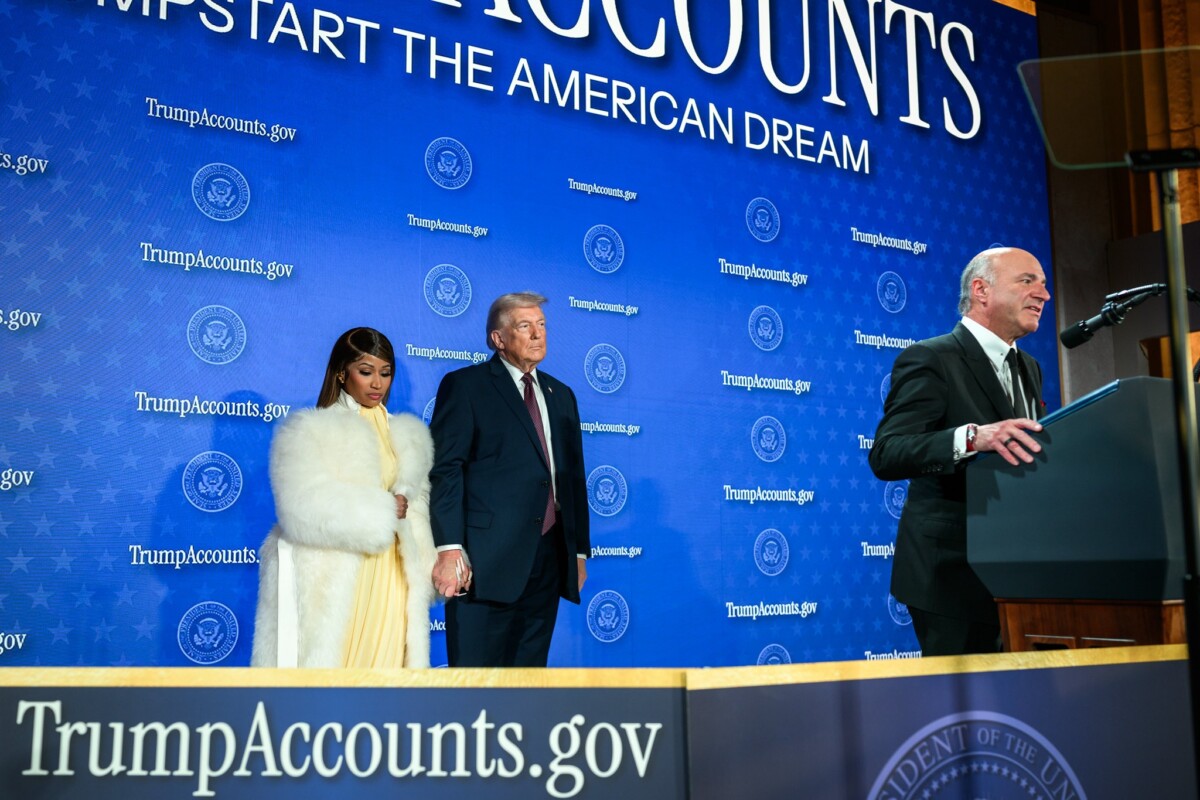
On Oct. 25, Nicki Minaj delivered remarks at President Donald Trump’s rally in Michigan.
“We don’t want our children to be bombarded with sex changes, right?” Minaj asked the audience. The question was jarring enough on its own, but coming from Minaj, one of the most influential female rappers of her generation, they carried an entirely different weight.
The crowd erupted in cheers as Minaj concluded her speech by pledging to support Trump if he ran for office again (despite the 22nd Amendment prohibiting him from being elected to a third presidential term). Trump responded by thanking her, but quickly shifted the exchange to Minaj’s appearance, making lewd comments about her body.
Minaj’s support of the Make America Great Again (MAGA) movement and turn to right-wing conservatism has surprised many of her fans, particularly given her substantial Black and LGBTQ+ fan base.
However, while Minaj’s words and actions may generate considerable shock-value, they are not particularly shocking. Both Minaj and Trump have long relied on controversy to remain relevant.
To understand how Minaj, whose real name is Onika Tanya Maraj-Petty, was able to get away with being so divisive for so long, it is important to recognize the state of female rap during the time period in which she built her career.
Today’s female rap scene is incredibly diverse. However, in the early 2000s, misogyny in the hip hop community kept female rappers from mainstream success. That changed in 2010 when Minaj released her debut album “Pink Friday.”
Boasting superstar guests including Eminem and Rhianna while employing a wide range of genres and sounds, the album made Minaj a household name almost instantly. It topped billboard charts, went triple platinum and opened the door for her to be the decade’s defining female rapper with virtually no competition.
However, Minaj was constantly in some type of public dispute. She’s beefed with everyone from Remy Ma to Mariah Carey. Her jabs at her opponents have ranged from playful, like the iconic “Miley, what’s good” at the 2015 VMAs, to distasteful, like her 2024 diss track “Big Foot,” which ridicules Megan Thee Stallion for being shot in the foot. Yet, no matter how she addressed her feuds, the absurdity of her controversies always created a viral moment that bolstered her celebrity status.
Trump handles his public presence similarly, relying on shock value to push his ideologies and remain in the headlines. For example, during a 2024 presidential debate, he attempted to paint Haitian immigrants in Springfield, Ohio as dangerous by saying “they’re eating the dogs…they’re eating the cats.”
That clip spurred a viral TikTok trend of people playing the soundbite for their pets and recording their reactions. Though it was meant to make fun of Trump’s ridiculous claim, it ended up giving him exactly what he always wants: attention.
Minaj’s more ridiculous antics have had a similar effect on internet culture. The lead up to the release of “Big Foot” was rife with virality, including clips of Minaj frantically constructing the song on Instagram live. Similarly to Trump, much of this attention came from people who did not support her.
Though Minaj only recently began to support Trump in public, she claims to have secretly identified with right-wing politics for a while. Those who watched her carefully at the start of the decade may have seen this coming.
In 2021, Minaj claimed that someone she knew in Trinidad suffered from testicular swelling after receiving the COVID-19 vaccine. That same year, Minaj and her husband, Kenneth Petty, were sued for harassment and intimidation by Jennifer Hough, the woman who Petty was convicted of attempting to rape in 1995.
If you’re noticing alignment with MAGA ideals, you’d be correct. They’re not big on vaccines or protecting the victims of sexual assault. However, after these incidents, Minaj’s fanbase remained strong. They were used to her being outspoken and controversial, but they never expected Minaj to so proudly align her public image with an administration that intends to limit the rights of the very people she profited off her entire career.
Now, Trump and his team are presented with a Black woman who immigrated to the United States and has a fanbase made of demographics that his campaign struggles to reach. She not only shares his ideology but also is an expert in what makes the MAGA movement so “compelling”: rhetorical absurdity.
Minaj and Trump share an uncanny ability to use their public platforms to make such outrageous statements that even their critics inadvertently amplify their messages by responding to their claims and questioning the judgment of those who believe them. Things like factuality and constitutionality don’t matter as long as that stadium full of people dressed in red hats cheer as loudly as possible.
Minaj’s and Trump’s shared approach to public attention makes them a powerful political marriage. They both acutely understand how to use their celebrity to sow social and political chaos. Their alliance is one of the most dangerous of the current political moment, and though we may be inclined to laugh at its absurdity, we need to recognize their combined rhetorical power as a serious threat to democracy.
Copy edited by Jori Johnson