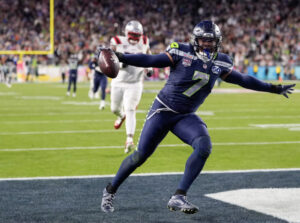
Guardian Caps are padded covers that are designed to fit over a football helmet. Its purpose is to reduce concussions that are sustained from hits to the head taken in-game. Advancements are always being made to reduce head injuries in the game of football, however, the Guardian Cap advancement is not being utilized by most players.
The National Football League (NFL) made it mandatory for all players to wear guardian caps during training camp, but that requirement does not translate to preseason or regular season games. The NFL claims the caps can absorb at least 10% of the force of a hit and, according to the Stanford University School of Medicine, the caps provided 15% to 20% more protection.
Even with the increased protection, there is clashing evidence that the caps may not actually reduce concussions, with the NFL claiming a significant reduction while other levels like college and high school not seeing the same results.
Dr. Alaina Davis, a speech language pathologist who specializes in traumatic brain injury and concussions, speaks to the limitations of the Guardian Cap.
“The cap might lessen some of the impact of the hit, where they may be less likely to experience a loss of consciousness. But if the brain is still shaking around on the inside upon a hit, there’s still the potential for them to experience a concussion. It also can depend on how many concussions they’ve had already,” Davis said.
About 25 NFL players in the 2025-2026 season wore Guardian Caps out of 1,696 active players.
Players have expressed the effectiveness of them, but also the negatives they bring when on the field.
“They 100% work, its just that the weather, like rain, can make them feel heavier or weigh them down,” said Makhi Green, running back for Monmouth University.
This further reinforces the idea that the caps are unpopular because of their design. The design of the caps can cause uncomfortability in-game and are also seen as visually unappealing.
“Most of the time the color of the layer over the cap doesn’t even match the color of the uniform. And it looks bulky. I feel like more players would wear them if they had a better design,” said former player Jayden Mason.
As previously stated, other levels of football are not seeing the same results for reduced concussions utilizing Guardian Caps like the NFL.
According to the British Journal of Sports Medicine, “Guardian Cap use in high school American footballers during practice was not associated with a decreased risk of sustaining a sport-related concussion during practice or games.”
There are clashing statements and opinions on whether Guardian Caps are actually effective. Players like Green feel more protected, but there is still mixed evidence on whether they reduce concussions. Even so, it can still be worn just as a possible preventative measure when applicable because it definitely is not doing any harm to wear one, especially for those who have suffered concussions in the past.
Philadelphia Eagles tight end, Kylen Granson, has the preventative mindset.
“Anything I can do to mitigate any sort of brain injury or long-term health effects that would be detrimental to me takes precedent,” Granson said.
Dr. Davis believes that on top of Guardian Caps and other helmet evolutions to reduce head injuries, concussion protocol still needs to be followed closely to see a reduction in head injuries.
“Definitely more needs to be done. I love the effort, but the return-to-play protocols have to be followed more. There’s still a history of sending athletes back out way too soon,” Dr. Davis said.
In other words, the caps themselves are not enough to protect the players. No matter how advanced technology becomes in reducing concussions, proper protocols still need to be taken to ensure player safety.
Guardian Caps low popularity may be due to the uncertainties of its effectiveness when it comes to reducing concussions, as well as its odd design. The Guardian Cap is a step in the right direction for making football safer, but more research and innovations need to be completed for them to be a definite solution to football’s biggest safety issue.
William Armstead is a reporter for HUNewsService.com.