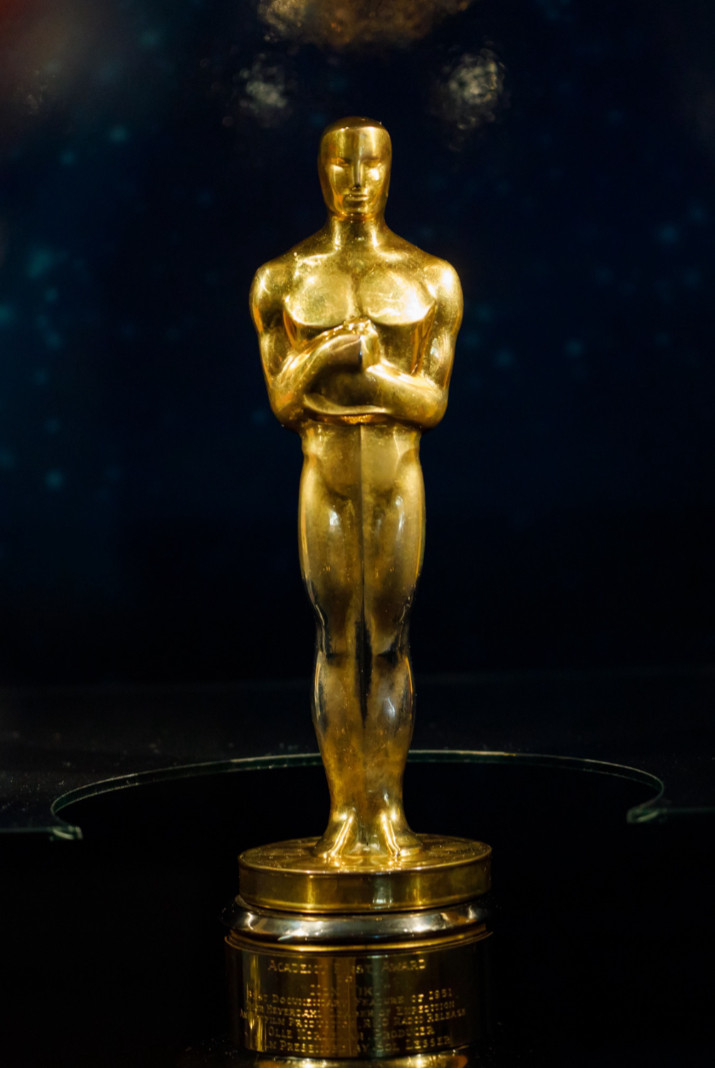
“One Battle After Another” won six Oscars, including the Academy Award for Best Picture, on March 15. The film follows a father, Bob, an ex-revolutionary, as he takes the audience on his journey to reunite with his daughter. While singer and actress Teyana Taylor caught many eyes in the trailer, she appears on screen for about 20 minutes in the nearly three-hour movie, but still received a nomination for Best Supporting Actress.
Though she didn’t win an Oscar, she accepted a Golden Globe for Best Performance by a Female Actor in a Supporting Role for “One Battle After Another.” For a film that drew most people in when showing Taylor shoot rounds from a gun that bounced repeatedly off her pregnant belly, some people might see this as the opposite of a reason to award a Black woman.
Taylor’s win highlights a stark pattern in the industry. There is a noticeable pattern of Hollywood rewarding stereotypical portrayals of Black women and mothers.
Hollywood is notorious for building on a common narrative about Black womanhood and motherhood on the big screen. It’s a new script with just a different approach. This sentiment is what Patricia Hill Collins, a sociologist and Black feminist, would call “controlling images”— socially constructed and stereotypical depictions of Black womanhood that lead to false constructions of Black women’s identities.
Historically, fictional Black women in movies and television juggle the multiple faces of the “aggressive matriarch,” the “sexualized jezebel,” the “sassy mammy” and so many other caricatures that represent the fragmented and damaging way they are seen beyond the cinema.
Jami Ramberan, award-winning filmmaker and chair of Howard University’s School of Communications, explained that filmmakers might use stereotypical images to gain recognition.
“Awards bodies often gravitate toward what feels visible as ‘acting’ or ‘craft’ which can mean transformation, trauma or spectacle,” Ramberan said. “For marginalized characters, this creates a pattern where stories rooted in pain or extremity are seen more as ‘award-worthy’ than stories rooted in complexity, joy or subtlety.”
Ramberan said the lack of complexity when it comes to Black women on the TV screen is noticeable.
“The challenge is that nuance, everyday humanity is harder to quantify and often undervalued,” Ramberan said. “Too often, Black women are shown in reaction, not reflection. We see what they endure, but not what they feel. Black women should be allowed to be complex, soft, flawed, joyful and evolving without being reduced to a symbol or a lesson.”
Movies, shows and celebrities that most Black women grew up watching were projected in this light. For the last century, minus Taylor, acting roles tied to these controlling images have been awarded prestigious honors by the same Academy whose mission is to promote high standards in cinema and prioritize film preservation.
In its journey to recognize filmmaking excellence, it can also be seen as incentivizing screenwriters to continue creating these images of Black women to receive a win.

Ultimately, a cycle begins that does not just reward performance but legitimizes and sustains Black women’s stereotypes under the guise of “excellence.” As a result, scripts with these portrayals could become the majority of available roles for Black actresses and, implicitly, the roles they should take if they’re looking to win a prestigious award.
However, Taylor is not the first Black woman to be associated with a role like this.
Lotus Teague, a Howard alumna from the class of 2025 majoring in TV and film, called back to actresses like Hattie McDaniel and Halle Berry, who were the first Black women to win Academy Awards in their respective categories.
“If you look into what roles the majority of Black women win or are nominated for, it leads to one strong conclusion,” Teague said. “Pain and minstrelsy are how you get Hollywood’s recognition.”
Teague believes this narrative is kept alive because writers are not taking the time to educate themselves on the complexity of Black women.
“Essentially, the problem starts when non-Black writers do not have a fundamental understanding of how multifaceted Black women truly are,” Teague said. “All writers write from a basis of what they know, so inevitably they will write what they consider to be true. It’s a lack of non-Black writers not practicing the art of observation, which shows in their work.”
Rebecca Wonzo, a chair and professor of women, gender and sexuality studies at Washington University in St. Louis, wrote on another familiar stigma to many in the demographic — that if you are a successful Black woman, then you won’t find a man.
Tyler Perry’s “Why Did I Get Married?” reinforces the idea that Black women’s success is emasculating and that romance is only achievable when they soften and neglect themselves to give in to their partner’s needs. This narrative is also one that is repeatedly utilized and suggests that Black women can’t have both success and romance at the same time.
All of these concepts didn’t just appear out of thin air. The exploitation of Black women began with the birth of this country.
Dorothy Roberts, a professor of law and sociology at the University of Pennsylvania, writes in her book “Killing the Black Body: Race, Reproduction and the Meaning of Liberty,” that Black procreation helped to preserve slavery and gave enslavers an economic incentive to govern Black women’s fertility. Once a source of economic prosperity, Black women and mothers today experience bondage in the form of federal and state government programs that control their daily lives and stereotypical studio roles to keep audiences engaged.
For the majority of the media, the industry reflects a mission keeping caricatures alive to entertain and essentially keep Black women in a tightly wound racist box — a reason why movements like #OscarsSoWhite and #HollywoodSoWhite trended on social media in 2015 in response to all 20 Academy nominations going to white actors.
This box also affects and determines the success of films that don’t portray Black women in a stereotypical manner.
Annika Dean, a Howard alumna and University of Southern California graduate film student, said productions, specifically ones with Black leads, perform litmus tests to gauge the audience’s opinion and if more would be made.
“For the rom-com ‘You, Me & Tuscany,’ they’re tracking the box office results to see whether or not they will actually produce other rom-com films starring Black talent,” Dean said. “It’s really discouraging.”
Dean believes Black filmmakers are actively taking steps toward breaking down doors that weren’t open for them before.
“As a Black woman behind the camera, it feels like a lot of times there aren’t people of color shooting these films,” Dean said. “It’s refreshing to see Autumn Durand win the Oscar for Best Cinematography because I think that’s gonna open up so many more pathways for women and women of color to go behind the camera to get these experiences going.”
Historically, the Black community has not been immune to propagating controlling images. The belief that only white filmmakers produce these portrayals is a myth because creators within the same marginalized communities can also perpetuate them.
In particular, some scripts written by Black male creatives, notably Tyler Perry, continue to frame Black women in limiting ways and it raises the question about whether Black women can feel fully represented, or safe, with them telling their stories.
“I’ve noticed that there’s a common trend of Black women used as commodities in the industry,” Dean said.
As a professor of film and television at a historically Black college and university (HBCU), Ramberan said she teaches a new generation of aspiring filmmakers to halt this practice.
“I emphasize critical awareness and intentionality,” Ramberan said. “In my classes, we interrogate references, ask who the story is serving and examine the difference between representation and repetition. We also discuss responsibility. Just because something is familiar doesn’t mean it’s truthful or necessary, as craft and ethics go hand in hand.”
Writer and activist Moya Bailey’s “Misogynoir Transformed: Black Women’s Digital Resistance” explores the Black feminist theory that recognizes ‘white supremacist capitalist society’ as a system that controls how the world sees marginalized groups—and how we eventually see ourselves.
Telling one’s own stories or uplifting the narratives of those who have lived their own realities becomes an act of resistance against an industry that has historically profited from their distortion. In doing this, Black women can challenge the erasure of their legacy as women and mothers, which was a story that originated in 1619.
Some Black filmmakers don’t care about awards sanctioning or approving their work. Ryan Coogler even declined a position to join the Academy and told The Hollywood Reporter, “I don’t buy into this versus that, or ‘this movie wasn’t good enough to make this list.’ I love movies.… For me, that’s good enough.”
Associate professor of film at Howard, Dr. Montré Missouri, said that award recognition is not a driving force or motivation for everyone in the industry.
“Film awards are more of an afterthought or a preoccupation for film studios, used primarily for marketing and to secure greater distribution,” Missouri said. “For writers, directors and other above-the-line crew, film awards ideally offer a greater chance of securing industry financing for their next project.”
Black women reclaiming their image is not just about having their story told, but about restoring the dignity and truth to Black femininity and motherhood in a way that goes against being defined by the limitations of anti-Black storytelling.
“Representation is not just about visibility, but it’s about authorship and power,” Ramberan said. “As more Black women occupy decision-making roles across the industry, we’ll see a broader spectrum of stories that move beyond narrow or harmful tropes.”
Faith Harper covers culture, lifestyles and trends for HUNewsService.com.