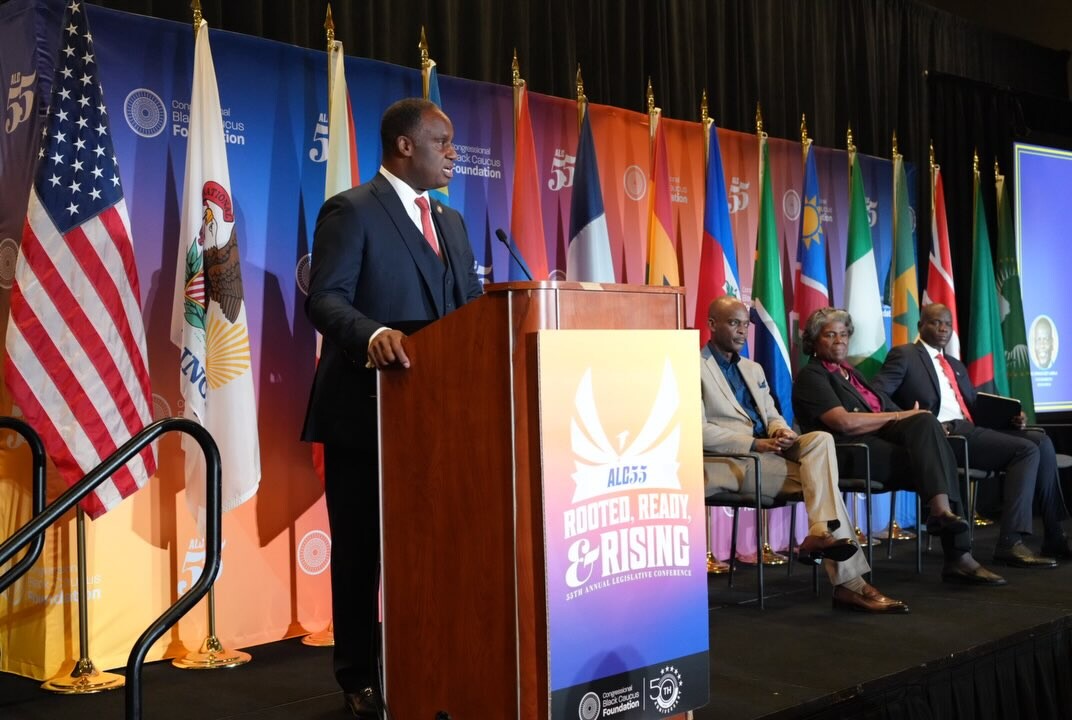
WASHINGTON (HUNS) — African leaders came together to discuss U.S.-Africa relations and reductions in foreign assistance last Friday during a session at the Congressional Black Caucus Foundation’s 55th Annual Legislative Conference.
“Do not push African countries towards greater economic dependence on China, Russia and other competitors,” said U.S. Rep. Jonathan Jackson, D-Ill., who hosted the session. “Most African countries prefer to do business with the United States.”
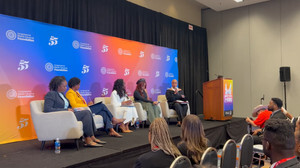
Other speakers at the session, titled “A U.S.-Africa Diaspora Forum: The Impact of Aid Cuts and Tariffs in Africa,” included James Gyakye Quayson, deputy minister for foreign affairs in Ghana; Linda Thomas-Greenfield, U.S. Ambassador to the United Nations; and Ronald Lamola, foreign minister of South Africa.
The African leaders discussed the U.S. Agency for International Development (AID) and the demolishment of many humanitarian programs throughout the continent of Africa. They said Africa should not rely on foreign aid. Leaders also pointed out how tariffs have affected the population, education and health.
Jackson opened the discussion by showing a map that depicts Africa as about the same size as Greenland, but Africa is about 14 times larger.
“The depiction of the size of Africa has been a distortion and has been propagandized,” he said.
Jackson then turned to Robert Dussey, foreign minister of the Republic of Togo, professor of political philosophy at Université de Lomé in Togo and driving force behind the Change the Map initiative.
Dussey spoke about Africa’s presence on the map and the root of the problem. How Africans and others see the continent is as important as being able to change the appearance of the continent geographically, he explained.
“It’s not only the geographical issue; it’s also in our mind,” Dussey said. “We need to change our mind to put Africa in the real size.”
The talk continued with Quayson highlighting the importance of a unified Africa and “being African” in all things, including the economy.
“We have to start globalizing ourselves,” said Quayson, emphasizing the need to be more independent and not rely on other countries.
The session ended with a message of bridging the gap between Africa and the diaspora. African leaders want to maintain a strong relationship with the United States and continue bringing investment and technology.
Several attendees shared what they took away from seeing African leaders in one place talking about the betterment of Africa.
Tatjana Jackson, who works for Detroit council member Renata Miller, said the event meant a lot to her and the conversation was important.
“This event was the next step to continue our history,” says Jackson, who has taught African American history for almost a decade.
Sheldon Thompson, a third-year accounting major at Delaware State University, talks about bridging the gap by getting African Americans more involved in the African economy.
“But it comes to a point where to empower it really means having a desire to share resources, whether that’s intellectual or otherwise,” Thompson states.
Thompson also imagined Africa and the African American population feeling connected and at home.
“I think there is opportunity to see Africa in the light of a place where we can find comfort,” Thompson said.
Chanea Davis, a political communications manager, said, “we are all struggling as people of the African diaspora everywhere — even the natives.”
“Our hearts are in the right place, and now it’s time for us to do the work.”
Amen Debretsion is a reporter for HUNewsService.com.