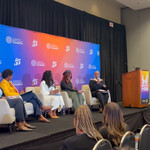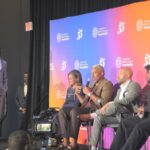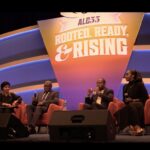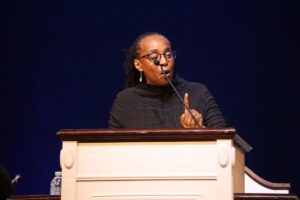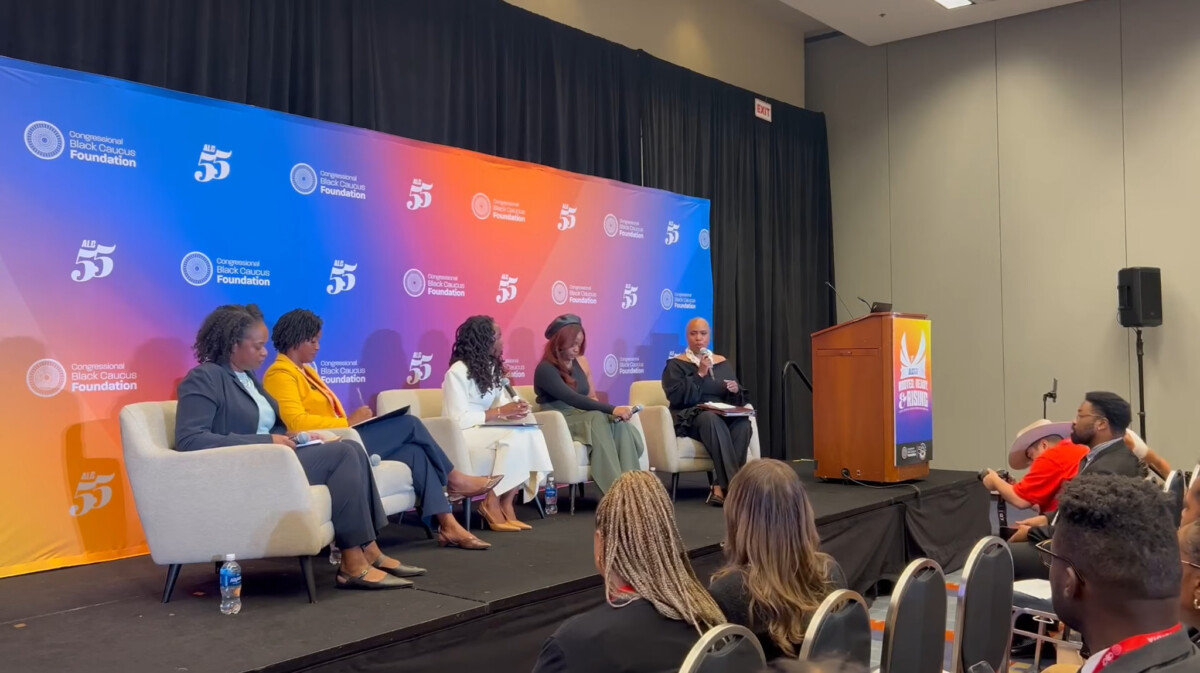
WASHINGTON (HUNS) — U.S. Rep. Ayanna Pressley, D-Mass., announced federal job guarantee legislation on Friday as panelists at the Congressional Black Caucus Foundation’s 55th Annual Legislative Conference discussed the financial pressures facing Black families.
During the panel, “Black Jobs, Black Women, Black Families, Black Futures: A Pathway to an Inclusive Job Market,” Pressley pointed to racial differences in unemployment and the financial challenges that can follow when people lose their jobs.
“Black suffering is so systemic,” Pressley told attendees. “It’s so endemic. It’s so ingrained in the fabric of who we are that for many it is unremarkable.”
Pressley said white unemployment is at 3.7%, compared with 6% for African Americans, based on data from the Bureau of Labor Statistics. Black women are also the primary breadwinners in 80% of Black households, she said.
Pressley’s legislation urges the federal government to guarantee jobs that would “pay no less than $25 per hour.” She referenced Coretta Scott King’s work advocating for full employment as an economic right and called on the Federal Reserve to fulfill its mandate of maximum employment.
Described as an “urgent discussion about the unemployment crisis facing Black women,” the panel also focused on how unemployment can affect entire households.
Ofronama Biu, chief economist of the Maven Collaborative, a research and advocacy nonprofit, presented data showing that when a Black woman becomes unemployed, her household income averages $44,000, compared to $80,000 for households with unemployed white women.
Biu said financial strain can also affect access to basic needs. Among unemployed Black women, health insurance coverage drops from 92% to 79%, she said. Inflation can also lead families to rely on short-term installment loans to pay for groceries and gas.
“When Black women suffer, Black children suffer,” said Brittany Packnett Cunningham, vice president and chief strategy officer at the Children’s Defense Fund.
Cunningham said Black women often take on unpaid work that helps support neighborhoods, volunteer programs and extended families even when they are not working formal jobs.
Angie Nixon, Florida state representative and Democratic Senate nominee, encouraged attendees to rebuild community-centered mutual aid networks, pointing to grassroots programs created by communities during the Civil Rights Movement.
The conversation became more personal during the question and answer portion of the session when an attendee with a law degree asked how workers can stay resilient after using their savings and facing repeated rejection in the job market.
Before the session ended, Pressley sent a member of her congressional staff into the audience to collect the woman’s resume and contact information.
“There is so much shame we carry about things, a shame that is shaped by policies and systems and leaders that have failed us,” Pressley said. “It took great bravery to be candid … and we want to reward that bravery.”
Aaliyah Clarke is a reporter for HUNewsService.com.