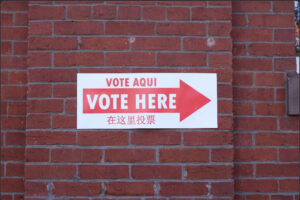
Outside Dunbar Senior High School’s Voting Center in Washington, D.C., five voters reflected on whether America’s uncertain future might make them leave or stay and fight.
WASHINGTON — Ellie Bomstein and her husband have discussed moving to Canada depending on the outcome of the 2026 midterm elections. Her husband holds Canadian citizenship through his father, making relocation a possibility. But as Bomstein left the voting center at Dunbar Senior High School, pushing a stroller with her infant son, she said leaving would feel like letting Republicans “win.”
“I think I want to stay and continue to fight for what I believe in,” she said.
Bomstein, 38, a third-generation Washington native, said voting rights, the future of democracy and recent Supreme Court decisions are among her biggest concerns.
Over 90 minutes outside the voting center on Election Day, five people reflected on the political issues shaping their futures and whether conditions in the United States could become so troubling that they would consider leaving. For some, voting rights and protections for vulnerable communities represented lines they were unwilling to see crossed. Others remained determined to fight for change.
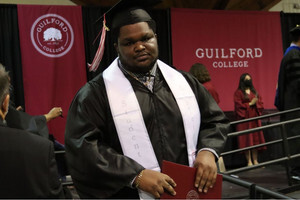
Akinyele Calhoun, 60, an educator at Dunbar and a father of five, said his children and the young people he works with every day influence his political priorities.
“I have five children, so I think about the issues that affect young people,” he said.
Calhoun, a registered Democrat originally from the Bronx, New York, said protecting public education and preserving the U.S. Department of Education are among his chief concerns.
For Anita Adams, 64, of Virginia, the right to vote is nonnegotiable.
An independent voter who researches candidates rather than aligning herself with a political party, Adams said her ancestors’ struggle for voting rights shapes her political convictions.
“If there were ever a repeal or change on that [right to vote], I’m gone,” Adams said.
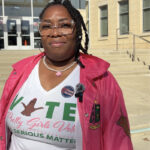
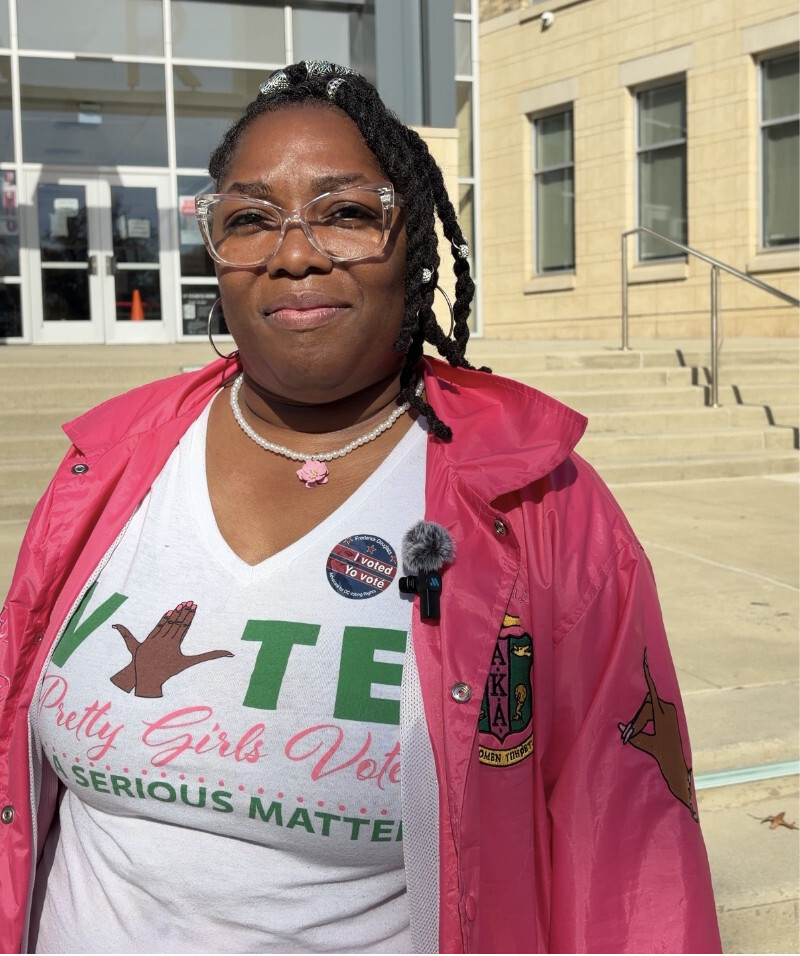
Nicole Johnson, 46, a Washington native and mother of children with disabilities, said threats to disability rights could also force her to consider leaving the country.
Wearing a shirt that read, “Pretty Girls Vote, It’s a Serious Matter,” Johnson said she is particularly concerned about protections under the Americans with Disabilities Act and access to special education services. She said losing those protections would be a breaking point, not only for her family but also for others who depend on them.
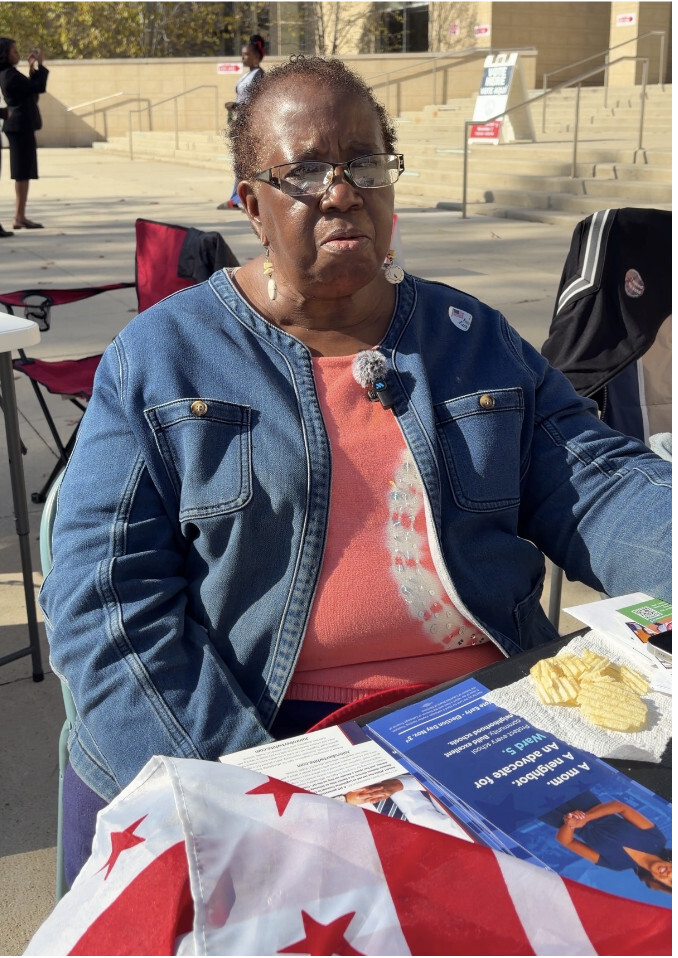
Hazel Thomas, 77, has her own concerns about the country’s political direction, particularly the influence of money on elections and the erosion of local representation.
Thomas, the Ward 5 Democratic committeewoman, was seated outside the voting center campaigning for Ana Rodriguez, a candidate for Advisory Neighborhood Commission 5E01. The commissions advise the D.C. government on neighborhood issues.
In a July 14 letter to the editor published in The Washington Post, Thomas argued that outside money had weakened residents’ influence over local elections. She urged Washingtonians to become more politically involved by running for neighborhood offices and attending public hearings.
Although Thomas said she has reached a breaking point with the political climate, she continues to participate in local elections.
“I was born on the edge of Jim Crow, and I haven’t seen people die, but I’ve seen persecution,” she said.
For Thomas, the struggle for political representation is not new. And on Election Day, rather than retreating from it, she was still outside a polling place, working to influence what happens next.
Ssanyu Lukoma is a senior honors broadcast journalism major and political science minor at Howard University.