WASHINGTON (HUNS) — Multiple residents told the District of Columbia Housing Authority (DCHA) that they did not feel heard when raising concerns about voucher support, for the federally funded affordable housing program, and overall living conditions.
“From the beginning of my residency, DCHA failed to assign me a housing specialist in a timely manner,” said Sophia Thelisma during the public testimony section of the DCHA Board of Commissioners’ first meeting of the year.
“The unit that DCHA approved passed [the] inspection, despite serious habitability issues,” Thelisma said. “The building was later found to contain mold levels exceeding legal limits, lead hazards and structural defects.”
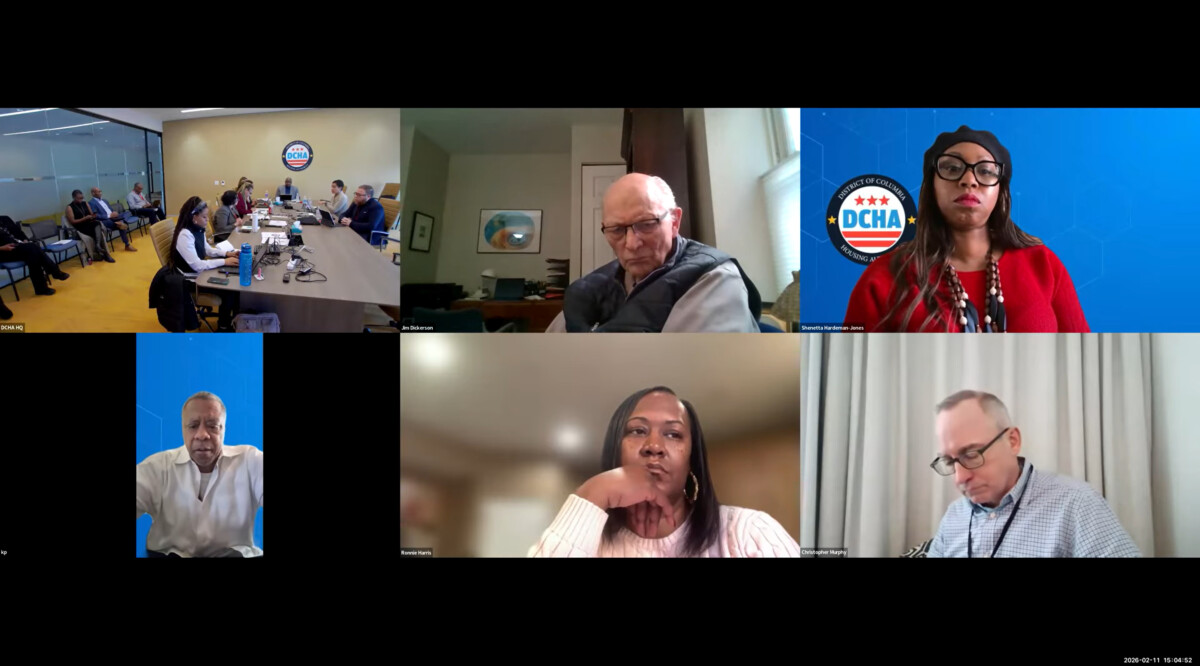
During the nearly three-hour virtual meeting, 25 people were called to testify, but only 17 actually spoke. Many raised concerns about voucher assistance, mold and, in some cases, flooding.
“I feel better when I leave my unit [rather] than when I’m in my unit,” said Chris Otten during his testimony.
Otten, who has lived in D.C. since 2000, said he paid an independent inspector $6,000 to inspect the property after he said he did not receive support from DCHA after discovering mold in the common areas of his building.
“There’s a mold issue in the crawl space under my unit,” Otten said. “I’ve shared those inspector reports numerous times with the DCHA staff, and it hasn’t moved them to act.”
Executive Director Keith Pettigrew gave a report on prospective properties and fee developers for the voucher assistance program and the 102% growth of leased vouchers.
The bond deal includes 19 properties, but for now, four fee developers have agreed to six properties: Clarence House, Hopkins, James, Fort Lincoln, Sibley Plaza and Syphax Gardens.
Pettigrew was mentioned multiple times during the public testimonial period, often referenced by those who said they have not received a voucher, even in dire circumstances. One of those moments came from Shonta’ High, former president of the Council at Park Morton, who spoke on behalf of fellow resident Bonnie Moore.
“She currently is a voucher holder whose mother has a few months to live,” High said in her testimony. “She has reached out to DCHA multiple times for her voucher so she can care for her mother in her final days. Her calls have gone unanswered, and her emails have been ignored.”
Moore is seeking a new voucher that would allow her to find housing in Texas, where her ill mother resides. She requested a hardship exemption to have her mother move in with her or rent out her sister’s home in Texas, but she was rejected.
“They gave us a federal voucher that’s supposed to be good in all 50 states, but they’re saying that I have to do a briefing to get a new voucher down here [in] Texas,” Moore said in an interview.
She was told that she could complete the briefing online, but later on was instructed to complete it in person, despite being in Texas and her mother’s sole caregiver. She has also had to fill out additional paperwork for the department’s approval.
Moore later explained that she has not joined a DCHA public meeting herself because officials never instructed her on where to go. She was always told to call and email to solve her issue.
Board Chair Raymond Skinner said that often issues raised within the testimonies cannot be resolved during meetings, but that DCHA staff would follow up directly with residents who shared concerns.
After public testimony concluded, the meeting focused on committee updates.
Commissioner Leroy Clay reported that the audit findings tracker is expected to be completed this month with a timeline of dates. The tracker aims to address operational failures issued by the U.S. Department of Housing and Urban Development (HUD), the D.C. Office of Inspector General and other auditing agencies.
In 2022, for example, HUD reported that DCHA had 82 federal violations, including failing to submit audited financial statements for three consecutive years.
Commissioner Denise Blackson said public safety continues to be a major topic of discussion for the committee on resident services. In emergencies, residents should call 911 or the Metropolitan Police Department rather than contacting DCHA staff directly, Blackson said.
The commissioners unanimously passed two resolutions involving contract modifications from the committee on operations and administrative services. They disagreed with some aspects of two other resolutions.
Blackson complained about Resolution 26-04, which was amended in December and details the procedures to plan for and implement the election of resident commissioners.
“The residents, resident leaders, resident councils, city-wide advisory board — all of those should have been included in this decision-making or at least weigh in and be able to share their concerns on this,” Blackson said.
Commissioner Rosa Burbridge added that DCHA needs to do more. She recommends hosting listening sessions and agrees with Blackson’s push to go block by block. The resolution was approved 5-1.
Resolution 26-05 was the only one that did not pass.
It was proposed to introduce revisions to regulations from the DCHA administrative plan, including adding a 30-day public comment period after the plan has been published.
Commissioner Theresa Silla expressed frustration that the board received updates on the same day they were expected to vote on the resolution, even though issues regarding this plan were flagged during the committee meeting on Jan. 30.
“It’s absolutely critical and important that you circle back with the updates sooner rather than later, and that you give us an opportunity to say whether the updates sufficiently address our concerns or not,” Silla said.
Pettigrew addressed the multiple comments from the commissioners about needing better and more timely communication.
“First of all, forgive us,” Pettigrew said. “I’ve heard the communication piece. It sounds like it’s across the board, and I need to do a better job with my staff.”
The next public meeting is scheduled for March 11 at 1 p.m. and can be viewed on the DCHA Facebook page.
Myla S. Roundy and Tatiana Allen cover public affairs for HUNewsService.com.