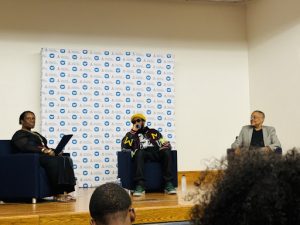
WASHINGTON — The Center for Women, Gender and Global Leadership (CWGGL), an interdisciplinary program at Howard University supporting the advancement of Black women in leadership, in its first event for the semester on Sept. 1, introduced new findings on global leadership and digital technologies.
These developments find its home in Digital Geopolitics, defined as the analysis of geographic influences on power relationships in international relations according to a study from the International Conference on Cyber Warfare and Security.
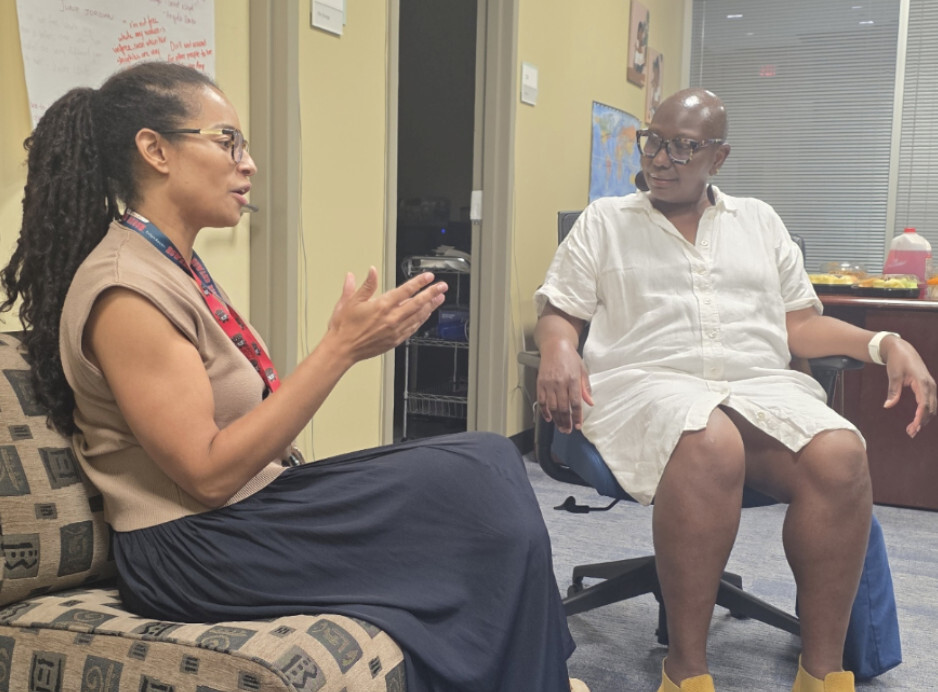
Dr. Anita Plummer, associate professor in the Department of African Studies, is the newest executive director of the center.
“There’s a theory circulating that countries, in terms of geopolitics and geopower, that have access to data will be the most powerful countries in the world,” said Plummer.
The center is in its sixth year since its founding.
“What’s great about the center is that we service multiple constituencies including students, faculty and staff. We have partners in the community and we work on global and local issues,” Plummer said.
The future of global policy, she said, requires researchers like her to look to digital infrastructure in Africa, grassroots activist networks, and even classrooms at Howard.
Since the center’s focus is on Black feminist scholars who are discussing international relations, she thinks exploring the power dynamics at the forefront of leadership will move beyond academia to keep developing young leaders at Howard to understand the possibilities of diplomacy.
“We tend to think of AI and digital futures as just being online, something we engage with individually, but it has implications in terms of our work,” she said.
Her recent book, ‘Kenya’s Engagement with China: Discourse, Power, and Agency’ investigates the relationship of political ownership between Kenyan and Chinese technology.
“So I’ve been doing research on that, as you know as it relates to Africa, but I think the intersections are global because we are disproportionately impacted, because Black women tend to be employed in the gig economy at higher rates than any other racial ethnic group,” said Plummer.
By integrating research on digital geopolitics, cross-continental solidarity and workplace resilience, CWGGL positions Black female scholars to not just enter global policy spaces, but actively rewrite the rules governing technology, equity and human rights on a global scale.
Imani Hopkins, the program coordinator, said the center offers a lot of programming geared towards the next generation of leaders. She shared her thoughts on new upcoming opportunities for students to engage in.
“Our new global leadership network program serves to help students who want to refine their skills, add to their resumes and be involved in a cohort of future leaders,” said Hopkins.
For the last six years, CWGGL has focused on the intersection of traditional geopolitics, physical borders, natural resources and military territory.
“We also have other programs such as ‘Mothers of the Mecca’, which we will use to offer support resources to women authors, as well as our ambassador program,” said Hopkins.
Abiba Moncriffe, student president of the Black Feminist Book Club, said she decided to get involved with the center to have a broader conversation about what’s happening in Western civilizations.
“The book club is sponsored by the center. So Imani sent me an email asking if I was interested in coming in. I was like absolutely yes. I think it’s going to be really helpful, because gender equity is so important,” she said.
The center’s initiative aims to foster critical discussion about gender equity and intersectional feminism within university spaces, challenging lingering systemic inequalities.
“Especially in places like Howard it looks like there shouldn’t be any issues of patriarchy or misogyny, but that doesn’t mean that these greater systems that we exist in are completely eradicated,” said Moncriffe.