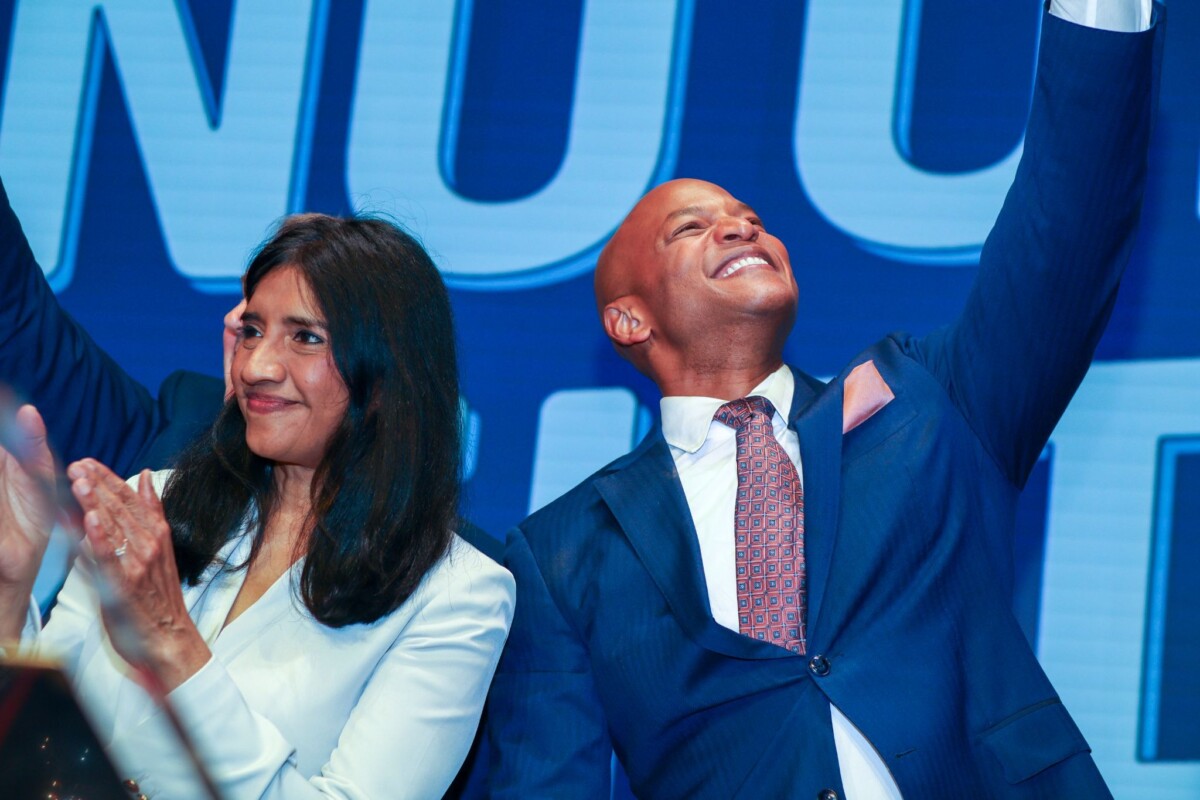
As supporters celebrate his reelection, they look for progress on housing, jobs and public safety.
BALTIMORE — U.S. Rep. Steny Hoyer urged supporters gathered for the Moore-Miller watch party Tuesday night at M&T Bank Exchange in Baltimore to look toward the 2028 presidential election.
“This is the first day of the November ’28 election,” he said.
Hoyer was already looking two years ahead, but the crowd had plenty to cheer in the returns still arriving.
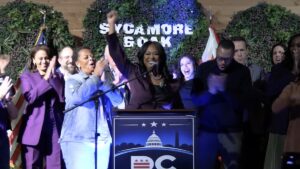
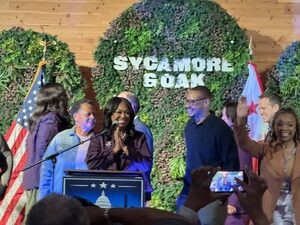
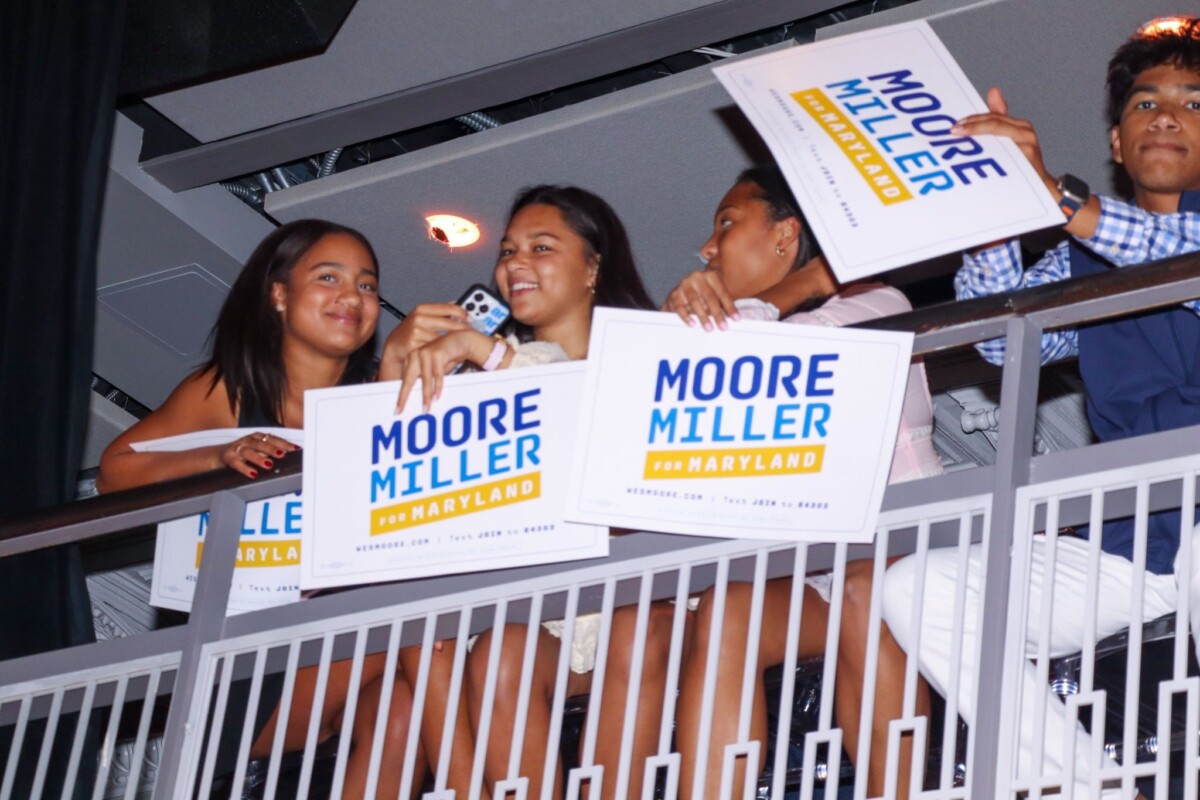
Red lights flooded the hall, only giving way to flashes of blue as election results filled the large screens. Each race that went blue ignited another round of cheers and applause, louder than the last. A sliver of floor separated the stage from the crowd packed shoulder to shoulder behind metal barricades. Phones rose above heads on the main floor. Guests leaned over balcony railings, some with drinks in hand, surrounding the stage with celebration.
Angie Winder had helped build toward this moment, knocking on doors and calling voters to help elect Democrats. But the Baltimore City resident and member of the Baltimore City Democratic State Central Committee expected more than a night of celebration. She wanted Gov. Wes Moore and the other winners to keep their word.
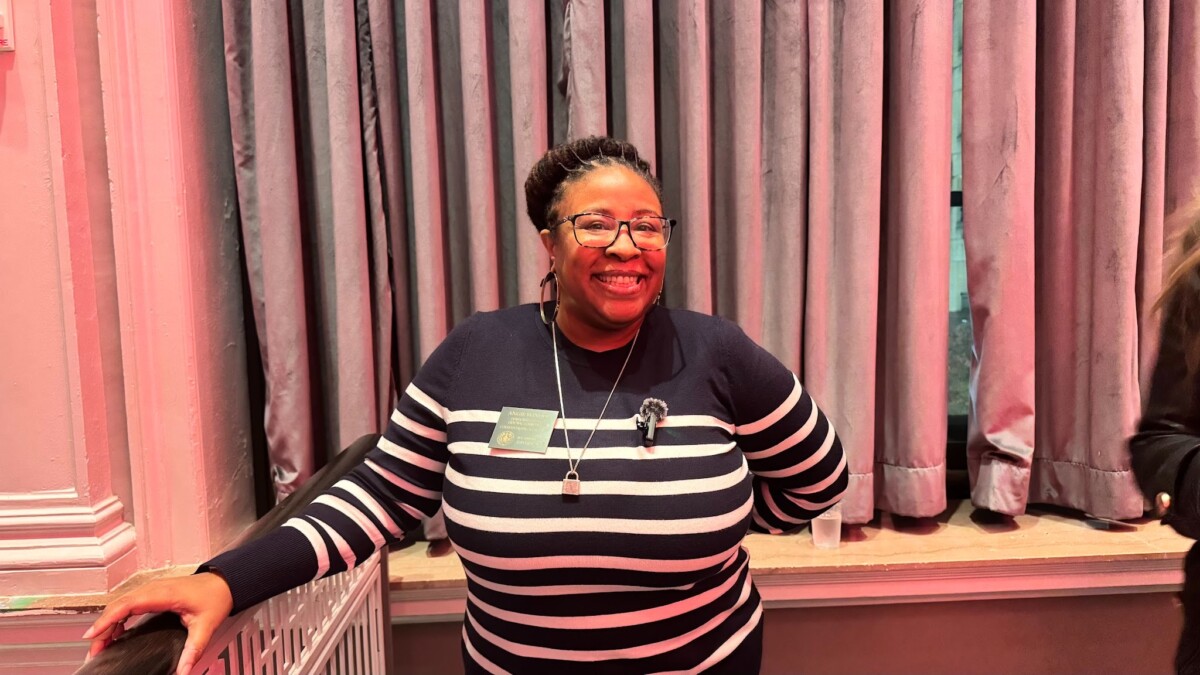
“I’m hoping that [Moore] continues because we have a long way to go,” she said boarding the elevator to the third-floor balcony.
Moore and Lt. Gov. Aruna Miller secured a second term shortly after polls closed, defeating Republican challengers Dan Cox and Rob Krop. Cox campaigned on cutting taxes and fees, expanding energy production and speeding the reconstruction of the Francis Scott Key Bridge.
As of 9:21 a.m. Wednesday, unofficial Maryland State Board of Elections results showed Moore and Miller with 62.6% of the vote, compared with 33.2% for Cox and Krop.
Marylanders turned out early in greater numbers than in Moore’s first election, but participation fell short of the last midterm during a Trump presidency. In-person early voting rose about 58% from 2022 to 604,396 ballots, yet remained about 9% below 2018, according to Maryland State Board of Elections turnout reports. The increase marked a rebound in one voting method, rather than proof of a record turnout overall.
Moore’s victory came as Democrats flipped governor’s offices in Georgia, Iowa, Ohio and Texas. In Georgia, Democrat Keisha Lance Bottoms became the nation’s first Black woman elected governor. Florida voters elected Republican Byron Donalds, making him the first Black Republican elected governor in U.S. history.
The bash also marked a battle over how Maryland would draw its congressional districts.

“Put up your threes,” Moore told supporters as he discussed Question 3, the redistricting amendment he championed. Three-finger salutes rose through the crowd alongside phones recording his speech.
Moore said voting yes would “protect our democracy and keep this in Maryland’s hands,” even as opponents warned the measure would give partisan mapmakers more power to choose their voters.
Addressing a still-growing crowd that had already been celebrating for hours before he took the stage, Moore pledged more affordable housing, stronger public schools and new jobs. He also pledged to reduce Maryland’s reliance on the federal government.
But even as he celebrated his administration’s record, Moore acknowledged the distance between statewide progress and the losses families still carried.
“We have seen historic drops in violent crime all throughout the state of Maryland, but yet we’ve still had to attend far too many funerals,” Moore said.
Maryland recorded 25% fewer homicides and 28% fewer nonfatal shootings in 2025 than in 2024, according to preliminary figures the governor’s office released in January. Those figures document the declines but do not establish how much Moore’s policies contributed to them.
Beyond public safety, Moore framed his next term around giving more Marylanders a chance at security and prosperity. He plans to further his efforts through the Housing Expansion and Affordability Act, which allows greater density in qualifying developments.
“It means we will continue to create more affordable housing and turn more renters into homeowners and give people a chance to pass something down to their children besides debt,” Moore said.
His plans for the future resonated with Elaine Vidal, who traveled about an hour from Hyattsville after work to attend.
“I loved hearing about his policies for the future and about how he wants to bring everybody up into a better place,” Vidal said.
Her enthusiasm for Moore came alongside anxiety about Washington.
“The federal situation has been … been really alarming and really upsetting,” she said.
Vidal welcomed Moore’s willingness to stand up to the federal administration and said she hoped his continued leadership would bring better times for Maryland.
Moore spoke proudly of meeting a former federal employee who had found work with the state. He promised to grow Maryland’s economy and reduce its dependence on what he called “an unreliable Washington,” tying those goals to a principle he learned in the Army.
“Leave no one behind means that no matter where you start in life, that everyone deserves a fair shot,” Moore said.
His running mate, Miller, thanked supporters and pledged to continue their work over the next four years. She connected the work ahead to her own experience of receiving opportunities.
“Because when you’ve been the underdog, you never forget who opened the door for you,” she said. “And you never stop working to make sure that you open for the next person.”
For Winder, who had worked to turn out voters, the hope was that the momentum would last beyond election night.
“I’m hoping this continues because we have a long way to go,” she said.
La Tetra Metts-Owens is a senior reporter for HUNewsService.com, who specializes in the arts.