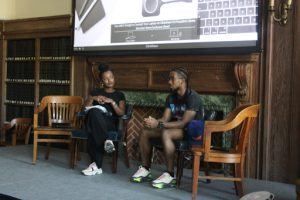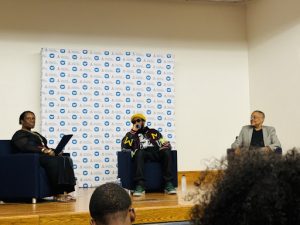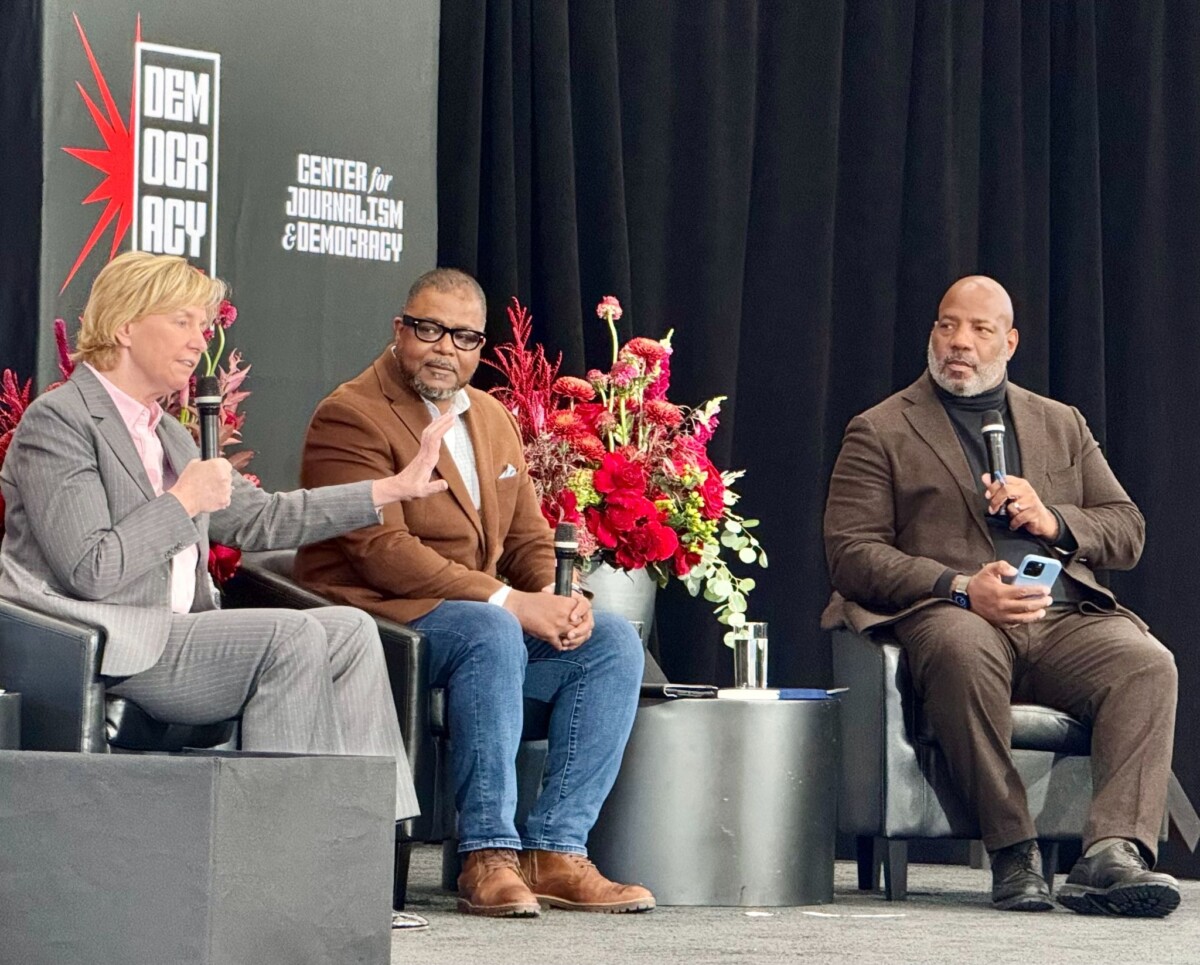
WASHINGTON (HUNS) — Preparation for covering the midterm election is key, Leroy Chapman Jr., editor-in-chief of the Atlanta Journal-Constitution, told journalists Tuesday at the Democracy Summit at Howard University.
“Being ready now is being ready for anything,” Chapman said during the second session of the day. The summit, organized by the Center for Journalism & Democracy, was a full-day workshop to prepare journalists for the upcoming election on Nov. 3.
As student journalists already doing this work, we left with a clearer sense of what our reporting will demand of us this election season. Here are our top takeaways from each of the five sessions.
1. Journalists Must Stick Together
In the first session of the day, “Press Attacks Amid an Eroding Democracy: Why We Must Defend Journalism,” the panelists discussed legal threats, government surveillance and intimidation of reporters, along with the responsibility news organizations share to defend press freedom.
One of the biggest takeaways was that even when the press and media are under attack, journalists must stick together. During the panel, Mary McCord, executive director of the Institute for Constitutional Advocacy and Protection at the Georgetown University Law Center, said the profession lacks unity.
When President Donald Trump refuses to answer a question and goes to the next person, “Why doesn’t that next person just say, ‘I want you to answer that question of my colleague?’” McCord asked. “It’s outrageous to leave them hanging.”
Although we have not experienced this treatment, it was a wake-up call. In a time when it seems like many journalists want to break news and get the story out first, it is important to remember that solidarity matters just as much. Even though we are competing, we are still colleagues going through similar challenges.
2. Build Relationships and Prepare Early
In session two, “Are You Ready? Preparing Your Newsroom for High-Stakes Elections,” two newsroom leaders shared a few best practices for election preparation. One standout practice came from Carolyn Ryan, a managing editor for the New York Times, who shared that the newsroom organized a full-scale, election-night rehearsal involving 70 staff members.
The exercise simulated gathering election data, checking results and producing maps under deadline pressure.
“We can’t really ask ourselves, ‘Are we ready?’ We have to get ready,” Ryan said.
3. Look Beyond Our Borders
“Lessons From Abroad: Fighting Back Against Attacks on Democracy,” the third session, demonstrated the importance journalists should place on their international colleagues.
Attila Mong, the Europe program director of the Committee to Protect Journalists, discussed Hungary. He illustrated the importance of tracking trends and showed how legislation can affect journalism by changing who owns the media and how the state funds journalism.
The final example from the panel described how six rival Brazilian news outlets pooled their resources during the pandemic to get public health data from state authorities when they couldn’t access federal data. For us, this example described the principles of collaboration and resource sharing, and how they help newsrooms obtain information that would be unobtainable individually.
It also illustrated the benefits of staying in contact with colleagues who live and work under different journalistic conditions, as they can help us anticipate obstacles.
4. Take Your Time and Get it Right
In an interactive exercise, the fourth panel, “What to Expect on Election Night: A Newsroom Simulation,” attendees heard the real-time thought processes of a journalist, editor and lawyer.
Hearing their different thought processes reiterated the importance of waiting to report with the most accurate information possible because, as journalists, we are truth-tellers. The conversations also connected back to an earlier session where Nikole Hannah-Jones, the founder of the Center for Journalism & Democracy, said, “Content creators cannot create content without our journalism.”
During the simulation, Claire McNeil, managing editor for news at the Tampa Bay Times, and Ron Nixon, former director of the Local Investigative Reporting Program at the Associated Press, discussed a viral video spreading among communities. The two agreed that regardless of how much attention the video was getting, if it was unverified, it should not be distributed in a way that could contribute to the misinformation that tends to float around social media.
“I’d rather be right than first,” Nixon said.
Pressure to publish does not relieve us of the responsibility to report only what we actually know.
That was a reminder we can carry into any newsroom.
5. Network in Stages
At the last session of the day featuring facilitated roundtables, attendees were split in small groups to reflect on how they will take the knowledge of the day and implement it into their reporting. Conversations explored different avenues, including sharing resources that participants brought from their home newsrooms.
Sitting at a table with a professor, freelance journalist and founder of an international fact-checking platform, I (Myla) realized the importance of the diversity within networking. Each of us are at a completely different stage of our career, yet each of us had something to offer one another.
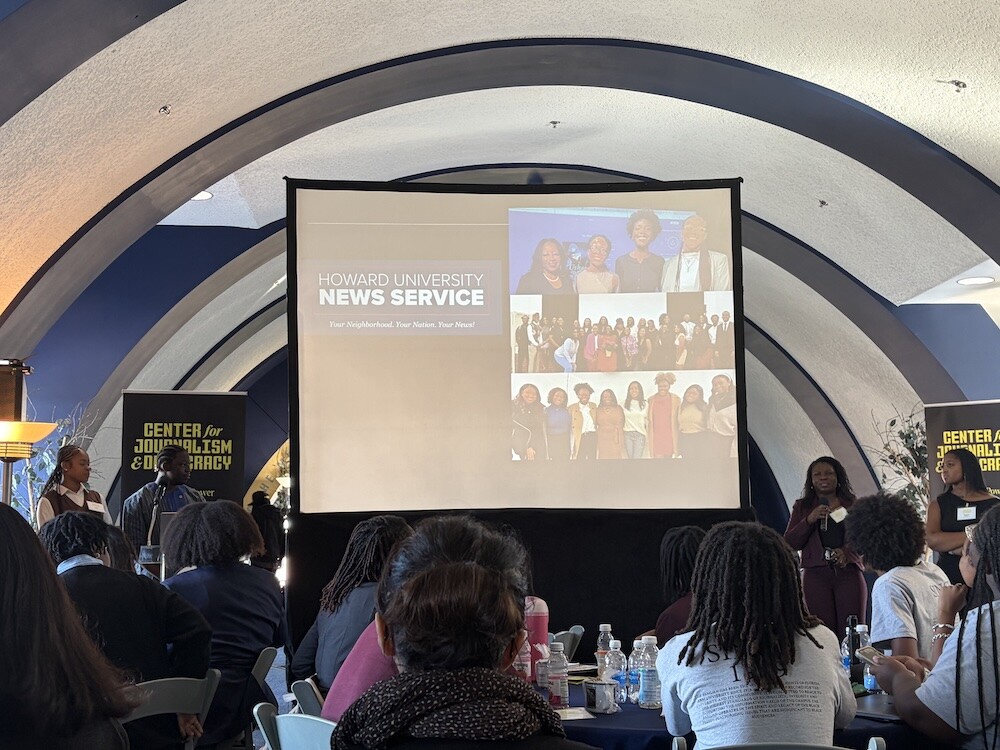
The day before the Democracy Summit, the Center for Journalism & Democracy hosted representatives from student newsrooms across nine historically Black colleges and universities.
The Indaba Student Press Leadership and Innovation Conference examined democracy, investigative reporting and journalist safety, connecting each topic to the demands of election coverage.
Some of the key learnings on Monday included obtaining documents to support our reporting, independently verifying information and assessing how our identities can affect the risks we face.
The Democracy Summit left us with practical steps to take back to our newsrooms: Build relationships early, ask for evidence and make room for collaboration.
Before Howard University’s “Showtime” Marching Band closed the day, the roundtables challenged us to identify one action we could take before election night. As for our newsroom, that work starts with knowing whom to call, what evidence to ask for and when to hold a story — even while everyone else is posting.
La Tetra Metts-Owens and Myla S. Roundy are senior reporters for HUNewsService.com. Metts-Owens covers Prince George’s County and the arts. Roundy covers Ward 5 and social issues. She is also the managing editor of The Hilltop at Howard University.