Environmental and Health Impact on Residents
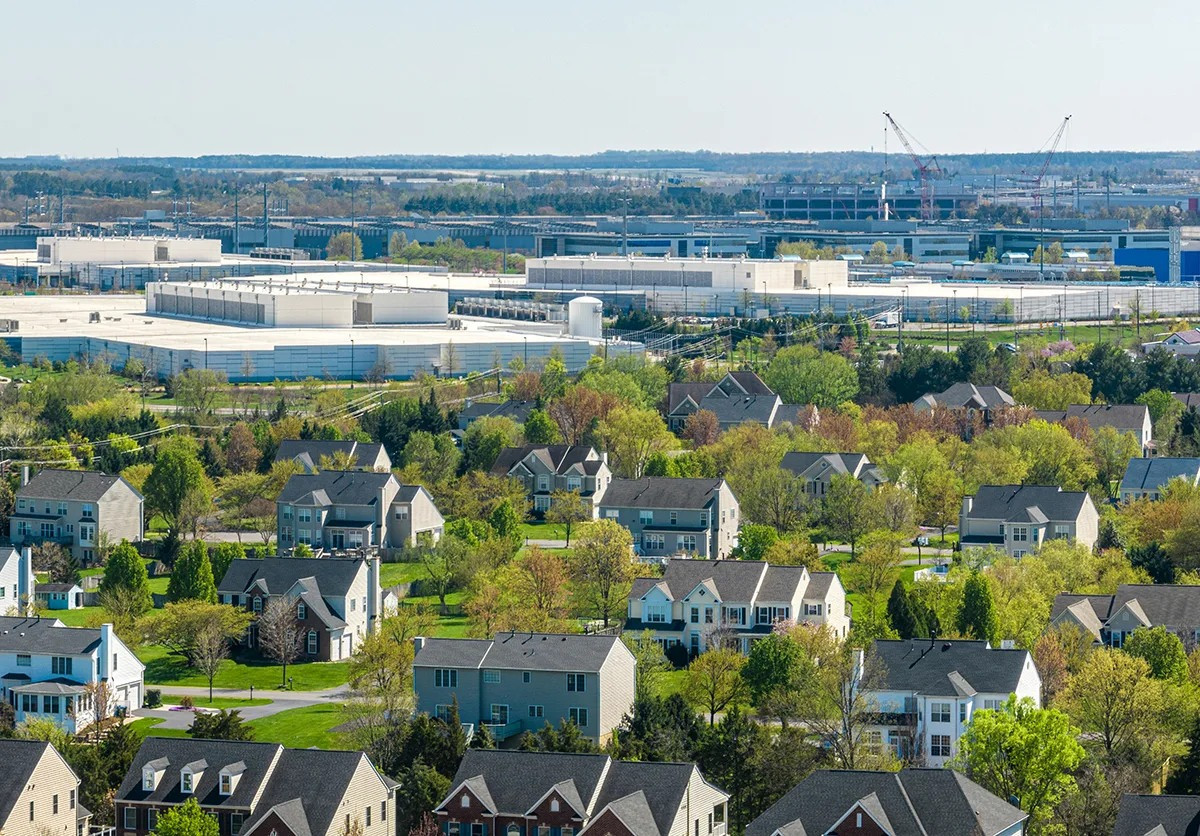
When a data center arrives in a neighborhood, it brings environmental effects, including energy demand, strain on water resources and several kinds of pollution. This can lead to a host of health problems for residents, some of which are invisible to the eye.
According to the Environmental and Energy Study Institute, millions of gallons of water are used daily to cool data centers, leading to billions annually. Manufacturing the computer chips used in data centers requires large amounts of water as well. This can deplete water supplies in regions that are already struggling with access to enough clean water.
Water use is tied to energy consumption, and as data centers require a significant amount of energy. As the World Resources Institute notes, they can sometimes consume as much electricity as tens or hundreds of thousands of homes. This creates dependence on fossil fuels and raises electricity prices for individuals.
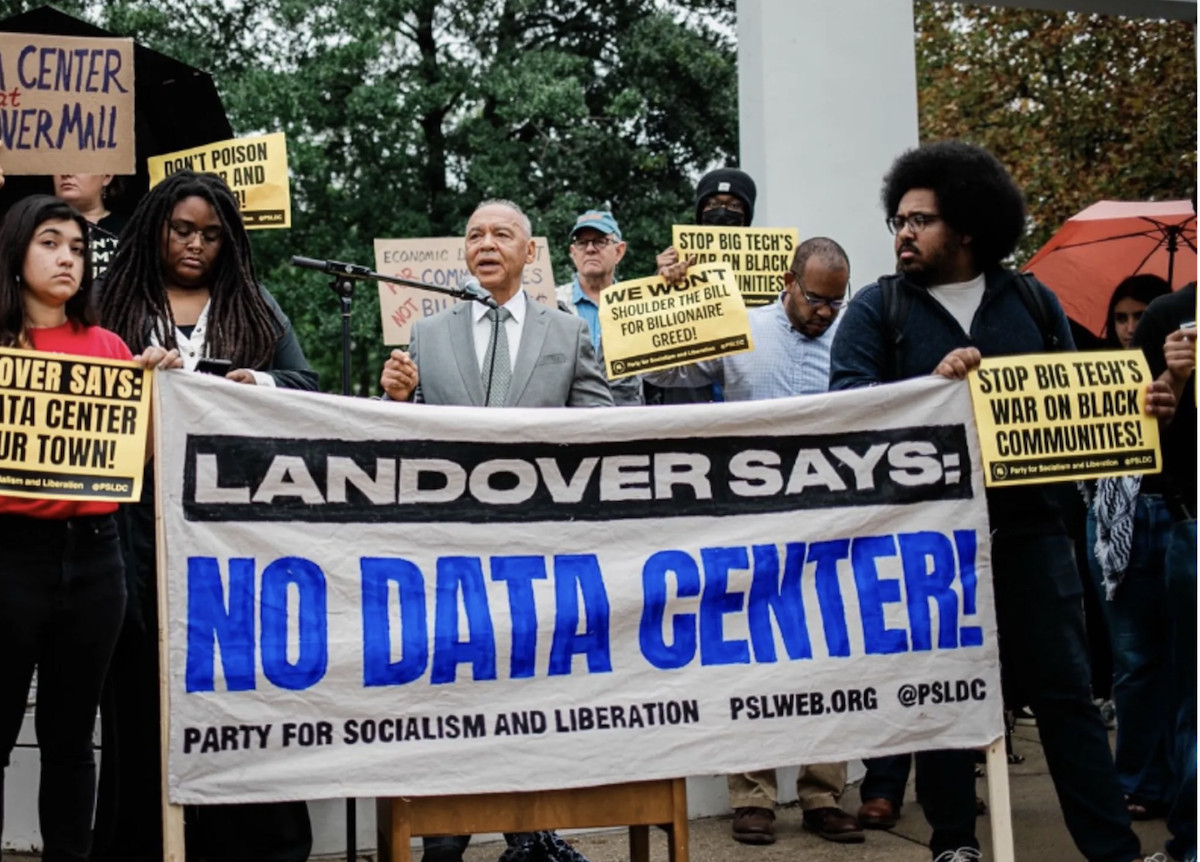
This is the biggest problem on many residents’ minds when they first learn about data centers, said Taylor Frazier McCollum, who is using a petition to garner support against building a data center on the old Landover Mall near her home in Prince George’s County, Maryland. She said this is the biggest problem on many residents’ minds when they first learn about data centers.
“People’s biggest concern is their energy bills,” McCollum said. “We have to meet them where they are.”
“If they’re not concerned about breathing in particulate matter or having pollution in the water, I really do stress to them that the closer proximity you are to a data center, the higher your energy bills will be.”
She said residents in Maryland are paying for data centers that are in Northern Virginia because they share the Pennsylvania-New Jersey-Maryland Interconnection energy grid for the region, even if they do not realize it. As she mentioned, energy bills are just one hidden consequence of data centers.
Although there is limited research from federal organizations like the Environmental Protection Agency about the health effects of data centers, organizations like that Environmental Health Project have identified that data centers, particularly gas-powered ones, emit air pollutants like nitrogen oxides, methane and fine particulate matter.
These emissions are linked to a host of serious health problems, according to David Goldsmith, Ph.D., a public health expert specializing in occupational and environmental epidemiology. His research has focused on hazards such as silica dust, asbestos and pesticides.
“What we know is that a great deal of epidemiology research, and public health research has studied the community exposure profiles of those particular criteria of pollutants,” said Goldsmith, who teaches graduate students at George Washington University. “They have specific impacts in terms of increased cough, increased respiratory disease, increased heart disease and probably in a broad sense of increased cancer risk as well.”
Noise pollution is also an issue, with construction, cooling systems and generators reaching levels harmful to hearing. Garcia has worked directly with communities experiencing this, such as Memphis and Southaven, Mississippi.
“The gas plant that has been up and running in the Southaven neighborhood is very close to neighbors, and they have reported suffering a lot from the noise associated with those methane gas turbines,” she said.
She said one of the biggest issues these communities face is feeling like they don’t have a say in what happens in their own neighborhoods. She gave the example of xAI using buildings already zoned as industrial to avoid getting public approval for bringing in data centers.
“In order for communities to make a decision about whether the benefits of a data center outweigh the costs, the community needs to be informed on the front end about what those benefits and costs actually are,” she said.
Many people are unfamiliar with everything that comes with data centers, and Garcia said this makes it harder for them to understand what they are fighting.
“Most communities have never seen an industrial facility that needs a gigawatt of power, that needs, you know, millions of gallons of water a day,” Garcia said. “Those have not been on folks’ radar until really recently when we started getting these hyperscale AI data center proposals.”
“This really is a major public health concern.”
— David Goldsmith, Ph.D., epidemiologist at George Washington University
Certain communities are affected more than others. Goldsmith said fossil fuel burning plants are often placed in communities of low income or marginalized individuals, specifically African American and Hispanic farmworkers.
“I am certain that the findings will be similar to what have been reported in other contexts, that namely higher exposures to these pollutants will lead to greater environmental risks and children’s risks, and for more serious problems in elderly retirees, that kind of thing,” Goldsmith said.
He said he is concerned that the current political administration is not enforcing policies that protect people enough based on research that has been done, and that it will fall on state and local politicians to do the work.
“It is my opinion that there is no justification for backing away from the current standards that have been said for controlling these atmospheric gases and particulate matter,” he said. “This really is a major public health concern that sort of ratcheting back the criteria pollutant standards will produce increased risks.”