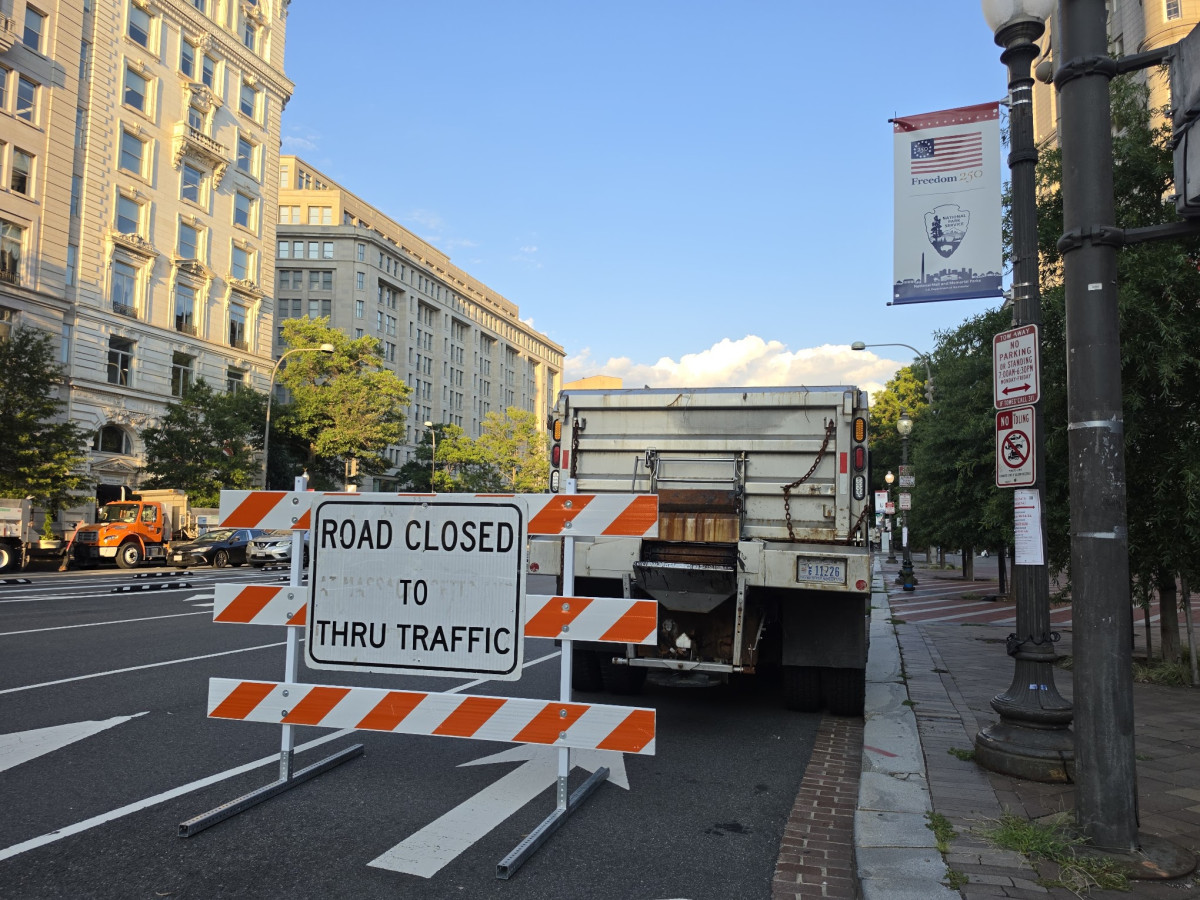
WASHINGTON (HUNS) — Some D.C. residents say they have come to expect disruptions to their daily lives — commuting to work, running errands and even enjoying a quiet home — as events continue in celebration of the country’s 250th birthday.
Still, they want the city and U.S. government to do more to make their lives easier.
Multiple large-scale events taking place this summer on and near the National Mall, including the Great American State Fair, the UFC fight and, most recently, the Grand Prix in association with Freedom 250, brought attendees from all across the country, which disturbs plans of those who live or work in the nation’s capital.
Allison Richardson, a D.C. resident of nine years, said she has experienced flight disruptions like no other this summer. The worst, she said, was near the Fourth of July. While visiting family in Michigan, she was informed all flights were cancelled when she was supposed to return to D.C.
“I had to completely reroute my plans,” Richardson said, causing her to end her trip two days earlier than planned. “The airline did not contact us and tell us that there would not be any flights. … I was told by someone who works on the Hill.”
Freedom 250 flyovers caused that disruption. Flights in and out of Ronald Reagan Washington National Airport were suspended on July 3 and 4 for the actual event and rehearsals.
Living downtown, disruptions from large-scale events are quite common, said Thomas Lee, commissioner of the Advisory Neighborhood Commission 2C03, which represents residents in Penn Quarter and near the National Mall. He compares some of them to the same disturbances that occur during protests, festivals and even presidential inaugurations.
“People just know to monitor [and] figure out when the games or concerts will occur. And if they need to exit the building or come home, … they take those things into account,” Lee said, who lives a block away from the Capital One Arena.
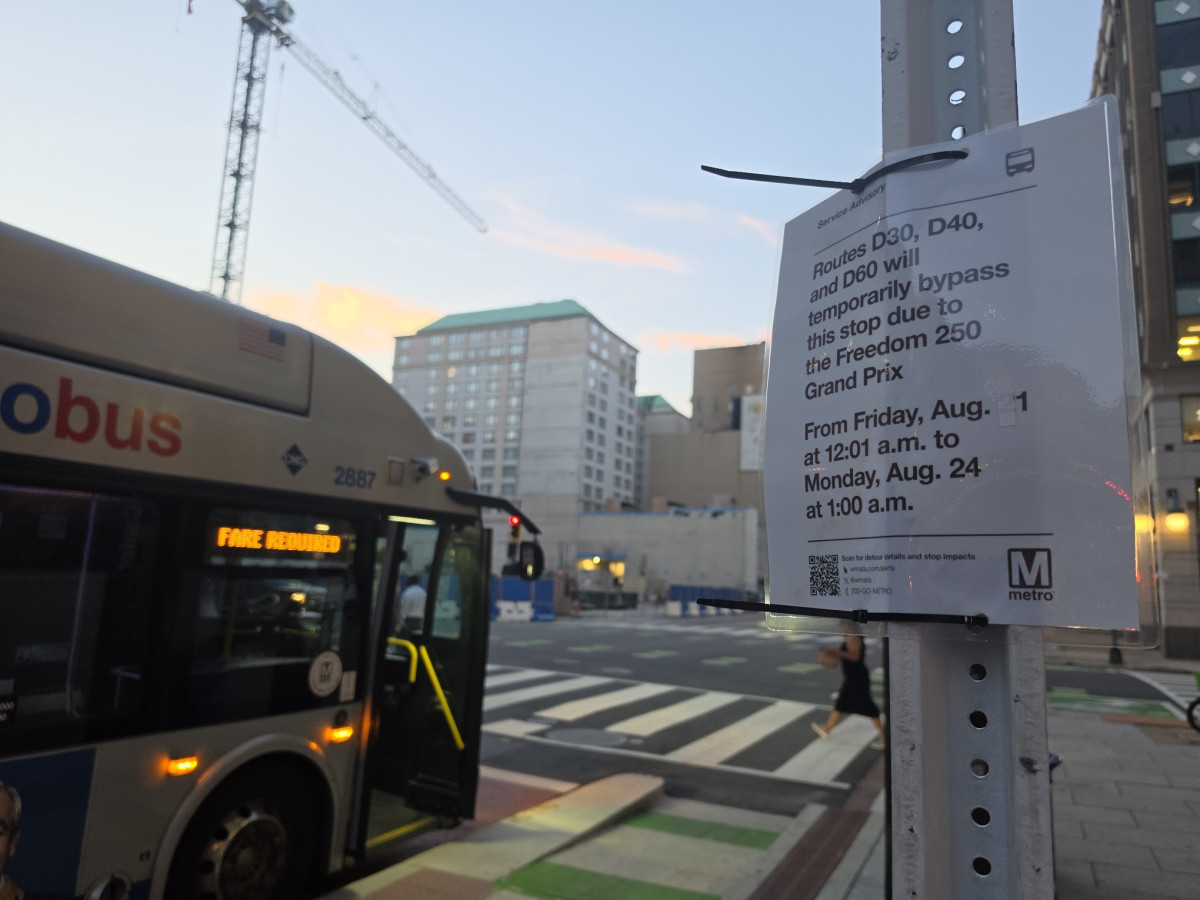
On Saturday, Aug. 22, the first day of the Grand Prix, at least 15 Metro Bus routes were impacted and on detour, according to the Washington Metropolitan Area Transit Authority (WMATA).
For these routes, the earliest detour alert began on Aug. 1 and the latest is expected to extend to Sept. 15. On average, these 15 routes have over 53,000 people board each day of the week, according to the most recent data available from WMATA.
WMATA declined an interview to explain how it is navigating changes brought on by Freedom 250 events and instead referred to a press release outlining service information and bus detours in anticipation of the Grand Prix. The transit system also recommended customers use Metro Pulse for real-time information.
The National Mall Coalition, a D.C.-based nonprofit, is dedicated to amplifying the public’s voice in decision-making centered around the National Mall. Chair of the board, Judy Scott Feldman, Ph.D, has studied the city’s architecture and history for over 30 years.
Scott Feldman acknowledges that the Mall is used as a place of celebration and camaraderie, but she doesn’t see how these events fit into a celebratory narrative.
“Explain to me how a car race represents the national interest and how it celebrates our 250th anniversary, or how a wrestling or fight match represents [us],” she said.
Richardson, who works in financial technology and lives in Capitol Hill, said that in preparation for disruptions caused by the Grand Prix, her job gave employees the option to work from home for the latter half of the week. She accepted the offer.
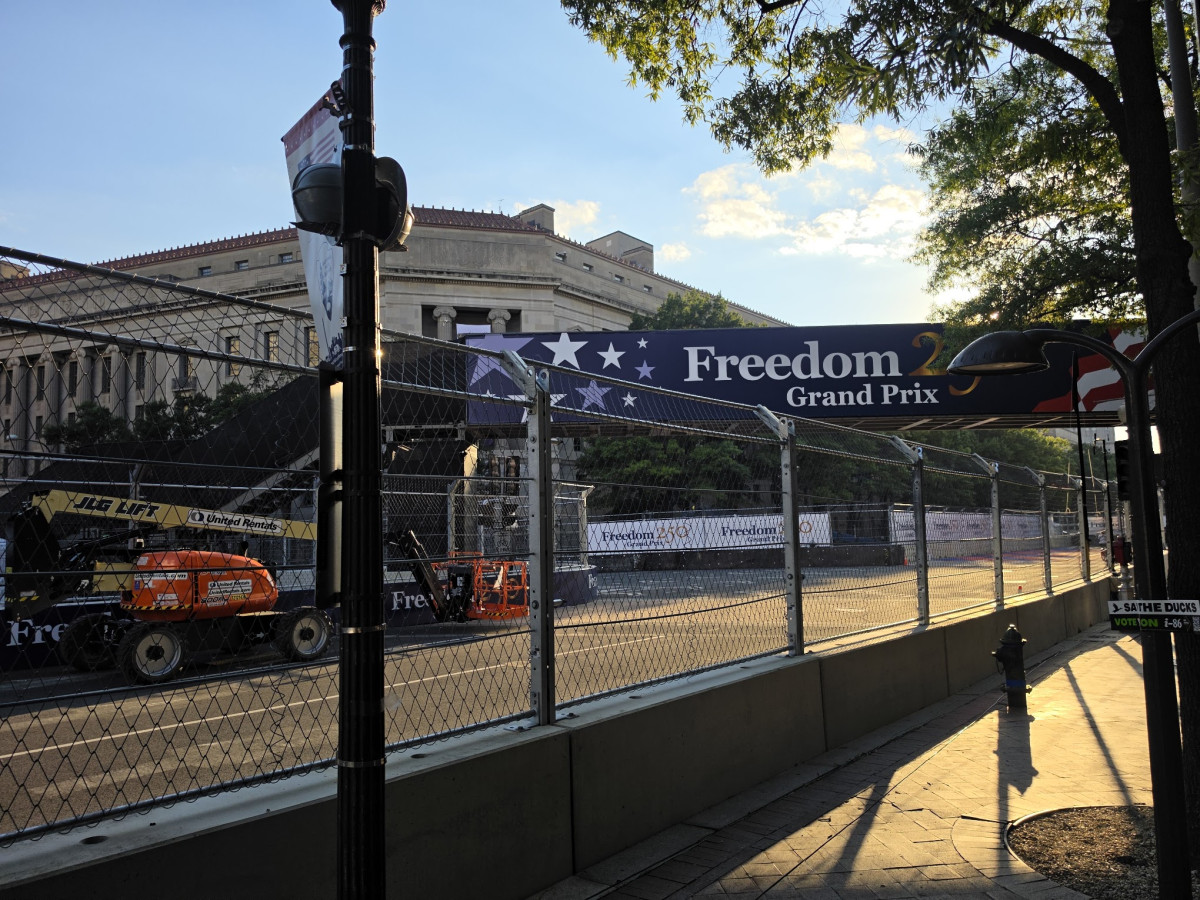
Growing up, Lee lived a mile and a half away from the location which hosted the annual Grand Prix in Quebec, Canada. He remembers how loud it was even with the distance.
“You could definitely hear it — as if there was a drag race down the block,” he said.
In preparation for the event, Lee purchased 1,000 earplugs to distribute to the 10 buildings within his single-member district.
“If you’re bothered by noise, try to escape downtown,” Lee said he told his neighbors. “Escape the city if you can; take a day trip. Don’t hang around downtown.”
Lee said he paid $65 for the earplugs, an approved purchase by the Office of Advisory Neighborhood Commissions, due to him fulfilling a need that was not addressed by the city. However, due to the road closures, the package was not able to be delivered before the event and Lee could not distribute them to residents. He said he will be returning the earplugs.
Richardson and Lee both said communication is one of the top issues. Although large-scale events may be inevitable due to the nature of the city, more can be done to keep the dDistrict informed, they said.
Lee said he appreciates notices from places including the Executive Office of the Mayor and WMATA, but those resources are limited because individuals have to opt in personally to receive them. He also said the notices are sometimes confusing to understand.
“It’s just a big long list of street names, and it’s hard to see quickly,” he said.
He wants to see more visual maps that are color-coded and easy to understand at a glance.
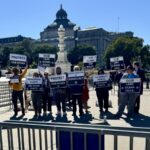
Scott Feldman said the best bet to see change that is truly in the public interest is for entities, including Congress and the National Park Service, to step in and hold the presidential administration accountable.
“But that’s not happening,” she said. “We’re really at a loss and people can protest [but] the strongest thing we have right now is lawsuits, because the last refuge of the law is to go to the courts.”
A spokesperson for the National Park Service declined an interview but issued a statement to HU News Service.
“The National Mall is both a nationally significant civic space and a valued public park for D.C. residents, and we recognize that large-scale events can create temporary impacts on access, pedestrian activity, park operations and landscaping,” said the statement. “Throughout Freedom 250 activities, partners have worked closely with the National Park Service to minimize those impacts.”
Representatives from the Executive Office of the Mayor or Freedom 250 did not respond to multiple requests for comment.
Myla S. Roundy is a reporter for HUNewsService.com and the managing editor of The Hilltop at Howard University.