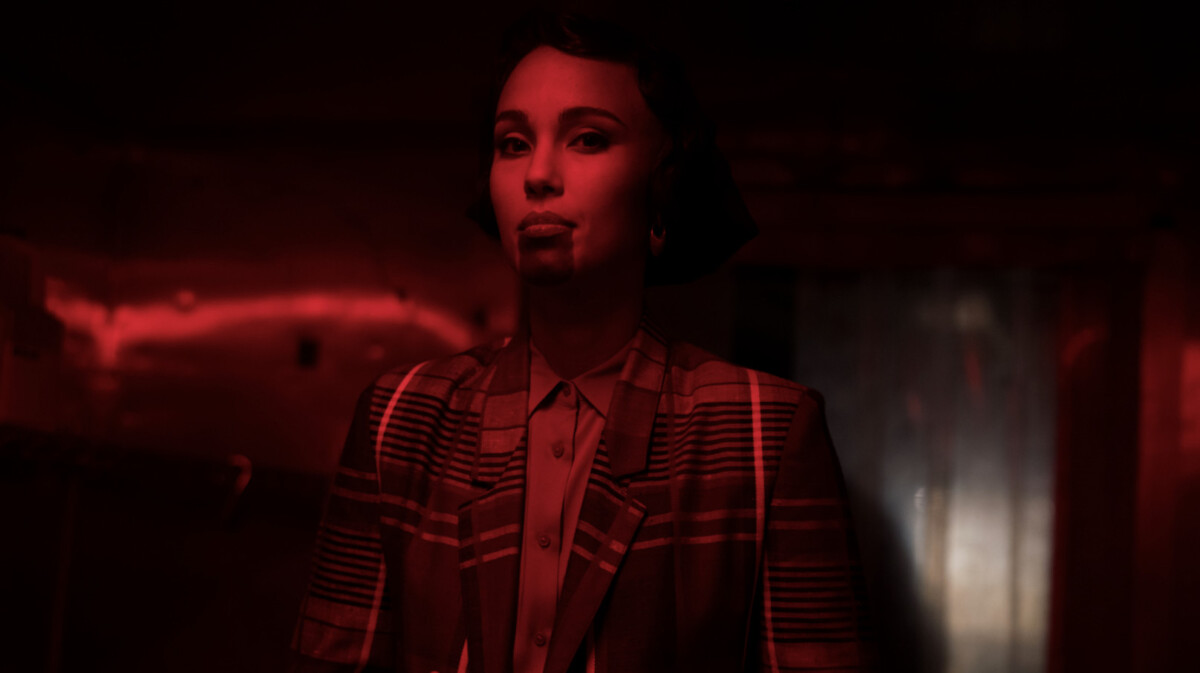
Kahlil Joseph takes a different approach to storytelling in his film, “BLKNWS: Terms and Conditions,” by weaving together history, contemporary life and fictional narratives through a nonlinear timeline inspired in part by music sampling. Through a collage of archival footage and pop culture references, the film constructs a multimedia archive of Black life.
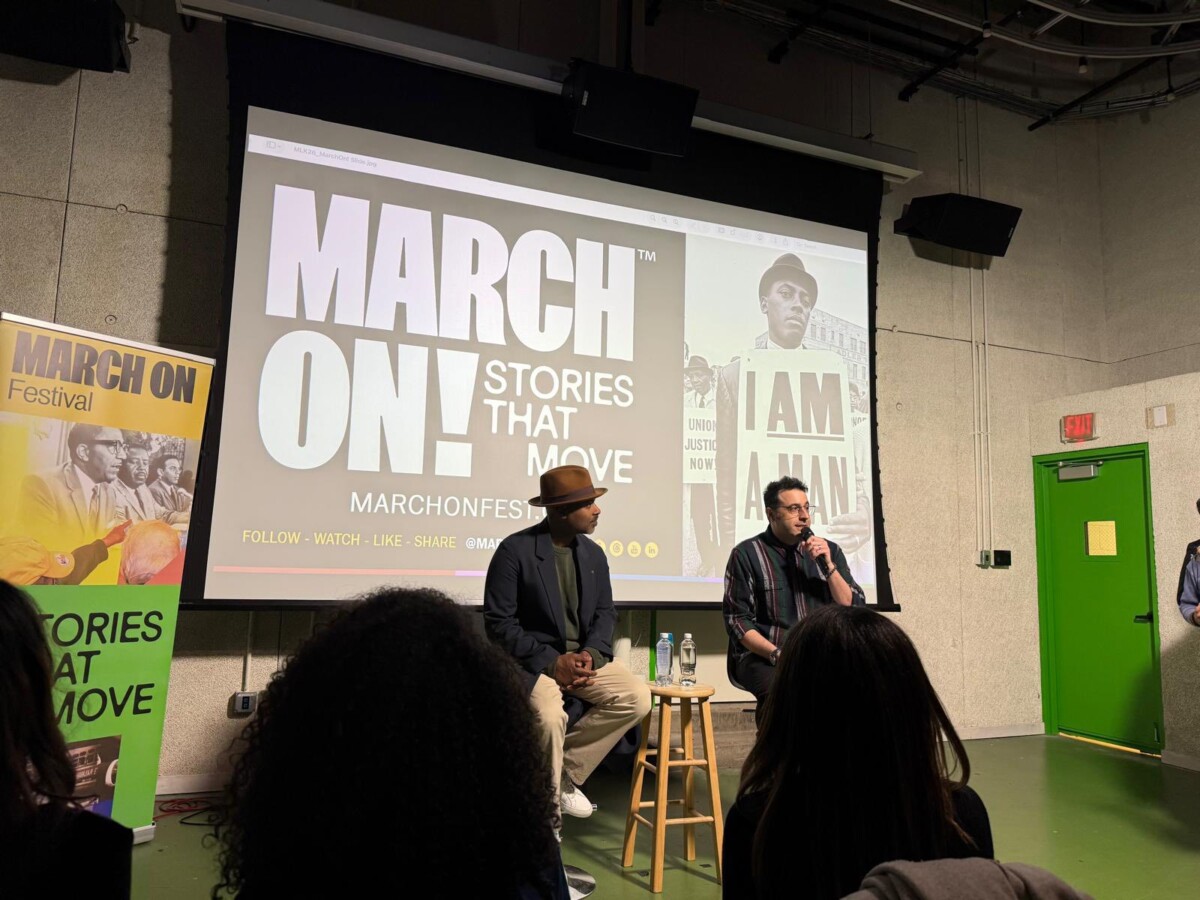
Joseph discussed his editing process and approach to collecting archival material for the film with students during a recent screening and conversation with Shah Shafiani, coordinator of the MFA film program at Howard University. He noted that his crew included two acclaimed Howard alumni, director Arthur Jafa and cinematographer Bradford Young.
His two-hour film grew from a video art installation, also called “BLKNWS,” which was part of the 2019 Venice Biennale. Joseph, an award-winning filmmaker and visual artist, also created short films for Kendrick Lamar’s “good kid, m.A.A.d city” and Beyoncé “Lemonade.”
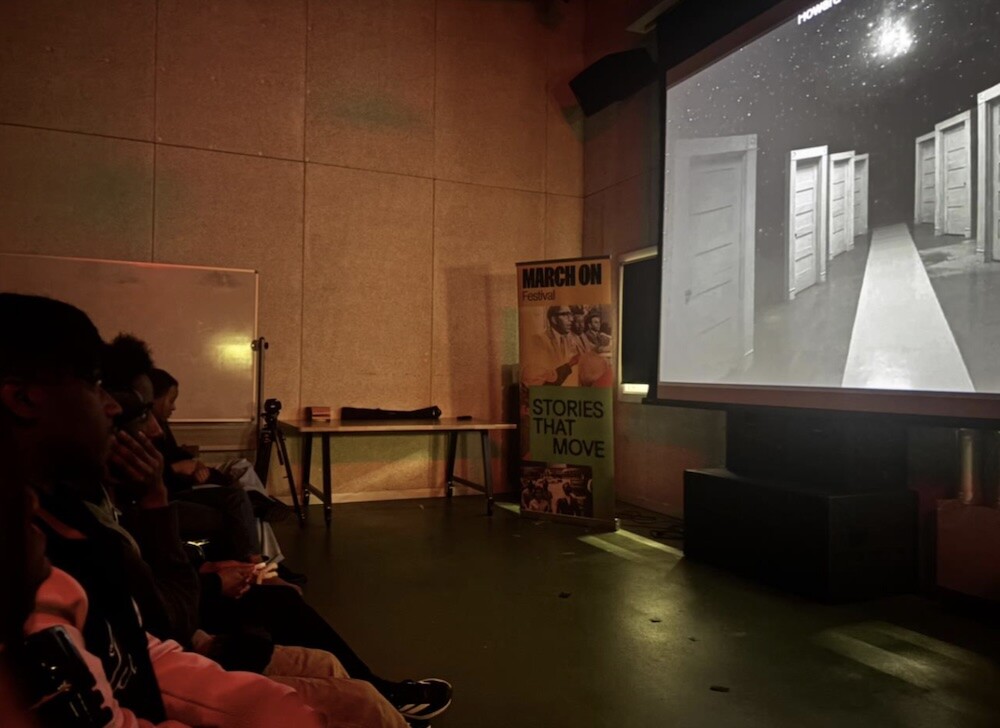
After its national theatrical release, “BLKNWS” is now available on Prime Video and Apple TV. The film, which took nearly five years to complete, centers the legacy of W.E.B Du Bois’ dream to create Encyclopedia Africana, a compendium dedicated to documenting the global history of people of African descent that was completed by Kwame Anthony Appiah and Henry Louis Gates Jr.
Although the encyclopedia ultimately became the foundation of the film’s narrative, Joseph said he did not encounter the book until late in the editing process.
“The encyclopedia came about four or five years into the editing process,” Joseph said. “It came really late — like 30 seconds left in the fourth quarter.”
By that point, Joseph said he had begun to lose confidence in the project.
“We’d been editing for a long time, and it wasn’t working,” he said. “I remember just kind of giving up.”
While working in his studio, Joseph noticed a first edition of “Africana: The Encyclopedia of the African and African American Experience.” He opened it, not expecting much.
“There happened to be the encyclopedia in my studio,” Joseph said. “And right there in the front, it was signed from my dad to my brother.”
The uncovering of the book reframed the film’s direction, grounding the project in both personal and historical memory.

The film combines historical footage, photographs and contemporary media, creating a nonlinear timeline that documents and reflects on the Black experience. Pop culture references, music, memes and speeches from historical figures appear alongside fictional segments, collapsing past and present into a layered narrative.
“On one hand, I was making a movie, and on the other hand, I’m making this thing called ‘Black News,’ a cinematic form,” Joseph said.
He said his approach emerged from his thoughts on conventional historical cinema.
“I’m a big fan of history cinema, and it’s been feeling sometimes a little stale,” he said. “They were just making movies a hundred different times. The same stories, cannibalizing itself.”
Instead, Joseph looks to music as inspiration for a new storytelling structure.
“Music does this really well,” he said. “It keeps evolving.”
“I was really struck by the concept of sampling. Where you take old music and make new beats, new music. I tried to figure out what that could look like for cinema.”
By blending archival material with contemporary media, “BLKNWS: Terms and Conditions” reframes history as something continuously being assembled. The screening offered a glimpse into how storytelling, memory and media can intersect to reshape how Black history is document and imagined.
Ve Wright covers social issues for HUNewsService.com.