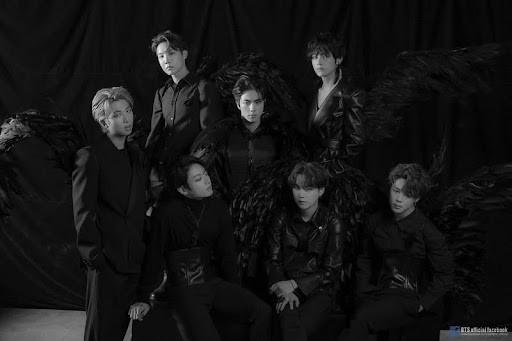
BTS released an album teaser video featuring Koreans at Howard University, where they first recorded music in the United States in 1896, based on a Washington Post article.
K-pop uses this video to portray the genre’s origins in the United States. In the animated scenes, Korean men are shown singing in front of the historic Founder’s Library. However, viewers can only spot two Black people in the crowd, surrounded by mostly white and non-Black individuals, which sent social media into an uproar.
Many people were disappointed by the whitewashing of Howard University’s campus, a historically Black college (HBCU). Some found the portrayal tasteless, and others believed BTS was paying homage to Black campuses and the work done there, particularly in welcoming Korean musicians.
For many Black audience members and pop culture enthusiasts, the video felt like another slight from the K-pop industry toward Black people.
History continues to repeat itself when it comes to K-pop appropriating Black culture or showing ignorance toward the Black community. There are countless examples of K-pop groups drawing inspiration from Black artists, particularly in hip-hop and R&B. They replicate sounds associated with Black musicians, especially from the 1990s, as well as visual concepts rooted in that era — all direct reflections of Black culture.
More concerning are instances of cultural appropriation involving hairstyles and fashion. Some K-pop idols, including RM from BTS and Lisa from BLACKPINK, have worn braids or styled their hair to mimic Afro-textured looks. Others adopt “urban” concepts like baggy clothes, gold chains and bandanas that are tied to Black 90’s and 2000’s culture, sometimes reinforcing stereotypes of being “ghetto” or “hood” based on the way they act in these outfits.
Another recurring issue is the use of the N-word. Numerous idols, including members of BTS, BLACKPINK, æspa, Enhypen, BABYMONSTER and solo artists, have been criticized for singing along to the word in songs, saying it during livestreams or pre-debut performances. These incidents repeatedly upset the Black community, even though many Black fans continue to support the groups or the industry as a whole.
Taken together, these examples suggest that cultural appropriation and the mistreatment of the Black community have become ongoing issues within the K-pop industry. Some overlook these patterns and each new controversy serves as a reminder and conversation starter.
BTS’ video had the potential to uplift Howard University and highlight an important historical moment. That story holds significance within HBCU culture and deserves recognition. However, the video ultimately falls short because of its lack of representation, leaving the Black community in a win-or-lose situation.
Many Black fans are deeply engaged in K-pop, drawn to its creativity and performance appeal. The issue is that the industry often fails to recognize Black audiences as key consumers. Until that changes, these longstanding concerns are unlikely to be addressed.
This BTS video is a clear example. An opportunity to showcase Black excellence and accurately reflect Howard University’s campus, but it missed the mark. Instead, it frames the campus primarily as the place where Korean musicians happened to be, rather than acknowledging its identity as a historically Black institution.
At the same time, it is important to recognize that Howard University has long been a welcoming space for marginalized communities. In the late 1800s, Korean musicians may not have been accepted at white institutions, making Howard a place of opportunity. That spirit of inclusivity is central to its history.
In 2026, that same inclusivity is not always extended back to Black communities within the global entertainment landscape.
South Korea has a small Black population, and Black residents there often face marginalization. As K-pop continues to grow globally, entertainment companies must adopt a broader cultural perspective rather than centering only on South Korean audiences.
It is difficult to place the blame solely on artists like BTS, who are typically not responsible for creative decisions. Responsibility often lies with the companies and creative teams behind them.
As fans continue to call out these companies, there is potential for change. Without accountability, these issues persist.
HYBE, the company behind BTS, has begun to recognize K-pop’s global reach. Its partnership with Geffen Records led to the creation of KATSEYE, a multinational girl group that debuted in 2024. The group was designed to include members from diverse backgrounds and appeal to a global audience.
While KATSEYE initially gained popularity, it has also faced criticism from the Black community over the treatment of its only Black member, Manon.
Manon was already widely known on social media before entering the process of joining the group. KATSEYE was formed through a competition, “Dream Academy,” where more than 20 contestants competed for spots in the group through singing and dancing challenges. This journey was documented in the Netflix series “Pop Star Academy.”
Throughout the documentary, Manon faced criticism and minor conflicts with some contestants, who felt she was not working hard enough and had secured her place primarily because of her looks.
After being announced as the main visual of the six-member group, many fans labeled her the “it girl” of KATSEYE. However, when “Pop Star Academy” was released, social media users began to question whether some contestants, who later became group members, had treated her unfairly.
In late February, HYBE announced that Manon would be going on hiatus, raising further questions. Speculation grew after Manon liked Instagram posts suggesting she had been mistreated by her company.
Since then, the group has released new music, participated in campaigns and even performed at Coachella without her.
Manon’s situation highlights a larger issue: Even as companies expand globally, underlying racial biases remain. These patterns continue to leave many Black fans feeling overlooked and disrespected.
The disregard for Black culture and blatant racism in some cases, is frustrating given the significant influence Black history has on K-pop.
As the K-pop industry continues to usher in a new generation of idols, it remains unclear whether changes will be made to fully appreciate the culture that inspires so much of its work.
Real change may require sustained pressure from fanbases, not directed at the artists themselves, but at the companies and creative teams, to ensure they properly educate themselves on the harm caused to the Black community.
Taylor Swinton is a reporter for HUNewsService.com