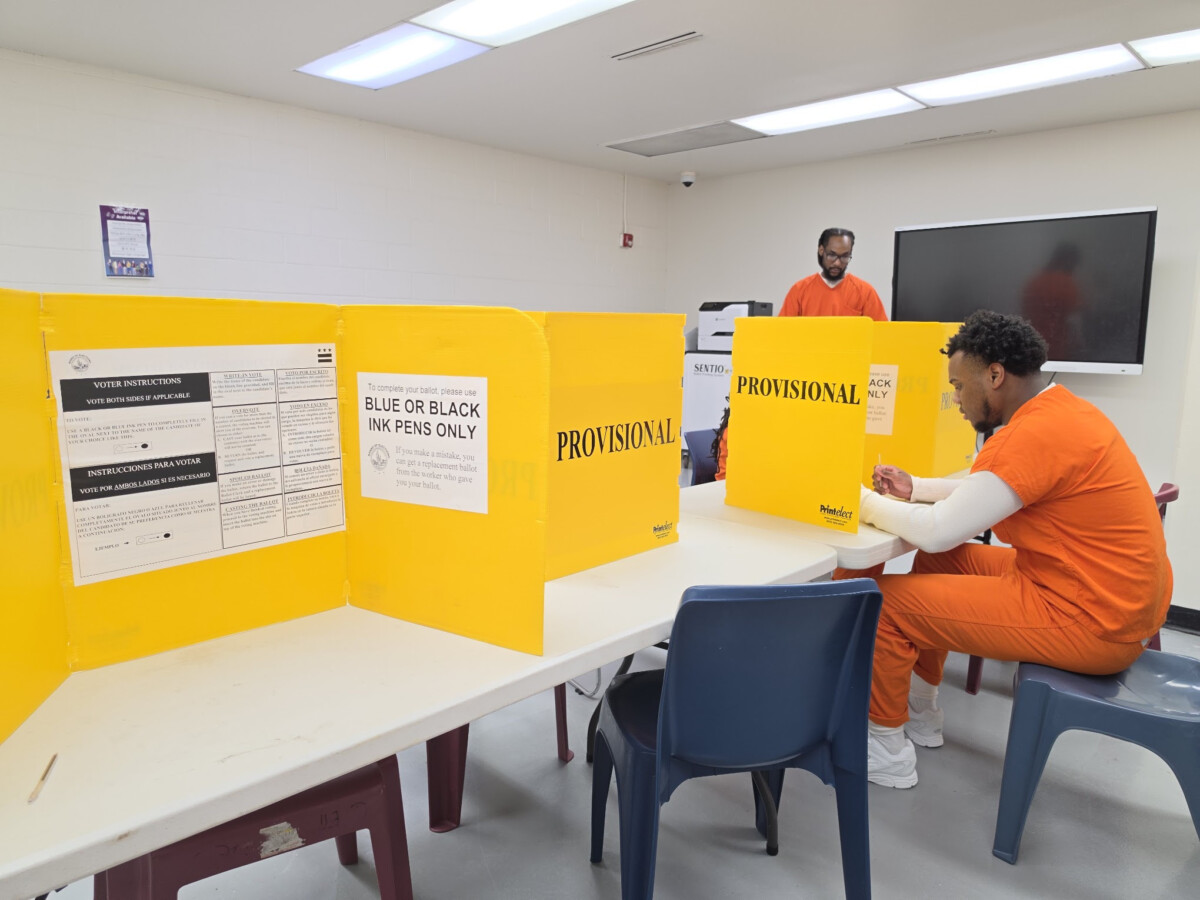
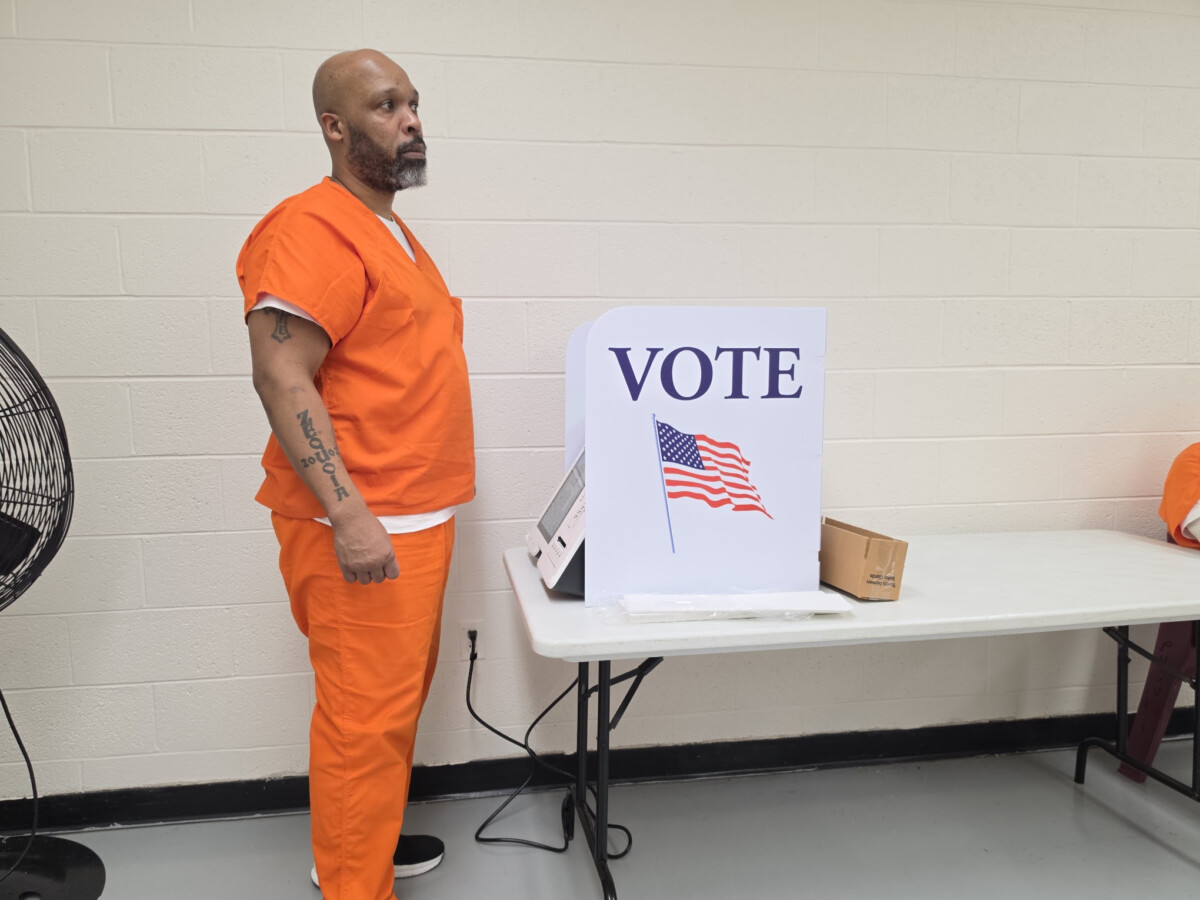
WASHINGTON (HUNS) — In a set of matching orange clothing and white shoes, an incarcerated resident seemed defeated as he sat at a folding table in the D.C. Department of Corrections Central Detention Facility on the first day of early voting at the facility.
“I don’t know none of these people,” he was overheard saying on Oct. 27, while staring at his ballot.
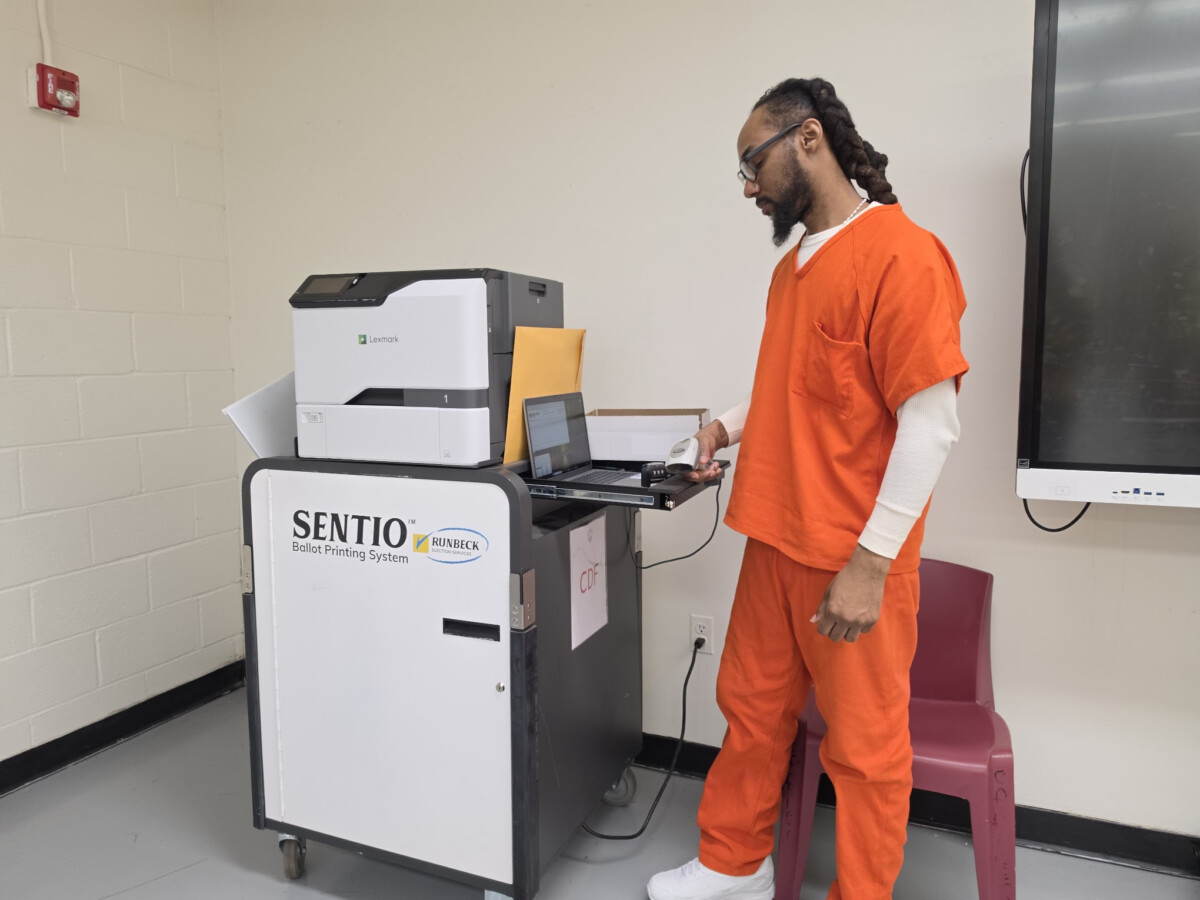
For some D.C. jail residents, the process to check in and receive their ballots took longer than actually filling them out. Many had only one thing on their mind — to vote for the next advisory neighborhood commissioner of the single member district 7F08 district, which represents the jail residents and the nearby Harriet Tubman women’s shelter in Ward 7.
Across the United States, the lack of education surrounding voting is a common thread for both those who are currently and formerly incarcerated.
Consuela Gaines said voting was not talked about when she was growing up in Louisiana. Gaines said she knew her mother was a voter, but did not know the impact of voting until later in life. She attributes the lack of conversations when she was young to one of the reasons why she did not exercise her civil rights until much later.
“After spending 22 years in incarceration, while there, I came to understand … why it’s important to have the right legislators or elected officials,” Gaines said. “They will be the ones crafting laws that could possibly help people who are incarcerated, formerly incarcerated or just our families in our communities in general.”
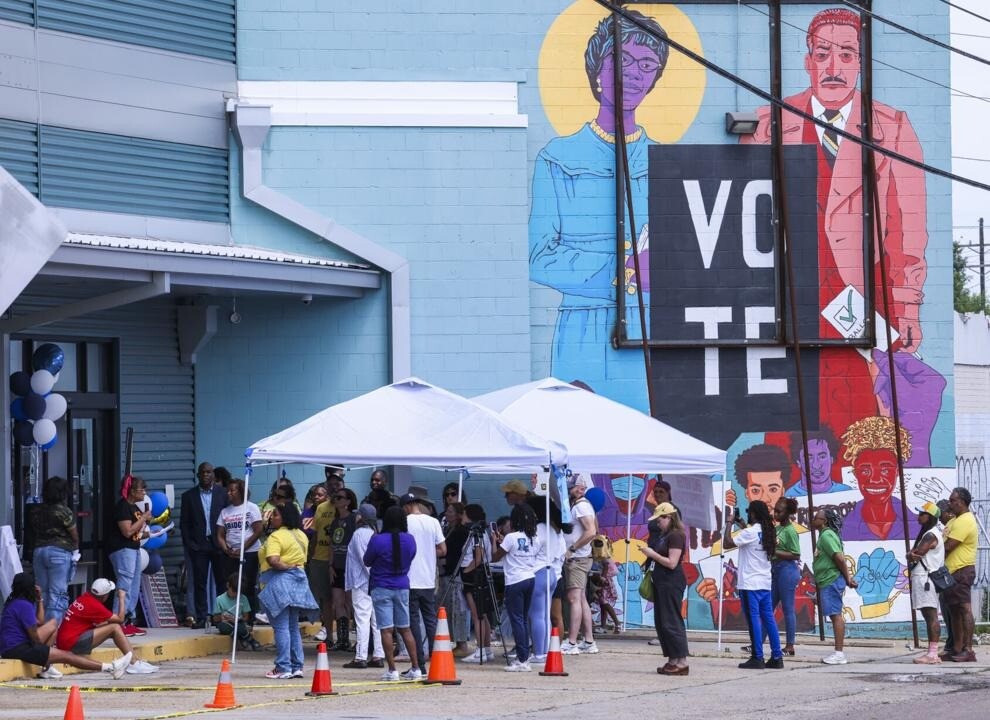
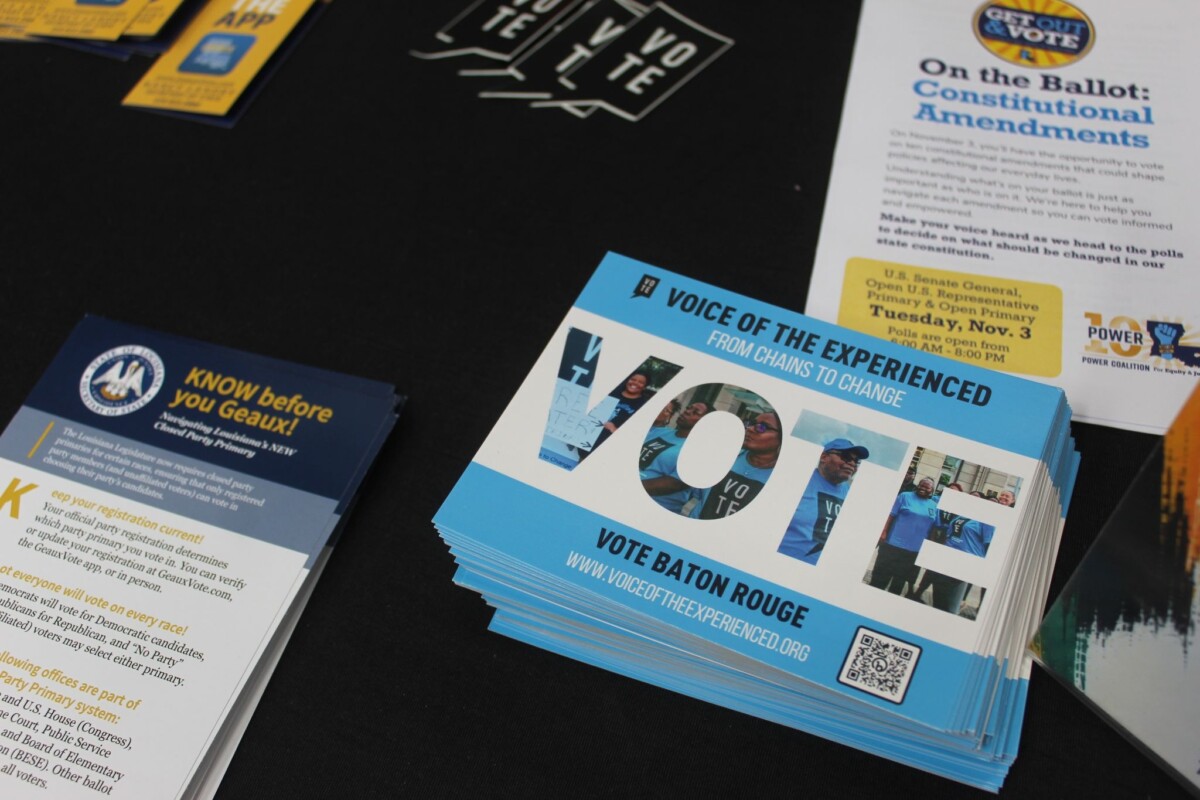
After being released from prison, Gaines was looking for employment when she came across the nonprofit Voice of the Experienced (VOTE), founded and run by formerly incarcerated people. The group fills the education gap that Gaines once experienced by advocating for the civil and voting rights of those who are formerly and currently incarcerated.
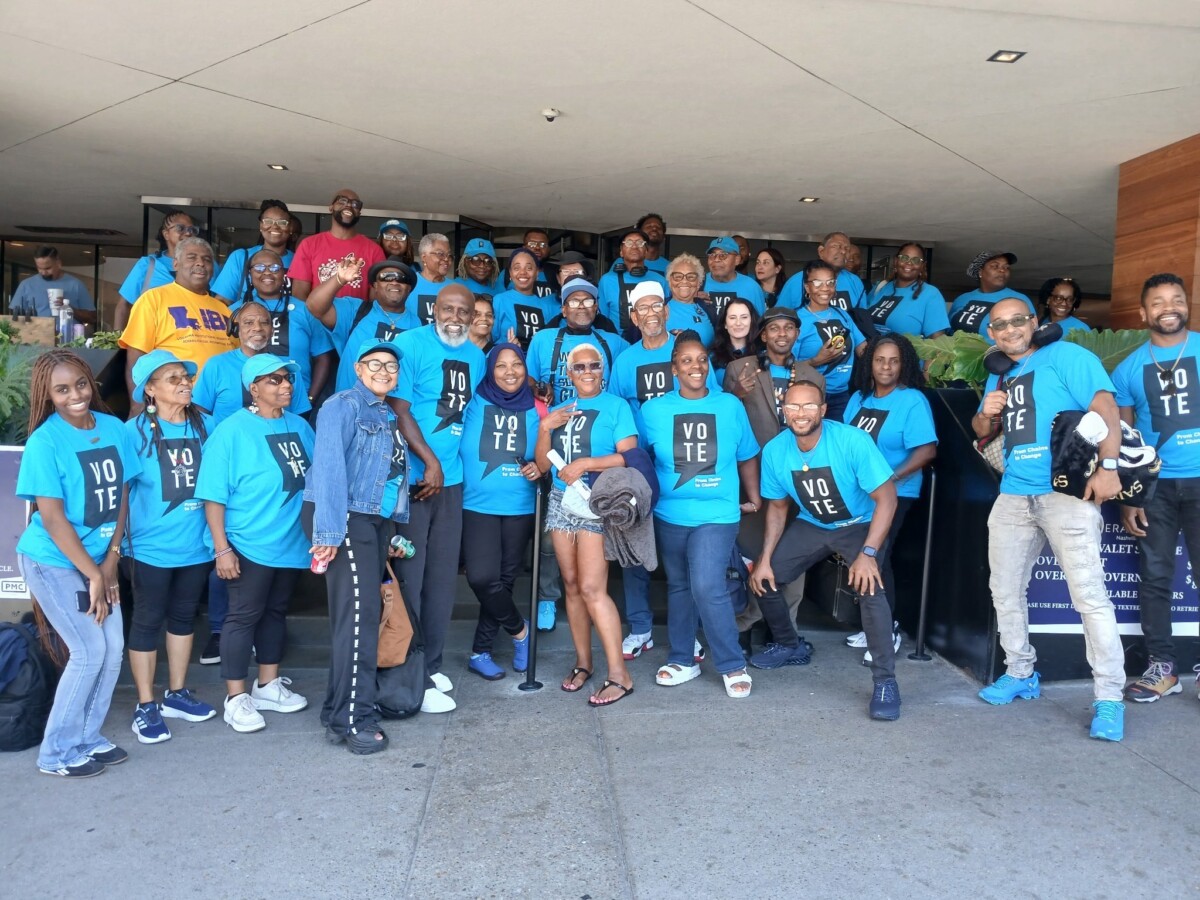
She started at VOTE as a volunteer, then became a chapter organizer and now is the director of organizing.
“We’re not the ones just telling people what to do; we are also educating people, listening to our community, our members, and finding out what’s important to them,” Gaines said. “We’re able to share with them civil engagement and why it’s important, because it has to make sense to our folks before they even get to the polls to vote. It has to make a connection.”
In Louisiana, where VOTE is based, the state has one of the highest imprisonment rates in the country, with 617 individuals incarcerated per 100,000 residents, according to The Sentencing Project.
Back at the D.C. jail, the Restore the Vote Amendment Act of 2020 ensured that all incarcerated District residents could register to vote. The act also made the Department of Corrections (DOC) a voter registration agency in partnership with the D.C. Board of Elections (BOE).
Although giving incarcerated people access to vote largely started because of advocacy efforts, that is not what is happening at the BOE, said Scott Sussman, the Restore the Vote program manager.
“We don’t advocate; we just follow the law,” he said. “It sometimes would feel like advocacy because we’ll go into the institutions to educate folks on their right to vote, but we don’t advocate for their right to vote.”
The law became effective in 2021. Between the 2022 primary election and 2024 general election, the DOC registered over 2,300 voters, according to the most recent voting report by the D.C. Corrections Information Council. The average daily population in the first six months of this year was 1,430 residents in the Central Detention Facility.
The D.C. jail was open for in-person early voting for three days this year. The jail’s residents also had the option to vote by mail if they did not want to vote in person or could not because of reasons including being in a locked-down unit.
Some states across the country also have their own jail-based voting initiatives, including Arizona, Colorado and Illinois.
Although these initiatives make voting more accessible, the process is far from seamless.
On the first day of early voting at the D.C. jail, Sussman called the process a “disruption” to the jail because of the need for extra guards and coordination of schedules.
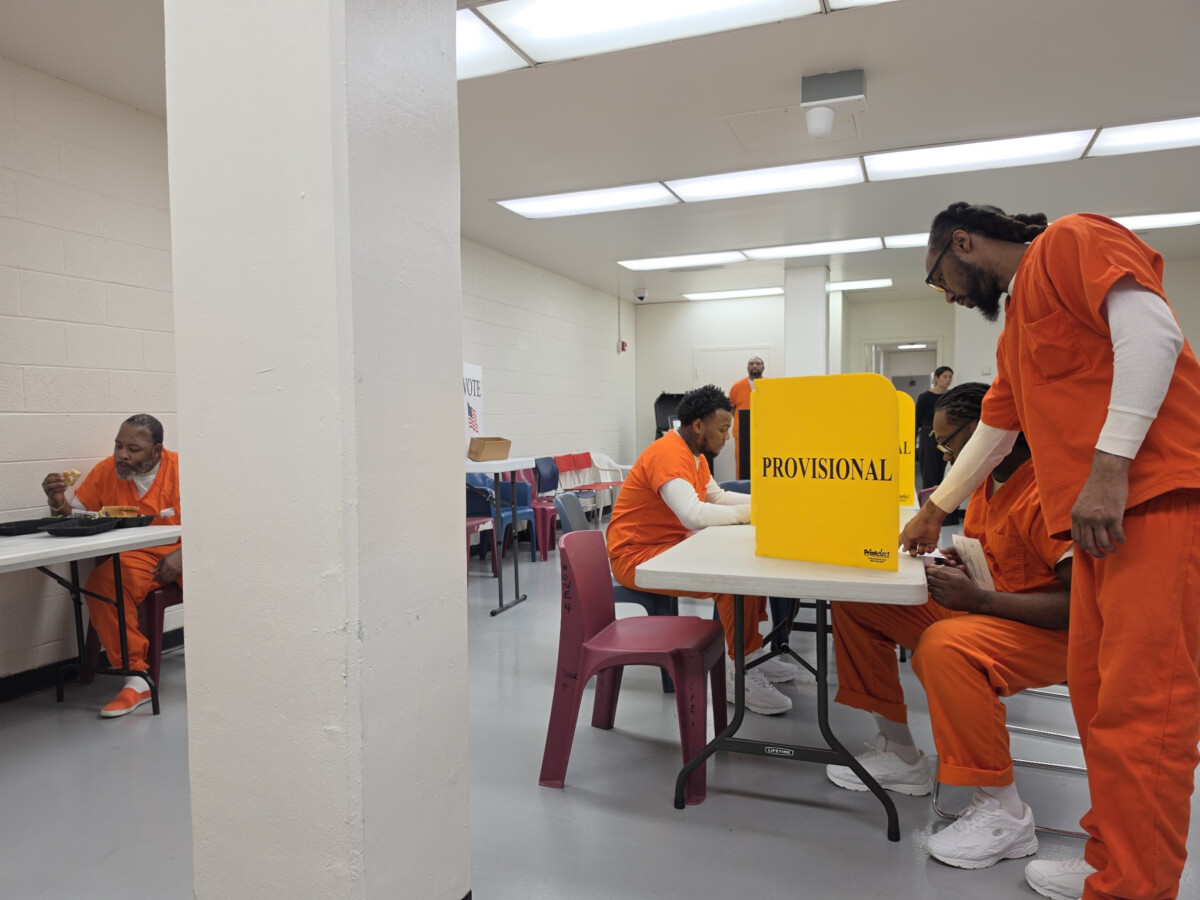
For some residents, the voting process seemed difficult. In the morning, four residents gathered around a table to fill out their ballots, similar to as if they were working on a group assignment.
Later, the jail put up privacy folders, and for the next few hours residents voted independently, unless they asked Sussman or an incarcerated poll worker for help.
VOTE was born out of the Louisiana State Penitentiary, commonly known as Angola, when a group of men decided they wanted better lives for themselves and their fellow incarcerated people. While incarcerated, they founded the Angola Special Civics Project (ASCP) in 1987. In 2004, a year after Norris Henderson, the former ASCP president, was released from prison, he started VOTE.
At the time, VOTE was known as Voice of the Ex-Offender, but in 2016 the organization officially became Voice of the Experienced. Checo Yancy, one of the founding members of VOTE and ASCP, said they wanted not only to advocate for an incarcerated person’s rights but also to encourage people-first language.
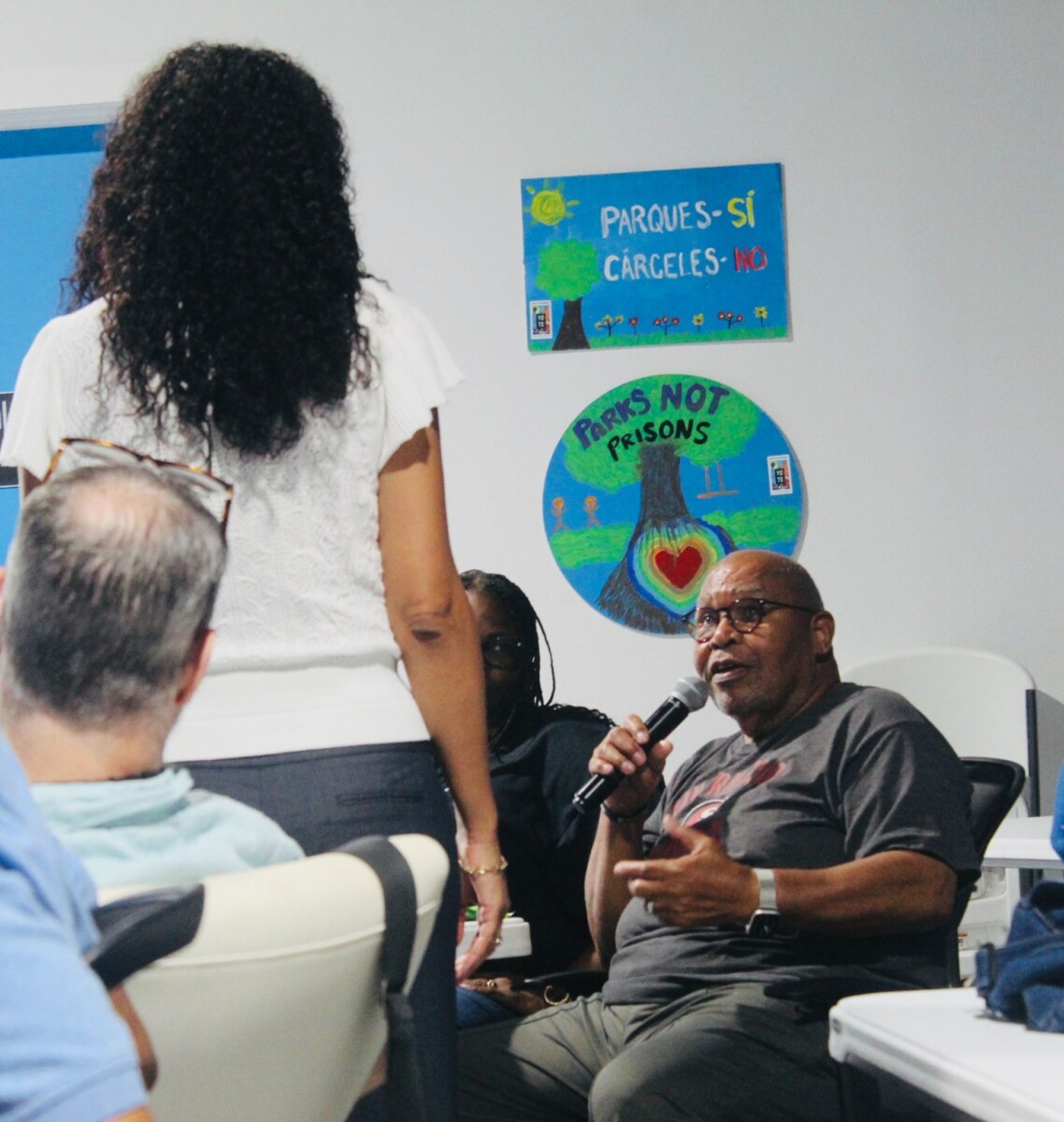
Yancy, who was incarcerated for about 20 years, said the road to leadership within Angola was not easy.
“To be a leader in prison, you have to be very, very strong,” he said. “You have the administration against you, the guards against you and incarcerated people against you because the first thing somebody will say: ‘Well, who died and put you in charge?’”
It took over a year for fellow incarcerated people to trust and understand the work they were trying to do with the ASCP and even longer for the administration, according to Yancy, who is the policy director of Voters Organized to Educate, the sister organization of VOTE.
However, the mission clicked immediately for Robyn Guillen, who has volunteered with VOTE for four years. Although she has not been incarcerated, Guillen said she has found a family within the organization.
“I didn’t know what it was so I went to a meeting and it was unlike anything I had ever experienced,” said Guillen. “It’s how I think people must feel when they find a church that they really vibe with.”
She recalled how welcoming the meeting atmosphere was, with a mix of formerly incarcerated people, local community members and children.
“[It] was mind-blowing to be in a place where it’s not only not frowned upon that they’re formerly incarcerated but they are welcomed back into society, the way that it should be,” said Guillen, a Ph.D. candidate in the justice studies program at the University of New Orleans.
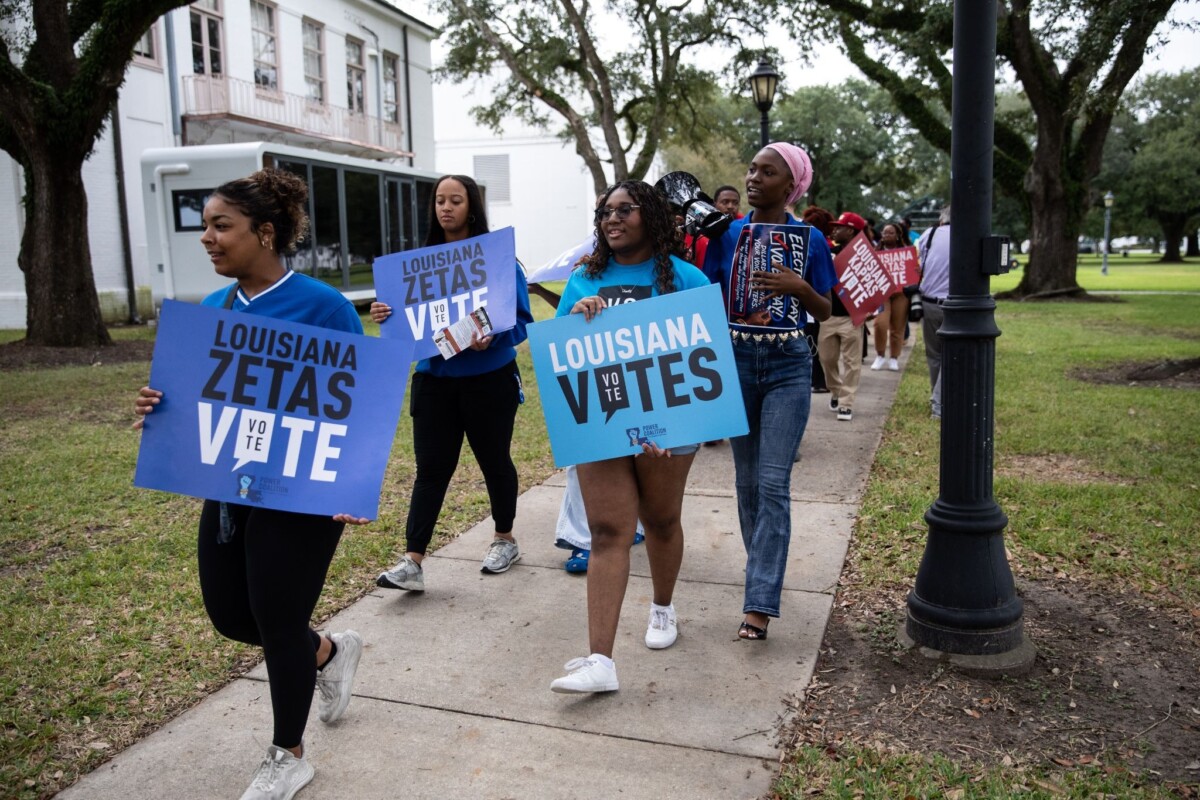
Much of VOTE’s advocacy efforts come from mobilizing the community and their volunteer members. In 2025, VOTE registered over 400 currently incarcerated people and the organization made over 280,000 calls. This was VOTE’s top mobilizing effort for the year, although in 2023, texting and door knocking came out on top, according to annual impact reports.
Gaines said one of the difficulties of registering people to vote, especially those who are formerly incarcerated, is the lack of power that some feel. She said VOTE wants to give back autonomy to voters “so that they know the true power lies within us.”
“Elected officials are term limited. We, as their constituents, we’re not term limited,” Gaines said. “It is our duty to hold our elected officials accountable to make sure that they live up to what they said they would.”
Yancy said sometimes people feel so defeated, and it can be difficult to encourage them, but he will spend over an hour talking with a person if it encourages them to vote.
At the D.C. jail, some residents felt like they were taking a test while they voted, said Harold Cunningham Jr., the currently incarcerated advisory neighborhood commissioner of 7F08. He previously worked as a poll worker in the jail during the June primary election.
“That’s something they really wasn’t feeling, but they fought through it because they wanted to make sure their vote counted,” Cunningham said.
During early voting, one incarcerated voter asked if he had to select a person in each race. He was writing in a name for an advisory neighborhood commissioner but for the other races, he said, “I don’t know these names.”
Cunningham said he wants more voter education in the jail and earlier education so that the residents have the time to learn about all the candidates on their ballot.
Nearly two weeks after the election, the 137 jail residents who voted for their next commissioner are still waiting on the results. All candidates were write-in candidates.
Yancy said that while he was incarcerated, he learned that if he wanted change, he had to make change.
“If they’re the policy makers and we didn’t like the policy, you needed to change the policy makers.”
Myla S. Roundy is a senior reporter for HUNewsService.com covering Ward 5 and social issues. She is also the managing editor of The Hilltop at Howard University.